 Elkhound
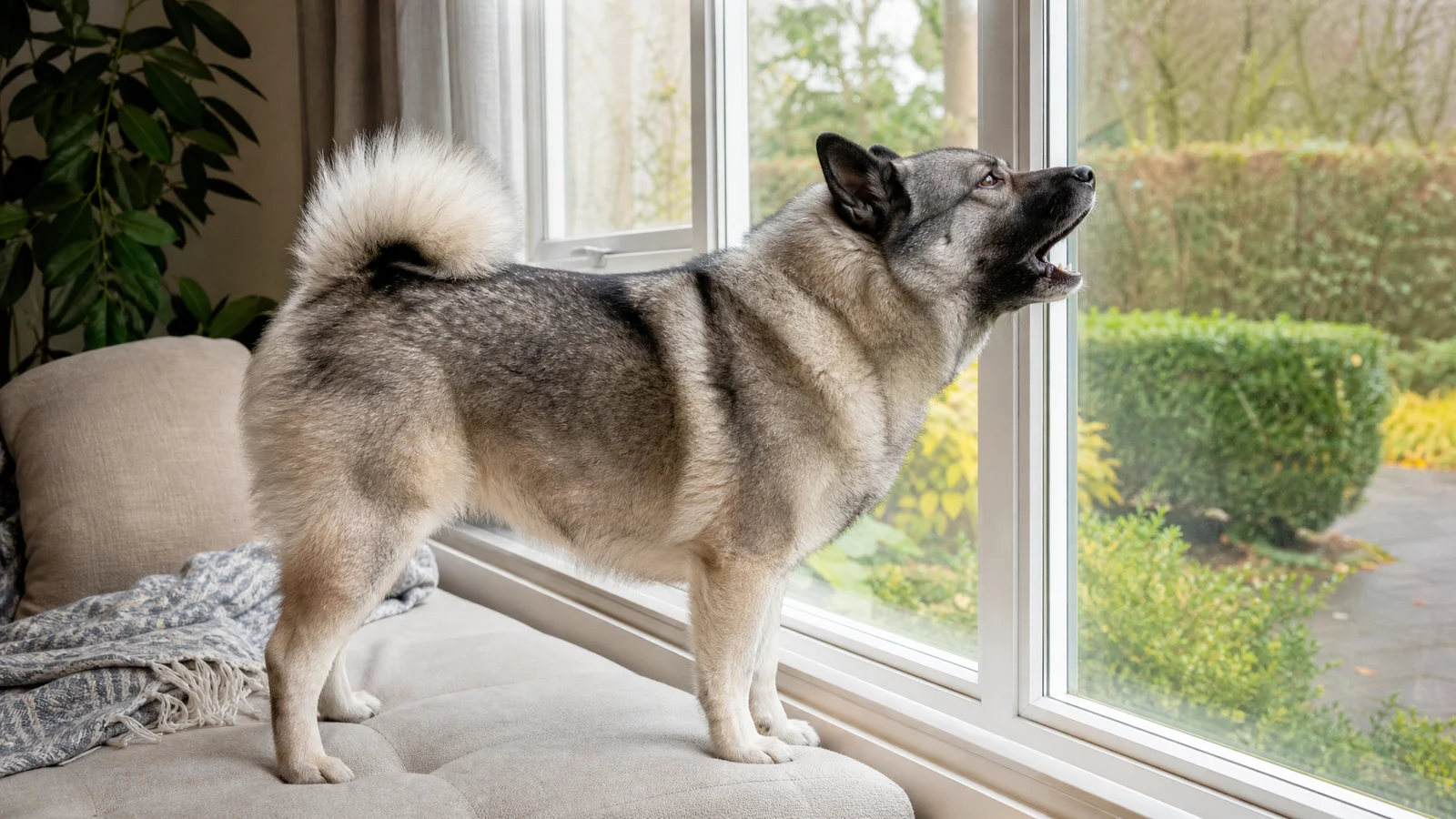
Some Norwegian Elkhound owners hear a deep alarm at every knock, and it keeps rolling long after the door opens. Others hear a couple of barks, watch their dog greet the guest, and then see them settle on the rug as if nothing happened. Both dogs are doing what the breed was built to do, and the gap between them comes down to habit, management, and individual temperament.
This guide covers visitor barking, from the doorbell and the window view to guarding-type behavior and the quiet routines that fix it. Handled badly, the habit grows into a neighborhood-wide broadcast and a dog who cannot relax. Handled well, you keep a vigilant, affectionate housemate who reports once and then lets you take over.
Barking at the Door
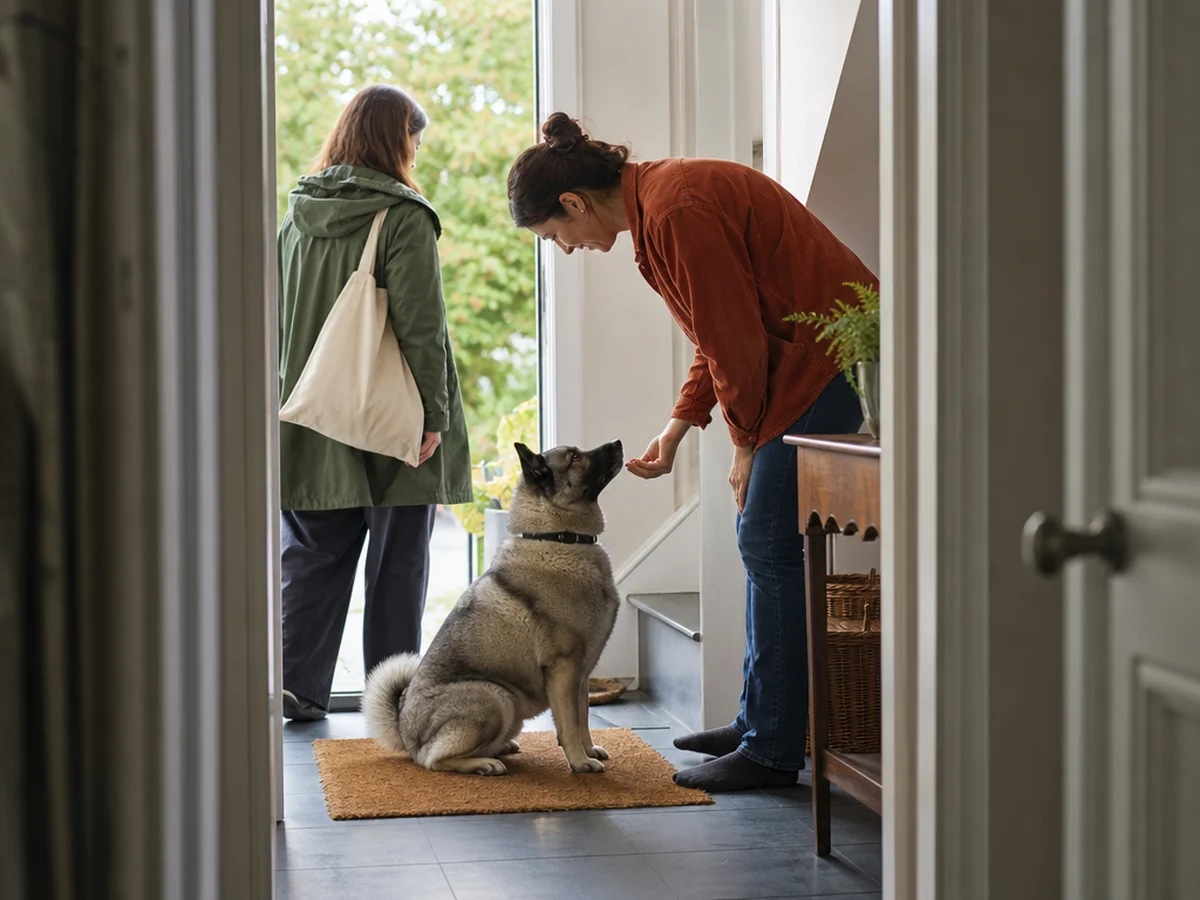
The most common sight in an Elkhound home is the dash to the door, followed by a burst of deep barking that seems far too big for the moment. This is the breed doing a job rather than being rude. The parent club describes the Elkhound as protective, even possessive, of family and property, and a commendable watchdog, so a visitor arriving is exactly the event their instincts flag. The encouraging part is that the same watchful brain learns quickly.
Doorbell and Knock Triggers
Doorbells and knocks are sharp, predictable sounds, which makes them the easiest trigger to work with. The likely reason the barking is so reliable is that the dog learns the whole sequence: the sound, the footsteps, the dash, the bark. Each repetition makes the chain stronger.
Because the sequence is so reliable, you can rehearse it on purpose and teach a different ending. We will build that rehearsal later in this guide.
Window Watching
Elkhounds rarely save their barking for the front door. Owners describe dogs who report on passing people, other dogs, trucks, and cars, and some become known across the whole neighborhood, as though they oversee the street. Every window with a view becomes a lookout post, and every bark from it is practice for the next visitor.
That is why managing the view matters as much as managing the door. Covering the lower part of a front window, or keeping the dog in a room that faces the back yard while you are busy, removes a huge number of rehearsals at no cost.
Barking Before Anyone Arrives
Some owners are surprised when the barking starts with nobody in sight. Many report dogs who bark at anything new, unusual, or imagined, such as a stray balloon, the wind, or a shape only the dog thinks they see. Others describe a dog who patrols and barks in every corner of the yard each morning. Steady background sound, such as quiet music or a television, can help in a very quiet house, since small noises stand out less.
So treat visitor barking as one piece of a general alert habit. If you reward quiet across the whole day, the doorbell stops being a special case.
Norwegian Elkhound Alert Barking
A deep, resounding bark that carries is the Elkhound's signature, and using it is normal. The breed scores 4 of 5 for barking level, where 5 means very vocal, and a full 5 of 5 on the watchdog and protective scale, which tops out at vigilant. Together those numbers confirm what many owners already know. Alerting is built in, and your job is to shape it into a short report rather than remove it.
Alert Versus Excited
Not every bark means the same thing, and the fix depends on which one you are hearing. Watch body language to tell them apart: a still, focused posture aimed at the trigger points to alerting, while a loose, wiggly body points to excitement or play. Some Elkhounds mostly bark outdoors during play or at cars, which needs little more than a calm indoor routine.
Elkhounds are described as reserved until introductions are made and trustworthy friends afterward. It follows that a dog may sound the alarm first, then warm up once the stranger is accepted.
Why the Bark Carries
The loud, persistent voice has a history. Elkhounds were used to hold a moose at bay by barking, being an annoyance rather than a threat, and were expected to keep it up for over an hour. They also worked as independent hunters, free of direct command from their person. A dog bred to keep going without being told will not always stop on the first request, which is why rewards for quiet work better than repeated demands.
Individual dogs differ a great deal. Some bark only to alert or to be let in, and a few rarely bark at all. Others are vocal well beyond anything the owner experienced with earlier dogs. Work from the dog you actually have.
When Barking Turns to Guarding
Much visitor barking is announcing, and routines can help. Occasionally protectiveness slides past announcing into something that needs more care. Temperament varies from one Elkhound to another, but the parent club notes that the breed is not normally aggressive and is normally friendly, even with strangers. A dog who does not fit that description deserves a closer look and a calm plan.
Signs It Has Gone Past Announcing
Watch the body, not just the sound. A stiff posture, a hard stare, lunging toward a guest, or standing between you and the visitor all suggest more than an alert. So does barking that gets worse as the guest comes closer, or guarding of a person, a couch, or a food bowl. These behaviors are often typically based in anxiety, so the dog needs reassurance and distance rather than pressure.
Notice also whether the barking stops when the guest sits down or keeps escalating. A dog who settles after the introduction is announcing. A dog who cannot is struggling.
When to Call a Professional
If a dog lunges, snaps, or guards people or objects, start managing right away. Put them behind a gate or in a quiet room with a chew before guests arrive. If a dog growls, treat it as a warning and calmly move away, which shows them there is no need to escalate.
Then book a visit with your veterinarian to rule out pain or other physical causes, and ask for a behavior professional who uses reward-based methods. Regular vet checkups are good practice for any Elkhound, and a sudden change in barking is a good reason for an extra one.
Barking After the Greeting
Some dogs get through the doorway drama and then keep going. The barking that continues once a guest is inside is usually a different problem from the doorbell bark, with its own cause and its own fix. Sorting out which kind you have saves weeks of trying the wrong approach.
Barking at Guests Who Sit Down
A dog who barks at a seated guest has often not finished deciding that the stranger is safe. Reserved until introduced is a real breed pattern, and the introduction takes some dogs longer than the owner expects. Let the dog approach on their own schedule, ask the guest to stay relaxed and avoid staring, and reward the dog for any calm moment nearby.
Keep the first visits short and predictable. A dog who gets repeated easy wins with the same visitor tends to relax faster each time.
Barking at Movement
Standing up, walking to the kitchen, or a child running down the hall can restart the alarm. To an alert-minded Elkhound, motion is new information, and reporting it is their job. Ask guests to move calmly, and reward the dog for staying quiet while they do. If the barking keeps rolling, a brief calm time-out in another room with a chew resets everyone without drama.
Playful, energetic dogs also bark more when under-exercised. Consistent daily exercise, 20–30 minutes twice a day, and mental work help a great deal.
Barking for Attention
Owners also report barking aimed straight at them, such as barking when supper is being prepared too slowly or once to be let in. This kind of bark is learned, because it works. The cause is not alarm, so the fix is different. Do not hand over the prize while the dog barks, and make sure quiet earns it instead.
Better still, reward natural quiet during the day, which shows your Elkhound that barking is not required to get your attention.
Training a Quieter Norwegian Elkhound
The fixes work best in a set order: manage the environment, teach a place-and-settle routine, then reward quiet and add a cue. Elkhounds are sensitive to praise, and the parent breed community describes them as responsive to voice and expression, so friendly, upbeat handling works far better than pressure. In our experience with this breed, training is an ongoing habit rather than a course you finish.
Manage the Setup First
Management stops the rehearsals while you teach the new behavior. Block window views, keep the dog away from the door when you expect a delivery, and use a gate for guest arrivals. Exercise matters here too. A well-exercised, mentally busy Elkhound is far easier to settle, and the breed does rate high on both energy and mental stimulation needs.
Management is not a failure. It simply prevents the dog from practicing the habit you are trying to change.
Build a Place-and-Settle Routine
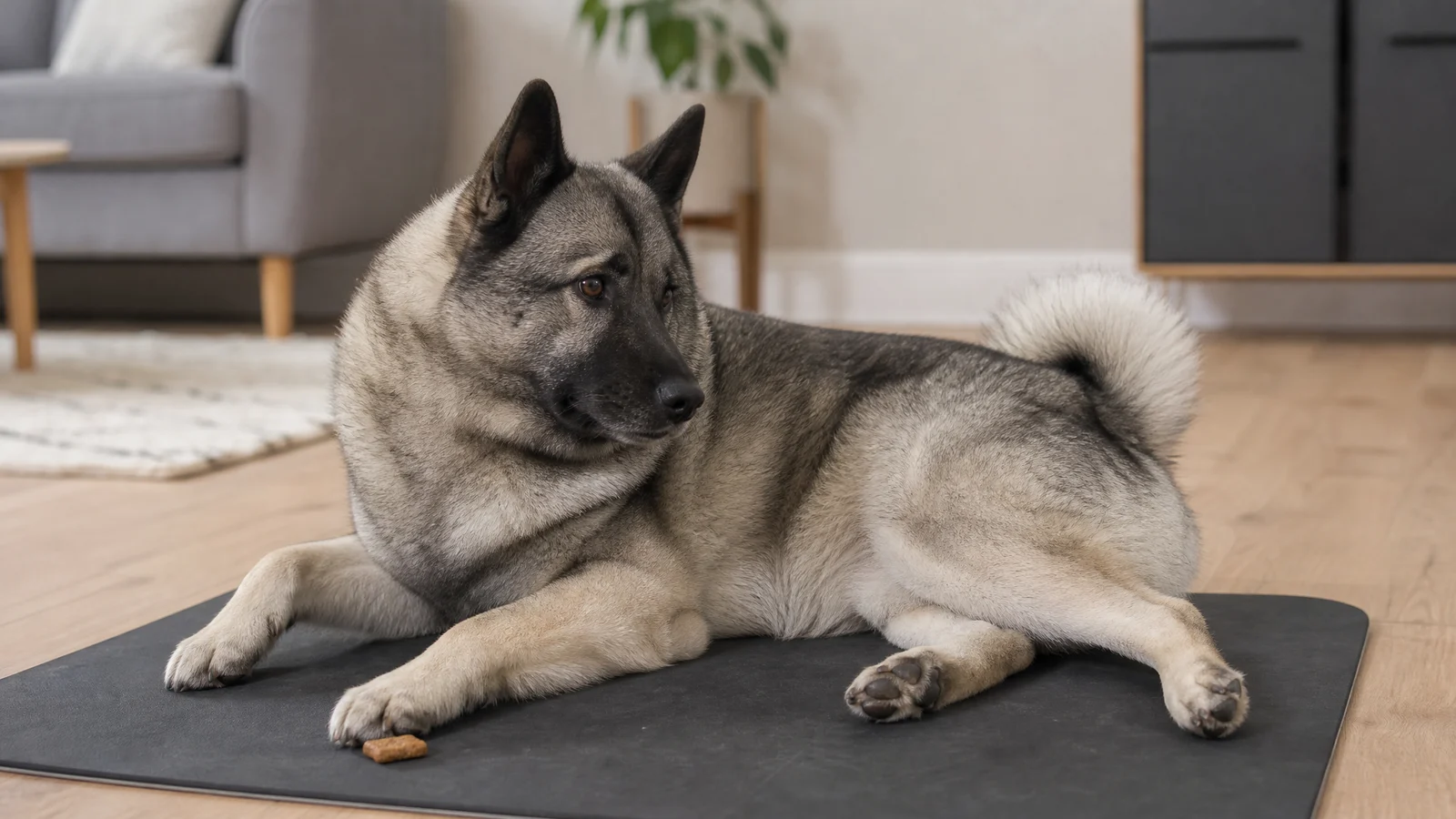
A mat gives the dog a better job than barking at the door. Teach it away from the entrance, then move it closer in small steps.
- Reward the dog for stepping onto the mat, then for lying down on it, with a treat delivered right on the mat.
- Once the dog heads to the mat reliably, attach a cue word and reward them for staying put a little longer each round.
- Practice with small distractions, such as a door opening or a visitor walking by, and reward calm.
- Finally, ring the bell yourself and reward the dog for heading to the mat instead of the door.
Reward Quiet and Add a Cue
Here is how to teach a quiet cue. Wait for a bark, calmly say your chosen word, then deliver a steady stream of small treats as long as the barking has stopped. After several days or somewhat longer, they link the word with going quiet. Mark and reward every pause, however brief, and slowly ask for a little more each time.
Aim for a quick quiet rather than total silence. Elkhounds can learn to stop when asked, and some still let out a few small half barks, which is a perfectly good result. For the wider routine that supports this, see our guide to Elkhound daily training.
Today's Barking Fix
If you do one thing today, rehearse the doorbell using a mat and a pocketful of treats. Place the mat a few steps from the door, ring the bell yourself or have someone outside press it, and wait. When the dog offers a first quiet moment, even half a second of silence, say your marker word and then give a treat on the mat. Then end the session while it is going well.
This is the right first step because it targets the one trigger you can predict, and Elkhounds learn fast when the pattern is clear. It also changes what the bell means, from a signal to guard the door to a signal that treats appear on the mat. We have focused on this breed's behavior and training for many years, and this small, repeatable rehearsal is a good place to start.
The deep bark will never disappear, and it should not. What you are teaching is a short report followed by a calm settle, which is exactly what a vigilant, affectionate watchdog can learn to give.
 Training basics“Didn't We Already Do This?” Keeping an Elkhound Engaged in Training
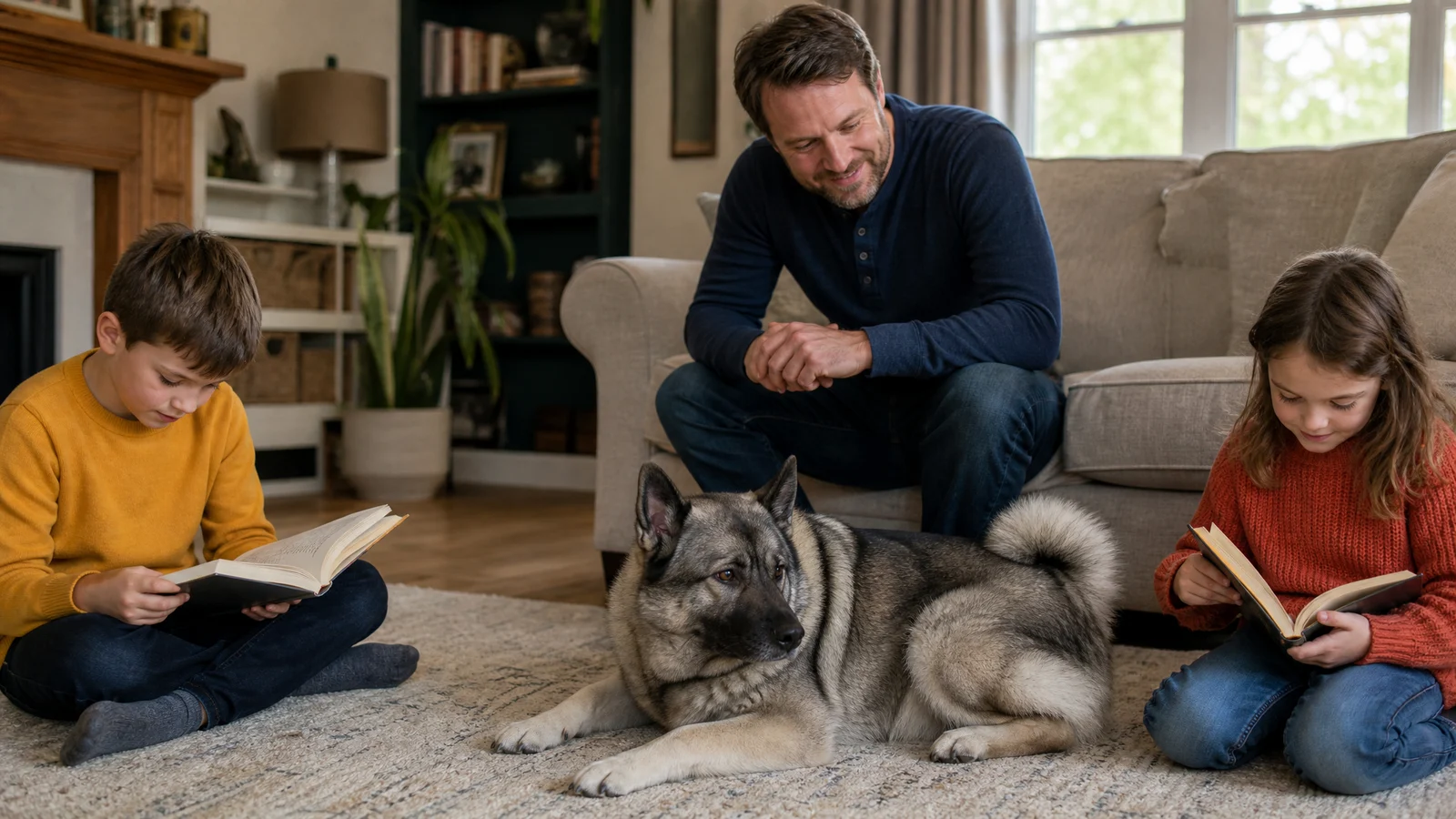 BehaviorIs a Norwegian Elkhound a Good Family Dog?
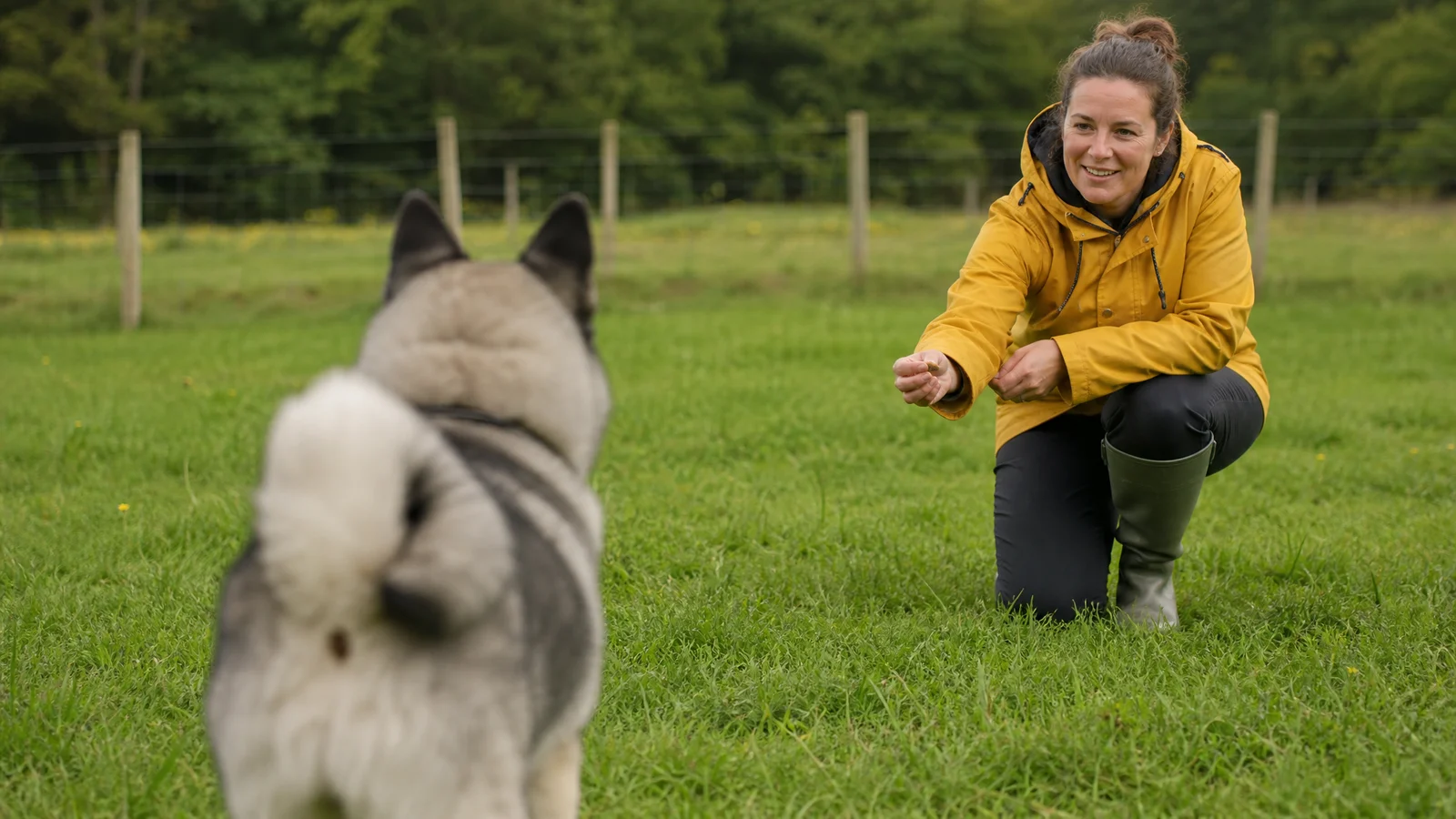 Training basicsTeaching a Reliable Recall to an Elkhound Who Wants to Roam