 Elkhound
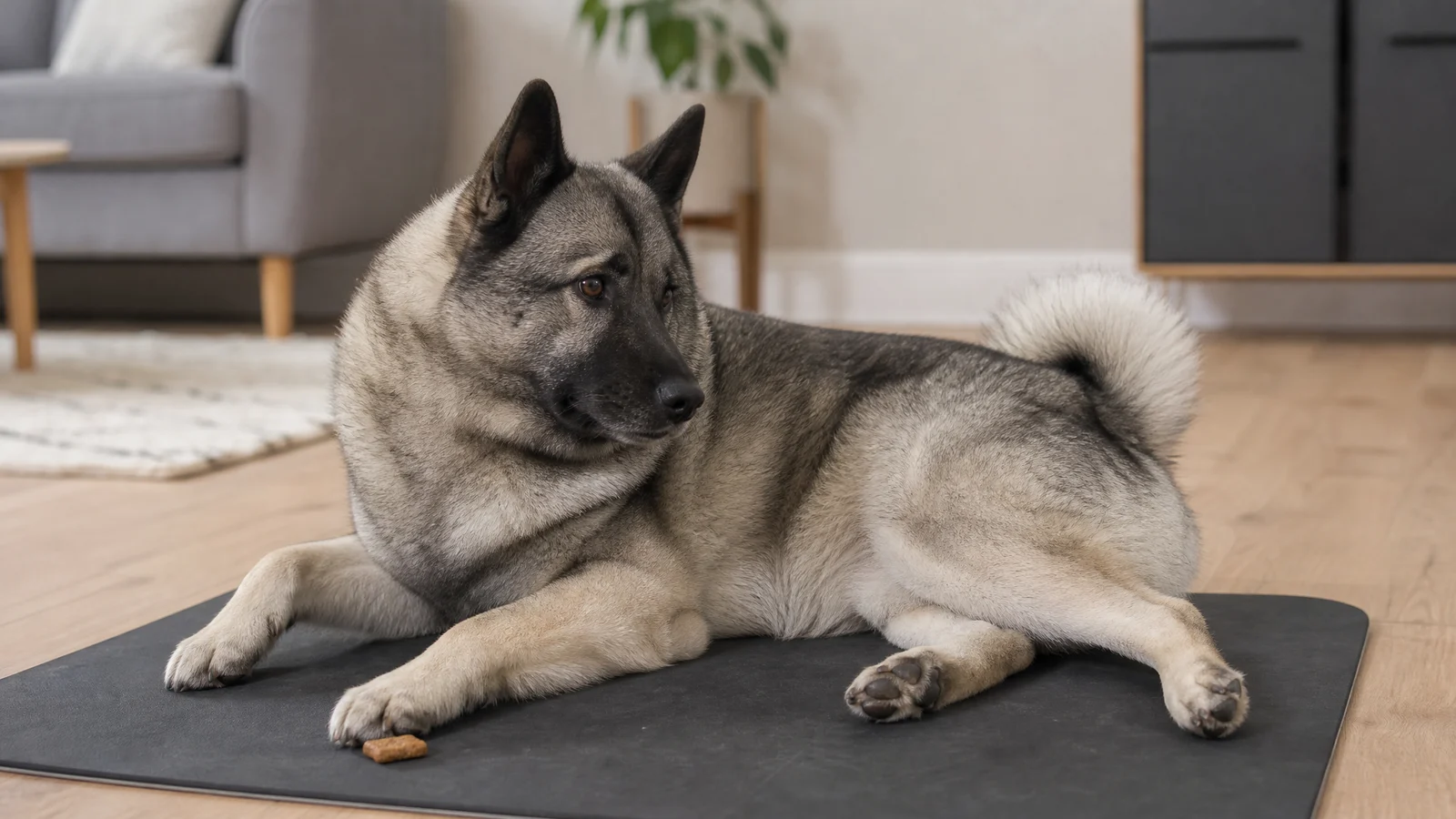
Why does an Elkhound seem bored as soon as they have learned the exercise? Often the dog is not tired of training. They are tired of receiving the same question after the answer is already clear, especially when nothing about the setting, reward, or next choice changes. That distinction keeps a short pause from becoming a verdict about the dog.
The answer is not constant novelty. A bright dog still needs clear criteria and practice. Engagement improves when repetition has a purpose, sessions end before interest drains away, and familiar skills reappear inside useful games instead of one long drill.
This sorting casebook separates five common pictures: the finished learner, the missing paycheck, the overloaded dog, the unclear lesson, and the dog whose change may not be boredom at all. Match the behavior you see before changing the plan. Read on for case patterns, mid-session checks, reward repairs, and the point where a different kind of help is wiser. The separate cases prevent one fashionable solution from being applied to every slowdown.
Read Engagement Before Adding More Training
Begin with the first minute. Does the Elkhound approach willingly, take food gently, offer familiar behavior, and return after a release? Those signs show that training is available even if enthusiasm drops later.
AKC describes the breed as highly intelligent and quick to learn, followed by an attitude summarized as “Didn’t we already do this 12 times?” Its breed account also notes that obedience-ring repetition may not suit them. That is a useful tendency, not an explanation for every disengaged dog. We use that description to shape session length while still observing the individual.
Look at the whole body. Sniffing can be a normal break, while frantic scanning, a closed mouth, food refusal, repeated scratching, or attempts to leave can signal stress. A dog who rests after a release differs from one who cannot settle.
Use a simple mid-session check. Answer it before selecting the case that fits the session.
- Can the dog take the reward they accepted at the start?
- Can they perform one very easy familiar behavior?
- Do they return voluntarily after a brief release?
- Does moving to an easier setting restore a loose body?
The answers decide which case to open. Do not call every pause stubbornness or every fast response enthusiasm. Engagement includes comfort, clarity, and a reason to take another turn.
Set a baseline on an ordinary day. Note how many useful turns occur before attention fades, which reward keeps its value, and how the dog behaves after release. The next session can then be shorter than the point where quality usually drops.
Also compare training with the rest of the day. A dog who has missed normal movement or rest brings a different body to the lesson. Adjust the session rather than expecting a marker and treat to erase every unmet need.
Norwegian Elkhound Training After the Lesson Is Learned
This dog begins sharply, answers correctly, then slows after several identical repetitions. The cue is understood. Continuing to request the same response in the same place for the same reward adds fatigue without adding much useful information.
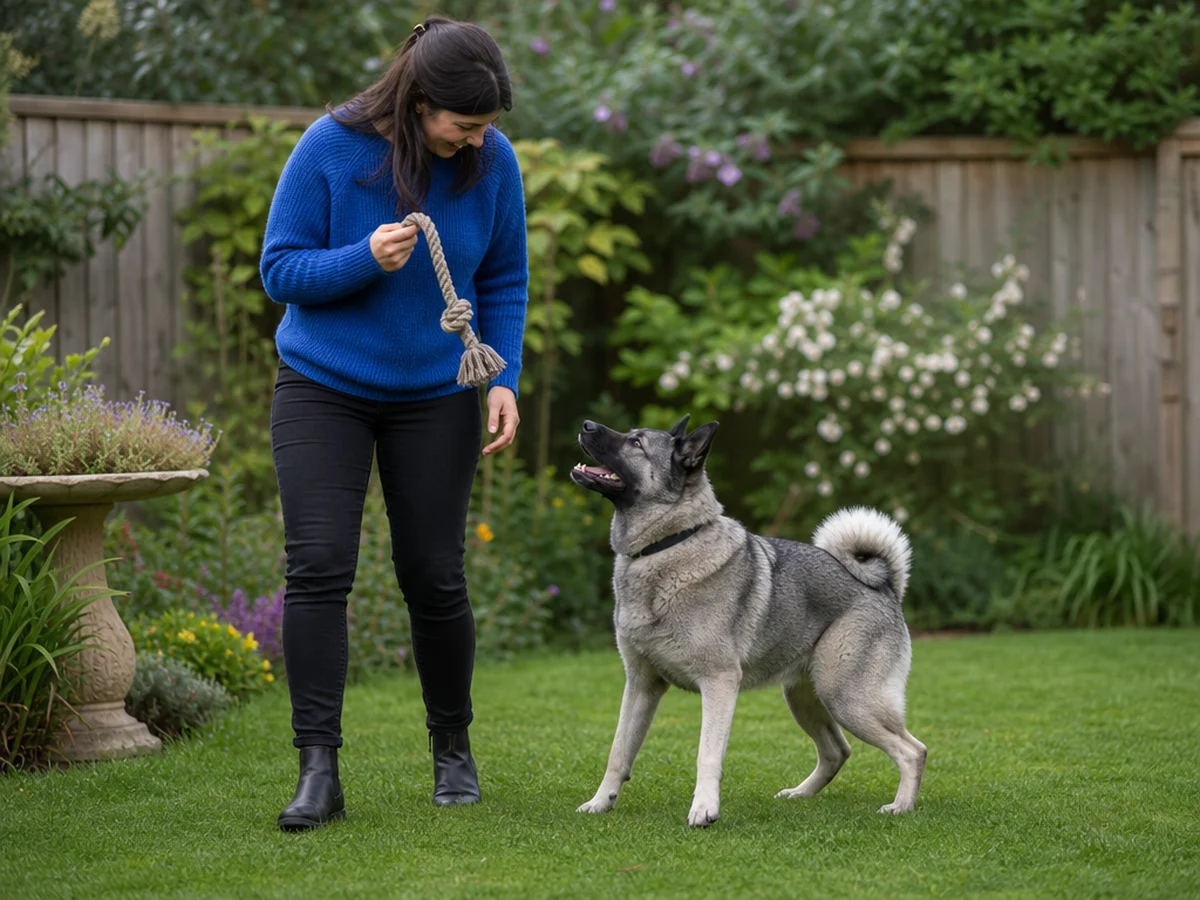
Case A and the Twelfth Sit
The handler asks for sit again because the previous sit was good. The Elkhound looks away, scratches, or offers a down. That may be an attempt to change a solved pattern rather than a loss of the skill.
Stop after a small group of clean responses and release the dog. On the next session, use the sit where it has a job, such as before a door opens or while a leash is clipped. Function gives familiar behavior a new consequence. The lesson now checks whether the behavior works, not whether it can be repeated endlessly.
Maintenance still matters, but it can be distributed. One sit at the door, one before a toy begins, and one while a guest enters produce three useful contexts without a block of identical repetitions. The behavior stays fluent while the day supplies variety. This distribution also shows whether the cue transfers without building one long drill.
Do not hide a long drill behind constant prop changes. Moving from rug to mat to platform while asking for endless sits is still endless sitting. Vary the question only when the variation teaches transfer, balance, duration, or response around a real distraction.
Case B and Fast but Careless Answers
A dog may throw several known behaviors at the handler before hearing the cue. Speed here does not equal understanding. Pause, keep your hands still, and reward the first deliberate response after the actual cue.
Separate cues with a release and a breath. If sit, down, touch, and spin arrive as one stream, practice only two choices and make their signals distinct. Clarity is more engaging than asking the dog to guess faster.
For a broader foundation, the site’s Elkhound training guide explains markers and releases. Use those boundaries to make each repetition readable.
Training Casebook for a Faded Payoff
This Elkhound performs slowly from the start or watches the reward without moving toward it. The exercise may be understood, but the offered consequence does not compete with the room, the weather, the smell, or the opportunity the dog is giving up.
Reward value is contextual. Kibble can work before breakfast in a quiet kitchen and fail beside an interesting yard. Praise may matter after an easy check-in while a sniff release matters more during a walk. Test value instead of assuming it.
Case C and the Changed Setting
Lower environmental difficulty first. Move farther from the window, choose a quieter patch, or return indoors. If the dog immediately works for the same food, distraction was the main change. Better treats alone would not have fixed the setup.
If interest remains low, compare two safe rewards in easy repetitions. Keep pieces small and delivery prompt. The reward should arrive where the useful response ends, because placement helps explain which choice earned it.
Watch delivery speed as well as reward type. Searching the pouch after a marker creates a gap in which the dog may wander to another activity. Prepare pieces first, then keep hands neutral until the response occurs.
Case D Finds That Training Ends the Fun
A recall that ends yard time or a check-in that removes access to a smell becomes expensive. Build life rewards into the session. Mark the return, reward near you, then release the Elkhound back to safe exploration when appropriate.
The dog learns that responding can preserve opportunity. This is especially useful in Elkhound leash training, where slack can open forward motion and planned sniffing. Cooperation no longer predicts that every interesting thing disappears.
Rotate reward types without turning the session into a guessing game. A useful menu can include:
- small food delivered quickly for precise responses
- a brief toy interaction when movement helps
- warm praise for calm voluntary choices
- release to sniff or continue along a safe route
- a genuine break with no cue attached
Training can belong in an ordinary day without becoming one long session. Brief practice refreshes useful responses while leaving room for rest, movement, and exploration. Daily does not mean repetitive. It means learning is woven into ordinary life in small pieces.
Norwegian Elkhound Training When Difficulty Looks Like Boredom
A dog who disengages after the setting changes may not be bored. They may be confused, worried, physically tired, or unable to filter the new environment. Calling that response boredom can lead the handler to add speed and novelty when the dog needs an easier question. Lowering difficulty is the first test because it can separate confusion from lost interest.
Case E and the Cue That Vanishes Outdoors
The kitchen response depended partly on the kitchen. Outdoors brings scents, sound, movement, different footing, and greater distance from the reward location. Return to a very easy version and pay as though the cue is new.
Change one variable at a time. Practice near the open door before the sidewalk, or in the yard before a busy route. A single correct response in a harder context may be enough for that session.
Case F and the Marker That Does Not Help
A marker must predict a reward and land at the wanted moment. Battersea recommends pairing a click with food in a calm place, with the reward following promptly. Its clicker basics describe that first association before the sound is used in training.
If the marker has been late or inconsistent, rebuild it away from the difficult behavior. Mark one simple action, reward immediately, and stop. The marker should clarify the exact choice, not become another cue repeated while the dog is uncertain.
Case G Finds That Novelty Raises Arousal
Some dogs become faster and louder when props, movement, and food searches appear together. That is stimulation, but it is not necessarily thoughtful engagement. Reduce the setup to one object and one response.
Use enrichment as a separate outlet when appropriate. Safe food puzzles can turn part of a meal into useful mental activity, as ASPCA explains. Its enrichment ideas can vary the day without requiring the dog to perform a long chain of cues.
Watch recovery after the game. Useful enrichment ends with the dog able to settle, drink, or rest. If searching becomes frantic or object use becomes destructive, simplify materials and supervise closely.
Training Casebook When Boredom Is the Wrong Label
We treat this final case differently because it begins with change. A dog who previously engaged and now hesitates, moves differently, startles, forgets familiar patterns, or avoids a particular position needs observation beyond session design. Do not try to out-entertain a possible health or fear problem. A change in willingness deserves a different response from a familiar pattern of disengagement.
Case H begins with a sudden change in willingness. This dog deserves careful observation before another session is planned.
End the exercise and note exactly what changed. Was the dog reluctant to sit, slow on stairs, sensitive to touch, unable to hear a cue, or distressed in one location? Specific observations help a veterinarian assess the pattern.
Continue ordinary wellness appointments and arrange a prompt veterinary visit for sudden behavior or movement changes. A reward-based trainer can help rebuild confidence or clarify a lesson after health concerns are addressed. Persistent fear, guarding, or reactivity also deserves qualified support rather than more repetitions. Written details are more helpful than trying to reproduce the change during another lesson.
Use the final contrast as a decision aid. Both lines depend on change from this dog’s ordinary learning behavior.
- Progress includes voluntary returns, quick recovery after a mistake, comfortable food-taking, and familiar skills appearing in more than one setting.
- Concern includes escalating avoidance, no recovery after difficulty drops, new physical reluctance, or distress that extends beyond training.
A brief session can still be productive. The concerning pattern calls for help, not a more exciting prop.
For the next session, choose the case that best fits and change one element only. End after a clear success or a comfortable release. An Elkhound stays engaged when the question is understandable, the payoff matters, and repetition still has something useful to teach.
 BehaviorIs a Norwegian Elkhound a Good Family Dog?
 Training basicsTeaching a Reliable Recall to an Elkhound Who Wants to Roam
 Exercise and jobsNorwegian Elkhound Service Dog and Therapy Work Training Basics