 Elkhound
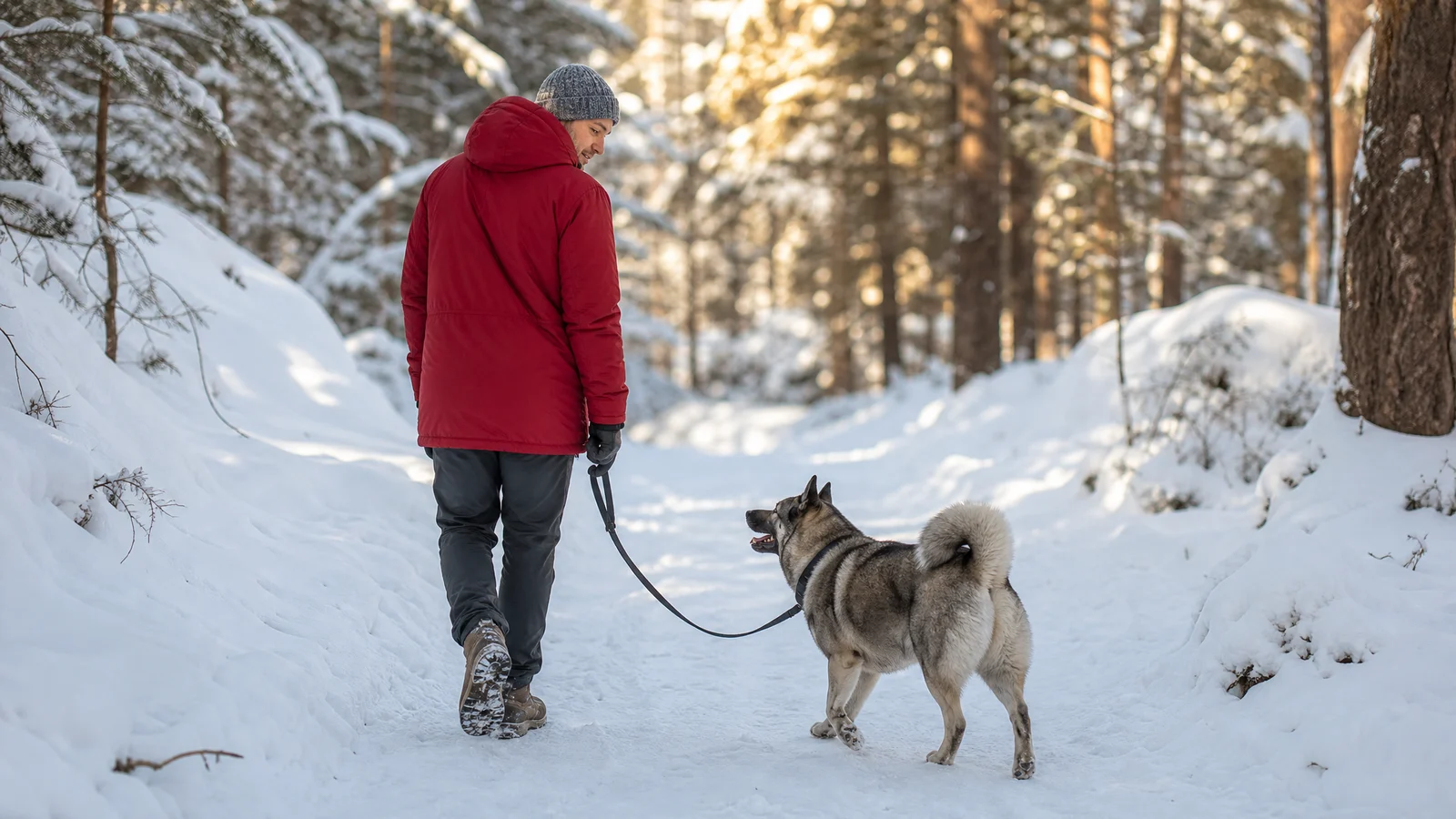
Loose-leash walking with a Norwegian Elkhound is not mainly a question of endurance. The breed is built to keep moving, while a neighborhood walk asks them to pass smells, motion, and side routes without towing the person attached to the leash.
Ordinary advice often starts with a perfect position. For an Elkhound, start with a route that makes success possible. You will map a quiet launch, a sniffing lane, a practice stretch, a distraction junction, and a calm return, then teach the leash rule inside each part. The route map solves that problem before the first formal walking repetition begins.
The destination can still matter to the dog. Loose movement earns progress, tight pressure pauses it, and planned sniffing keeps cooperation from meaning a dull march. The workshop below turns one familiar walk into a repeatable training route.
Map the Norwegian Elkhound Leash Training Route
Walk the route once without trying to improve everything. Mark where the dog can eat, check in, and move with a curved leash. Then note the doorway, corner, yard, or traffic point where the body leans forward and food suddenly matters less.
The UKC standard says the breed is constructed for agility and endurance, with gait reflecting those qualities. That enduring build helps explain why simply waiting for physical tiredness is a poor leash plan. The dog can practice pulling for longer than most people want to wait. Endurance changes the plan because distance alone will not produce a softer leash.
Check equipment fit before mapping the route. The dog should be able to move the shoulders freely, breathe normally, and turn without the leash wrapping around the legs. Recheck fit as a puppy grows or an adult changes weight, and replace worn hardware before it fails. Comfortable equipment lets leash feedback stay consistent as the route changes.
We draw the walk as five zones rather than one distance goal. The launch teaches how movement begins. The easy lane pays slack. The practice stretch builds a few connected steps. The junction tests choices, and the return lowers excitement before home.
The Quiet Launch Point
Begin inside or just beyond the door where the dog can still think. Reward a glance toward you, clip the leash without wrestling, and open the door only while the line is loose. If pressure appears, close the opportunity gently and reset farther back.
A launch is ready when the Elkhound can leave without exploding forward. You do not need a long sit. Four paws under the body, a leash curve, and the ability to take a reward are enough.
The Sniffing Lane
Choose a low-traffic edge where sniffing is safe. Walk a few loose steps, mark them, then release the dog to investigate. Sniffing becomes a planned reward instead of something the dog must drag toward.
Keep the release clear. After the sniff, invite the dog back with a hand target or cheerful turn, reward beside you, and continue. The lane teaches that returning to the route does not permanently remove access to interesting smells.
Build Loose-Leash Steps Before Distance
Stand with your shoulders facing the direction of travel and the reward prepared at the place where the dog should reconnect. Mark the first slack line, take one step, and reward before it tightens. A successful first step is more useful than ten strained ones. Delivering there also makes the next connected step easier to organize.
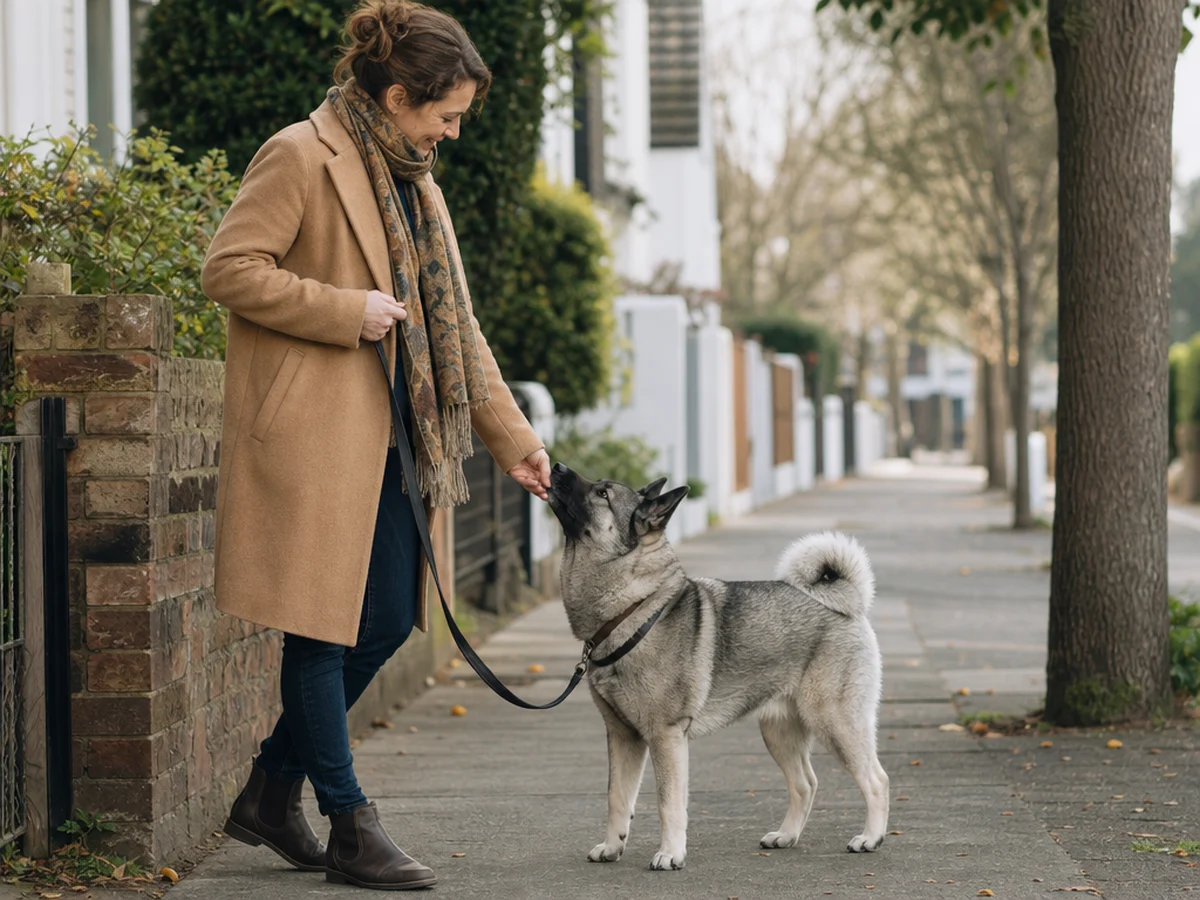
Increase only while the curve keeps returning. One step may become three, then five, with sniff releases between sets. If the Elkhound surges, the set was too long or the environment became harder. Shorten the next question.
PDSA advises stopping as soon as the dog pulls and never pulling back. Its no-pull guidance expects many stops early in training. The pause must be consistent and calm, with the leash kept steady rather than used to move the dog. That pattern gives the dog control over the consequence through their own movement.
When the Leash Tightens
Stop before your arm locks straight. Wait for the dog to shift back, turn the head, or create any slack. Mark that change, reward near your useful walking position, and move again. The earliest release of pressure is worth paying.
Do not reel the dog in or repeat a cue while they lean harder. Steady feet make the consequence clear. Tightness stops access, while the dog’s own softening restarts it.
When the Dog Checks In
A voluntary look is a valuable route choice. Mark it even when the dog is slightly ahead, then deliver the reward where you want them to reconnect. Check-ins let you guide the walk before pressure develops.
Do not demand eye contact for every step. The Elkhound should be able to look around and sniff while remaining aware of the person. Rewarding occasional reconnection creates that balance.
When Progress Stalls
If every few feet become a stop, leave the difficult stretch. Turn toward an easier lane, scatter a few treats in a safe patch, or stand quietly until the body loosens. Continuing the same contest only rehearses frustration.
Best Friends warns that allowing pulling to work even occasionally can preserve it. Their walking advice also supports changing direction. Use that change as a smooth route choice, not a sharp surprise.
When Rewards Lose Value
Food refusal can mean the environment is too intense, not that the dog is unmotivated. Add distance from traffic, another dog, or a compelling smell. Once the dog can eat and move softly again, practice there rather than testing the limit.
Compare rewards too. A brief sniff, forward movement, praise, or food may matter differently across the route. Keep several options and use the one that competes in that zone.
Use the Norwegian Elkhound Leash Route Workshop
Now connect the zones, but do not give each equal time. The easy lane should occupy most of an early walk. The distraction junction may receive only one successful approach before you retreat to a place where the dog can recover.
The table is a planning tool, not a mileage schedule. Adjust the route to the individual Elkhound, current weather, footing, traffic, and ability to respond. A shorter workable path teaches more than a long route spent at full extension.
| Route Zone | Handler Job | Elkhound Success | Reward or Reset |
|---|---|---|---|
| Launch | Open access only on slack | Leaves with four paws controlled | Forward movement |
| Easy lane | Mark voluntary check-ins | Leash repeatedly returns to a curve | Food or praise |
| Sniff stop | Give a clear release | Investigates without dragging | Access to the smell |
| Practice stretch | Link a few useful steps | Rejoins after looking around | Sniff break |
| Junction | Create distance early | Notices and can still respond | Turn to an easier lane |
| Return | Lower pace and difficulty | Arrives able to settle | Water and quiet rest |
Workshop Notes From the Full Route
Place the hardest zone in the middle rather than at the doorstep. That allows the dog to begin with successful movement and finish with a calmer pattern. If the junction overwhelms them, skip it and use another easy loop.
Track leash shape, not blocks completed. A route with frequent curves, check-ins, and comfortable sniffing is progressing. Distance can expand later without becoming the main reward for pulling.
Run the workshop at different quiet times before using a busy hour. Morning delivery traffic, school dismissal, and evening dog walking can transform the same block. Time is one route variable, so change it separately and return to the easier hour if the leash stays tight. Route notes should therefore include the hour as well as the physical location.
Let household members use the same map. They can choose different reward delivery styles, but slack must open progress for everyone. If one walker is not ready to train at a difficult junction, that person should take the easier loop instead of allowing a full-length pull through it. Shared rules matter more than having every person walk with identical mechanics.
Rehearse Leash Training at Route Junctions
A junction is any point where the dog’s preferred route and yours separate. It could be a squirrel tree, a gate, a parked truck, or a path toward another dog. Approach only close enough that the Elkhound can notice and still turn.
Use sight lines and space before cues. Cross the street, step behind a solid barrier, or arc into a driveway where permitted. Distance is not giving up. It restores the dog’s ability to learn.
Turn Before Full Extension
Practice the turn on an empty stretch first. Say the cue once, rotate your shoulders, and reward as the dog follows. Keep the movement broad so the leash remains a guide rather than snapping tight.
At a real junction, turn when the head first locks or pace quickens. If the dog can follow and eat, the timing worked. If they cannot, create more distance before trying another repetition.
Keep turns infrequent enough that the route stays understandable. Several rapid reversals can make a dog scan the handler instead of moving comfortably, and they can frustrate an Elkhound who never reaches a planned sniff point. Choose one early turn, reward the follow, then settle into the easier direction. A predictable turn should lead somewhere useful rather than becoming another drill.
A separate long training line can support recall practice in suitable open areas, as the RSPCA notes in its recall guidance. It is not the tool for ordinary sidewalk leash walking, and it does not replace secure handling around traffic.
Finish Leash Training With a Recoverable Walk
The final part of the route should feel easier than the middle. Reduce the number of training questions, allow a safe sniff, and reward one or two natural check-ins. A dog who comes home scanning and pulling harder did not recover just because the walk ended. Recovery begins on the route, not only after the water bowl appears.
Expect loose-leash walking to improve in sections before it becomes the default. The launch may become easy while one junction remains difficult. That is normal route information, and it tells you where to add distance or choose a different time.
For a wider reward system, use the site’s Elkhound training starter guide. The adult Elkhound training audit can also help when a long-practiced pulling pattern needs one clear replacement. The route should be adjusted whenever safety or repeated lunging makes practice hard.
Keep routine vet care current, and arrange an extra visit when pulling changes suddenly, gait looks uneven, or ordinary equipment becomes uncomfortable. For repeated lunging or handling concerns, seek an experienced humane trainer who can watch the route and help adjust distance and timing.
Use this return-route checklist after a harder junction. This quick review protects the quiet finish you planned.
- Choose the broadest quiet line back toward home.
- Reward one natural check-in before asking for another.
- Allow a safe sniff where the leash can remain curved.
- Finish with water and ordinary rest rather than more drills.
Long term, pleasant walks are built from many small route decisions. Slack opens movement, pulling pauses it, and sniffing remains part of the bargain. The Elkhound still gets to inspect the world, but they learn that the best path through it keeps a person comfortably connected.
 Training basicsWhere to Start Training a Norwegian Elkhound: Reward-Based Basics
 Puppy trainingSocializing Your Elkhound Puppy With Calm Introductions
 BehaviorHow to Teach Kids and Your Norwegian Elkhound to Get Along