 Elkhound
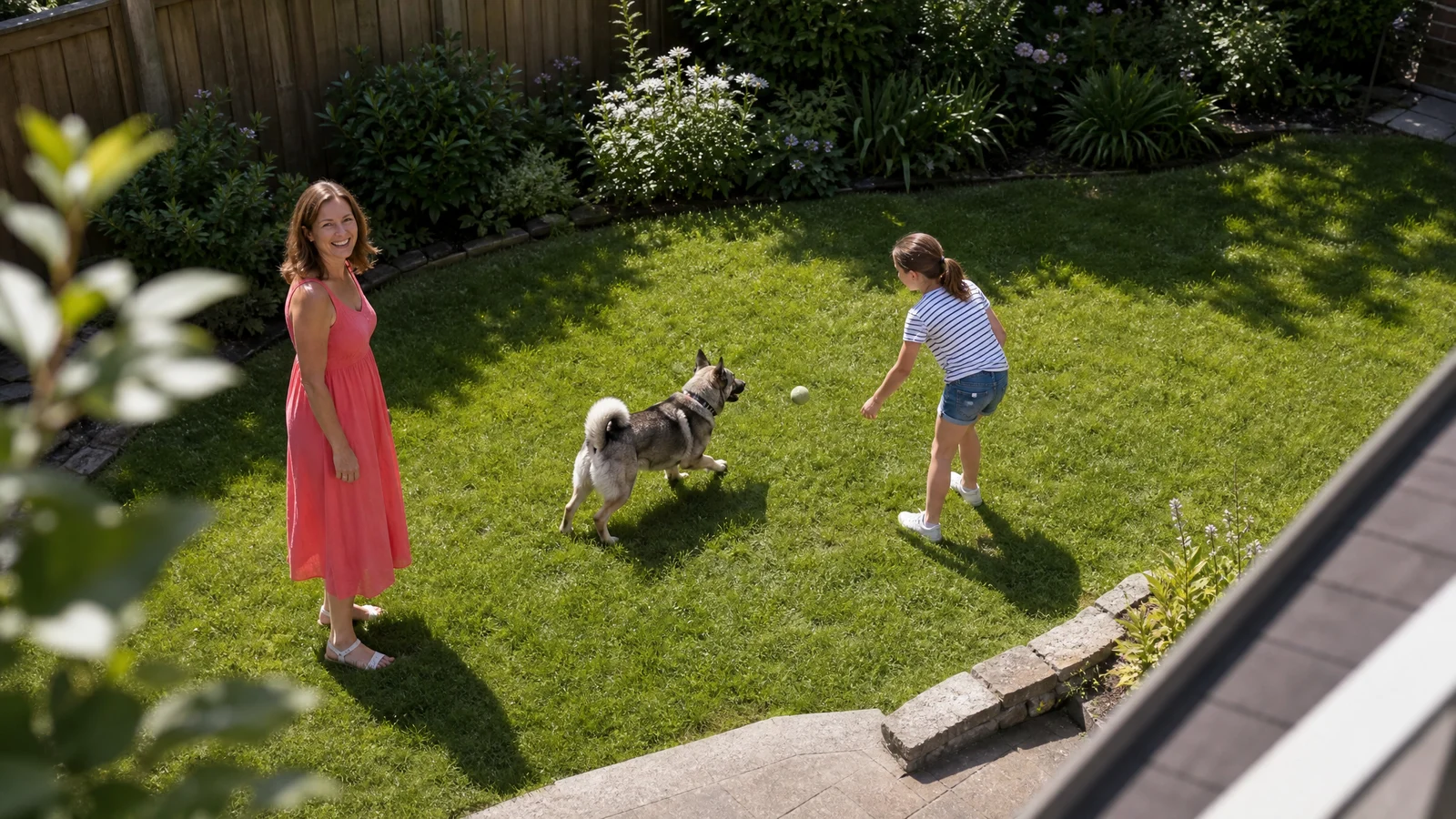
A child squeals and bolts down the hall. The Norwegian Elkhound is on their heels, circling, barking, and bouncing, and the whole house seems to be shouting. A scene like this can look like trouble. It usually is not aggression.
What you are watching is an energetic, playful dog meeting a child's excitement. The Norwegian Elkhound is wound up, loud, and independent enough to keep the game going on their own terms. Handled badly, the chase teaches a child to fear dogs and teaches the dog that small people mean chaos. Handled well, it grows into one of the warmest bonds in the house.
This article looks at socializing a Norwegian Elkhound with children, so you can stage the first meetings, give kids rules that fit their age, reward calm, read stress signals, and know when to call a professional. We have trained this breed for many years, and the steps follow the order we would do them.
A Norwegian Elkhound Bred for Farm and Forest
To understand how an Elkhound treats children, start with the work the breed was made for. These Norwegian dogs lived and worked around farms and in the forest, and the breed standard still describes them as bold and energetic, an effective guardian yet normally friendly, with great dignity and independence of character.
That working past left three traits that matter in a house with kids.
The first is a big voice. Many owners find their Elkhound much more vocal than any dog they had before, with a strong urge to check and announce everything. A family should plan for that noise before the dog arrives. Tell children early that a loud Elkhound is a normal Elkhound, not an angry one.
The second is independence. The breed's hunting heritage gives them a mind of their own, so a dog who wants a say in what happens to their body will not enjoy being hugged, ridden, or hauled around by small hands.
The third is a deep bond with the family. Elkhounds can be protective, even possessive, of their people and property. They are also normally friendly, reserved until introductions are made and trustworthy friends afterward. That combination is why an introduction plan pays off so well with this breed.
Socializing an Affectionate, Playful Norwegian Elkhound Within Limits
Elkhounds score 5 out of 5 for affection with family and 4 out of 5 for playfulness. They want to be in the middle of everything, which delights children right up to the moment the dog's enthusiasm outweighs a small person's balance. Bumping, circling, and loud bouncing are the usual problems, far more often than anything meaner.
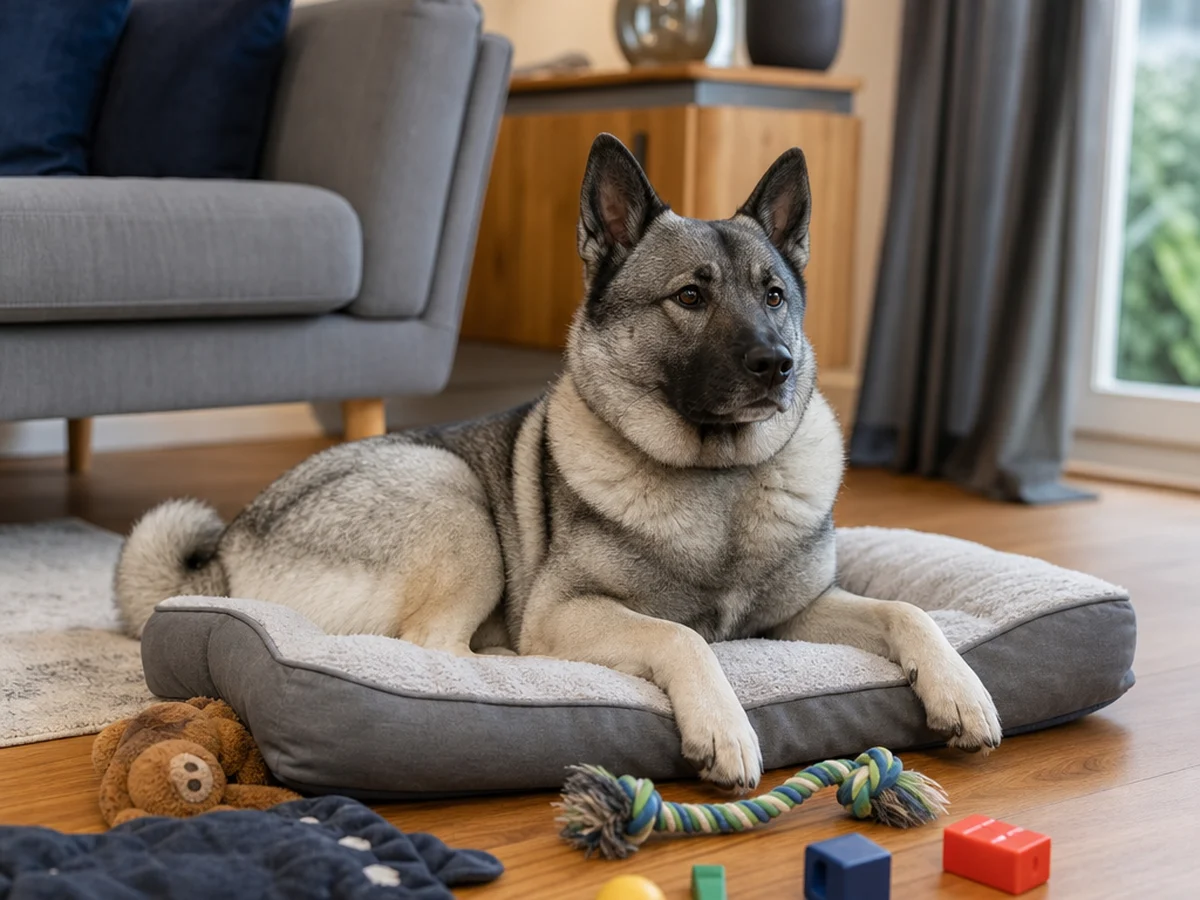
Energy feeds all of it. Breed guidance calls for consistent exercise of 20–30 minutes twice a day, and a dog who misses it struggles to settle into the calm housepet role. Mental stimulation needs rate 4 out of 5 as well, so sniffing walks and short training games count.
A popular tip says to tire the dog out and the kid problem solves itself. We disagree. A tired Elkhound still has a loud voice and a strong sense of fun, so the children need clear rules no matter how long the walk was.
Play Noise or Alarm Noise?
For some Elkhounds, barking outdoors is simply part of the fun. Other owners have quiet dogs who bark rarely, mostly outside or at passing cars. Learn which you have, because the two kinds of barking call for different responses.
| What you notice | Play barking | Alarm barking |
|---|---|---|
| Body | Loose, wiggly, bouncing | Stiff, tall, weight forward |
| Sound | Bursts that come and go with the game | Sharper, repeated, aimed at one spot |
| Where it happens | Usually outdoors, mid-game | Doors, windows, fences, new arrivals |
| Your move | Calm the game down before it climbs | Call children away and let the dog settle |
Either way, keep children from running wildly around the dog. Running feeds excited barking, and a calm walk to a quieter activity ends it faster than any shushing.
What a 3-Of-5 Rating Means for Socializing With Kids
The AKC rates the breed 3 out of 5 for young children, on a scale where 1 is "Not Recommended," 3 is "With Supervision," and 5 is "Good With Children." Read that middle number literally. It does not say the dog is unsafe. It says the arrangement works when an adult is part of it, and it is no hands-off guarantee.
Several traits explain the middle score. Vigilance rates 5 out of 5, so a shrieking, sprinting child can set off excitement and alarm at the same time. Add the dignity and independence the standard mentions, and you have a dog who may not tolerate being grabbed.
Real supervision is specific. It looks like this:
- You stay close enough to reach both child and dog in a couple of steps.
- You watch the dog, not your phone, and you end a game that is getting louder, faster, or rougher before anyone is upset.
- You hold the treat bag, the leash, and the food bowl until a child can handle them with coaching.
- When nobody can watch, the dog is in the retreat space or behind a closed gate.
Visiting children need the same rules as your own, and they know nothing about your dog. Let the dog settle first, keep a baby gate between them until everyone is calm, and brief guests before they come through the door.
Socializing a Norwegian Elkhound Puppy to Children
The plan is the same for a puppy or an adult newcomer: go slowly, keep sessions short, and always leave the dog an exit. Elkhounds are reserved until introductions are made, so a staged start suits them far better than a rush of hands and noise.
Staged First Meetings
Treat these as stages rather than a script. Stay at each one until the dog looks loose and curious, then take the next.
- Start with a good walk or play session so the meeting does not open with stored-up energy.
- Have an adult hold the leash, or put a baby gate between dog and child.
- Ask the child to sit on the floor with hands in their lap and a low voice.
- Let the dog decide whether to sniff, stay, or wander off.
- Drop a treat near the dog whenever they look relaxed.
- Close the meeting while it still feels easy for everyone.
Repeat across several days, allowing a little more closeness each time. Outdoors, a long training lead gives the dog some freedom without complete free range, which suits a breed with an instinct to travel and inspect the world.
Short Sessions That End on a High
Elkhounds learn very quickly, and then the repeats can feel like "Didn't we already do this 12 times?" Children lose patience with drills fast too. Brief, varied sessions suit both.
Pick one small goal, such as a child sitting quietly while the dog lies nearby, and reward the first good moment instead of waiting for a perfect one. Stop early if the dog starts bouncing, barking in a rising pitch, or turning away. Finish with a quiet chew or a rest on the dog's bed, never a wild game.
A Retreat Space Only the Dog Uses
Pick a bed or crate in a quieter corner and make it theirs alone. The rule for children is absolute: nobody goes in, reaches in, or calls the dog out. Build the habit gradually.
Start by tossing treats onto the bed and letting the dog walk in and out freely, then mark and reward each time they lie down there. Hand over an occasional chew in the spot so it stays pleasant, and praise the dog whenever they head there on their own.
Keep it a happy place. If it becomes the spot for exile, it stops being a refuge.
Socializing Children in Calm Play and Handling
Children cannot guess what an Elkhound likes, so give them clear jobs sized to their stage. Kids vary a great deal and you know yours best, so treat this table as a starting point.
| Child's stage | What the child does | What the adult does |
|---|---|---|
| Toddlers and preschoolers | Pets gently along the shoulder and stays seated near the dog | Stays within arm's reach and handles all treats, leashes, and bowls |
| Early school-age children | Offers treats on a flat hand, asks for a sit, respects the retreat rule | Watches from nearby and coaches each step |
| Older children and teens | Joins walks, plays on cue, takes short training turns | Checks in, sets limits for visiting friends, and steps in when the dog looks tired |
Play Rules Children Can Follow
Post these where the kids can see them, and let an adult apply them the same way every day.
- Fetch and tug start only on cue, with a clear start word and a clear all done.
- No chasing the dog and no running circles around them, since that invites bumping and noisy excitement.
- No grabbing the tail, ears, collar, or a toy already in the dog's mouth.
- One pause word, such as freeze, means everyone stops and stands still.
- Calm moments between rounds earn praise and a treat.
Reading the Dog's Stress Signals
Children who can read a dog need fewer rescues. Show them the signs that mean the dog wants out.
Turning the head away or walking off while a child is still reaching is a clear request for space, as are yawning, lip licking, or a tight, closed mouth. Watch too for the whites of the eyes or a stiff, still body, and for a tucked tail, pinned ears, or crouching low. Barking that turns sharp or repetitive when a child gets close belongs on the same list.
When you see any of these, call the child away calmly and let the dog go to their space. A dog who can leave learns that people respect their signals, and that makes escalation less likely.
Praise-Based Training for a Sensitive Norwegian Elkhound
This is a dog who listens closely to your voice. The breed is sensitive to praise and reproof, and a surprising amount of communication is possible through expressions, gestures, and tone. A harsh voice can leave a sensitive dog wary of the very children you want them to love, while a warm tone and a treat teach far more. Elkhounds are also headstrong and independent, so unquestioning obedience is not the goal. Cooperation that pays is.
Begin with a marker word such as yes. In a calm, quiet room, pairing a marker with food means saying the word and giving a treat within 3 seconds, repeated several times. Once the dog understands, the marker can reward calm moments near children.
Then give the children their part.
Have the children offer treats on a flat, open hand, or drop them on the floor, so no fingers get nipped in the excitement. A quiet, friendly voice works best, because squeals tend to feed the circling and barking. Reward the dog for lying down, sitting, or strolling away calmly, not only for tricks, and ask for one thing at a time before stopping to let the dog rest.
If a game goes too far, use a calm interrupt. Say all done, end the play, and give the dog a moment apart. Wanted behavior earns attention and treats, and the rest fades. Training this breed is never finished, so our guide to daily Elkhound training for a calm home covers the everyday routine that backs this up.
Signs Socializing Is Working, and When to Call Help
Socializing an Elkhound with children is a long project, not a single course. The independence and big voice that make the breed so vivid also mean training stays ongoing, exercise stays daily, and an adult stays in the room. Keep up regular vet visits too, so a sudden change in behavior gets checked for a physical cause.
Progress looks like a relaxed, willing dog and confident kids:
- The dog's body is loose, with a soft face and a relaxed, wagging tail.
- They approach the children calmly instead of leaping or circling.
- They seek out a child for company and settle nearby.
- They use the retreat space and come back on their own terms.
- The children stop when the dog walks away and follow the play rules without reminders.
Ask a qualified professional for help when you notice any of these.
Stiffness, a hard stare, or freezing when a child approaches all count, as do growling, snapping, or a lifted lip. Steady avoidance of the children or hiding from them is another reason to call, and so is guarding of food, toys, or a favorite resting spot against the kids. A sudden change in behavior also deserves a vet visit.
Plenty of signs from the first list and none from the second mean the plan is doing its job. Keep it going, because an Elkhound who is exercised, rewarded for calm, and given a place to retreat tends to repay the effort with years of loyal, good-natured company.
 Training basicsCan You Train an Adult Norwegian Elkhound? Yes, and Here's How
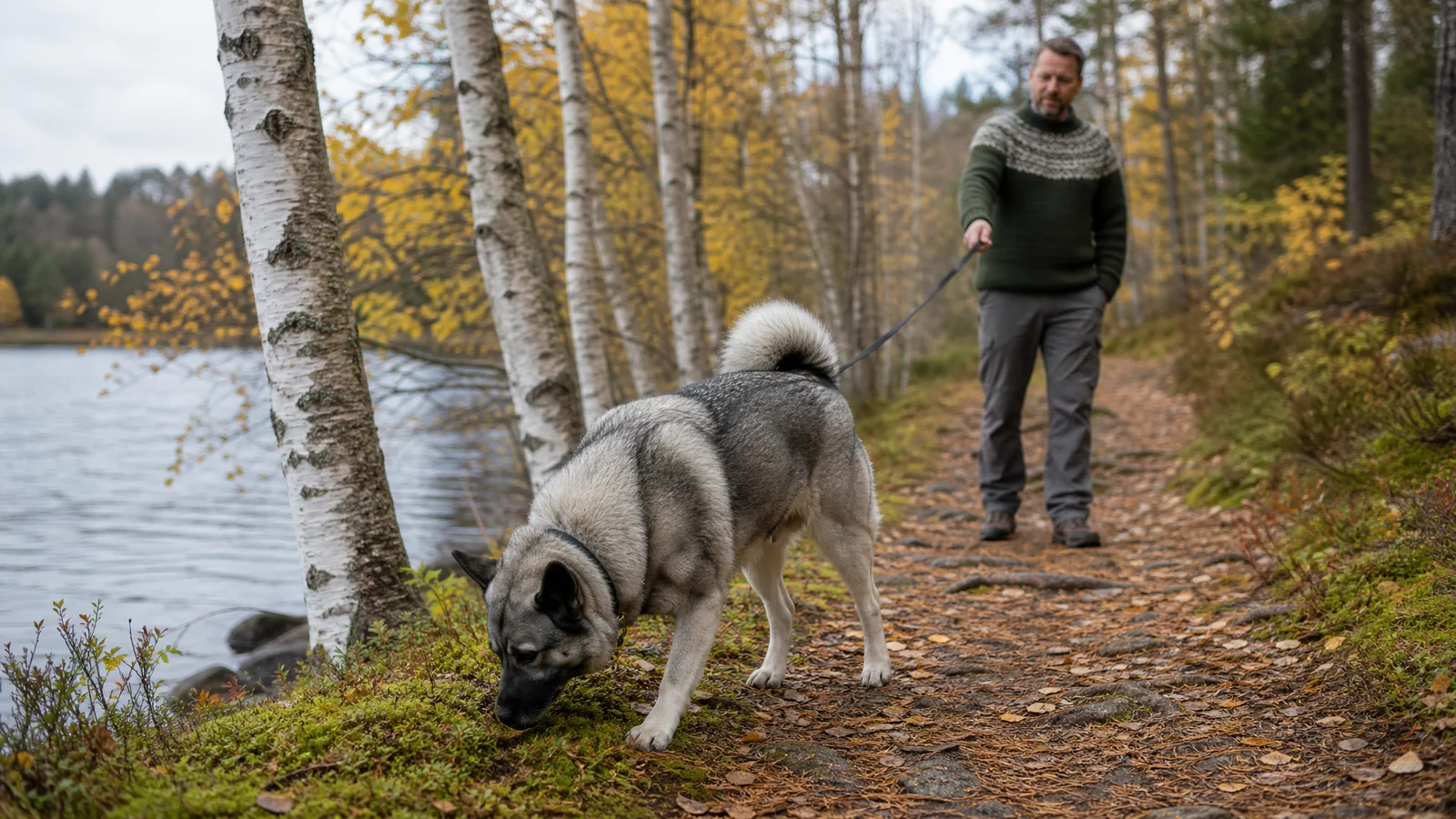 Exercise and jobsSniff Time on Walks for a Norwegian Elkhound With a Busy Nose
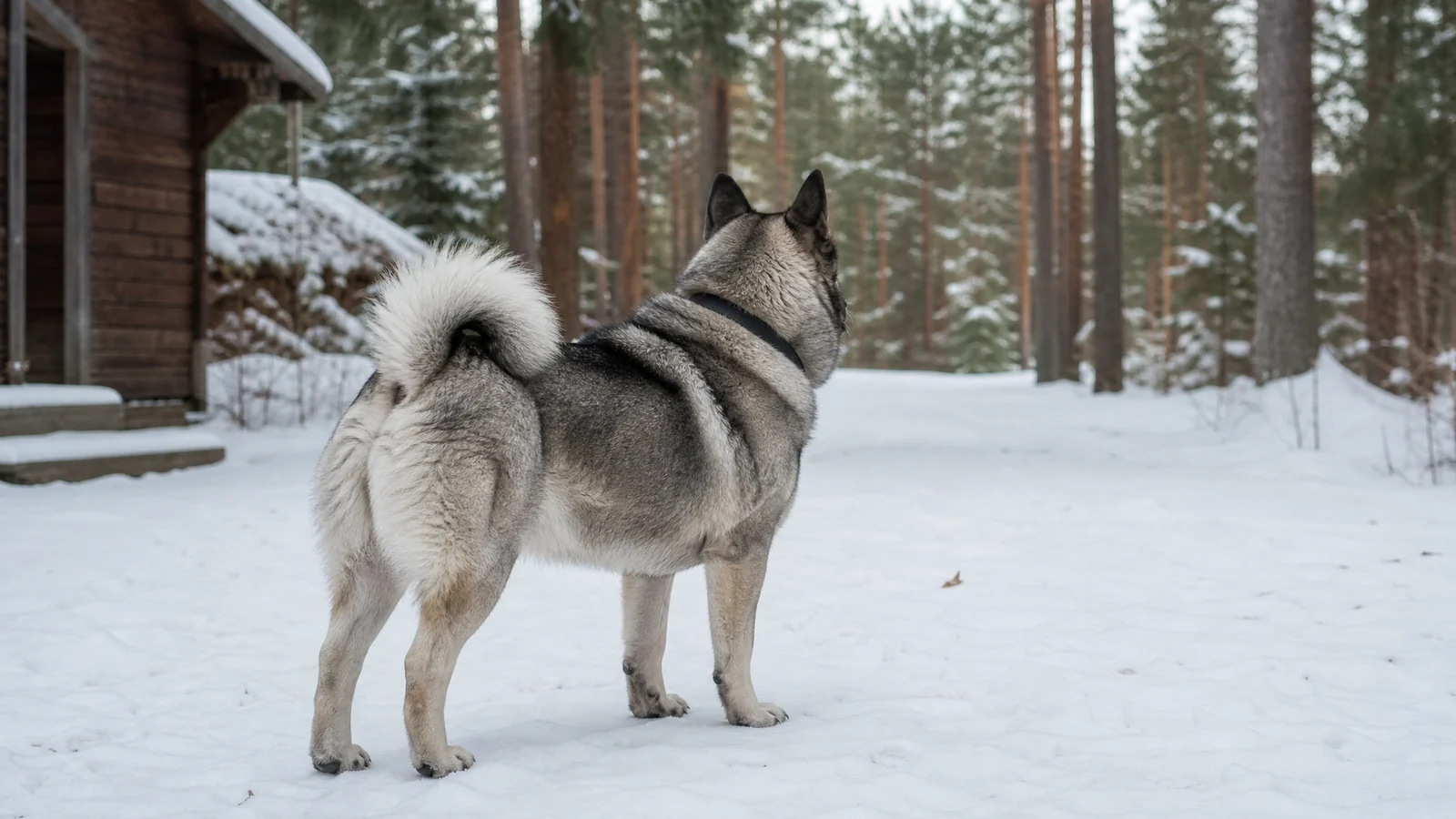 BehaviorHeadstrong but Smart: Working With an Independent Elkhound