 Elkhound
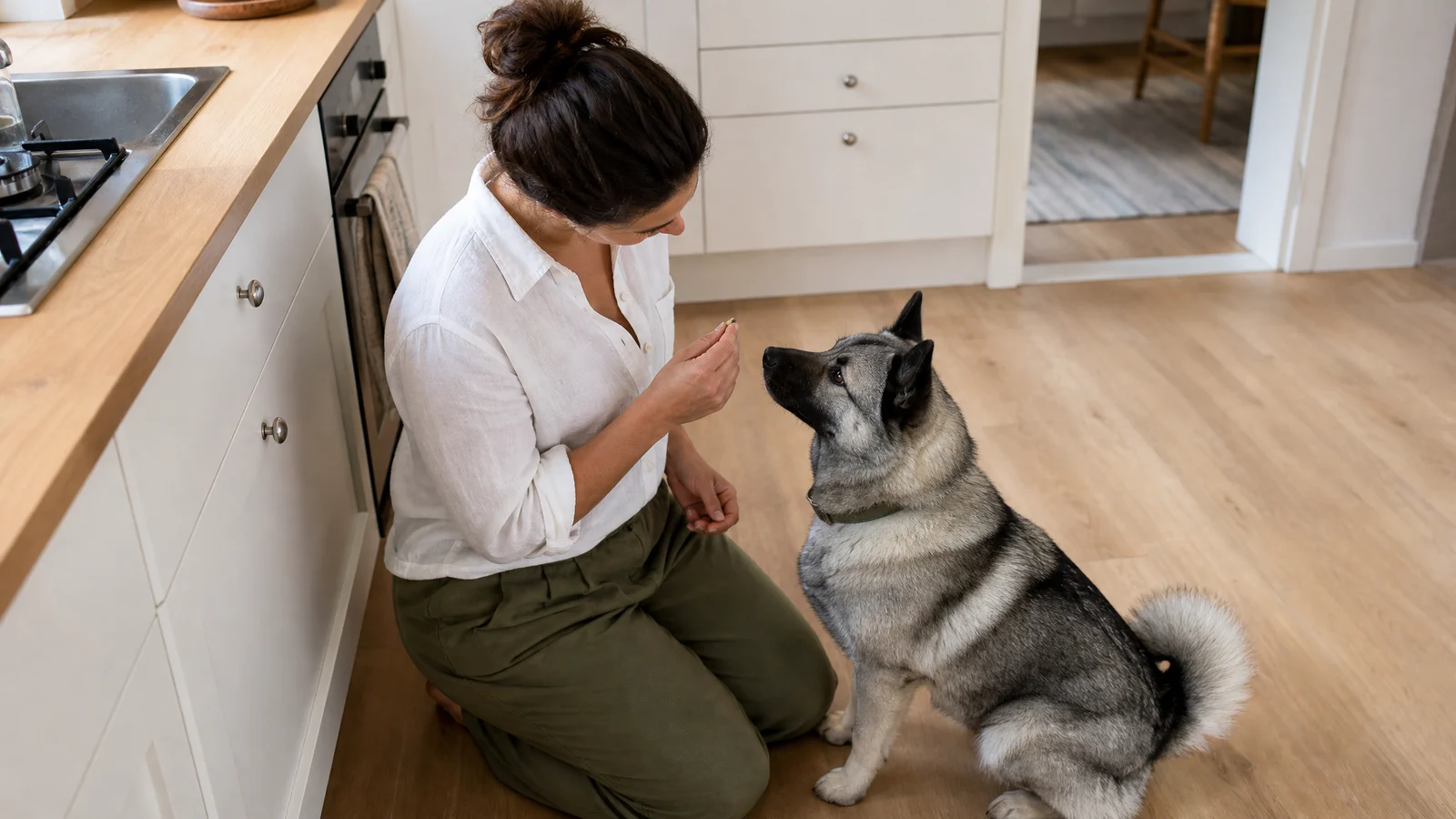
The common starting mistake is asking a Norwegian Elkhound for several cues before the dog knows how a correct choice earns anything. The fix begins at a kitchen table, with prepared rewards, one marker, one release word, and a tiny first lesson that can end successfully.
Reward-based training is structured. You decide what behavior opens access, mark it precisely, deliver something the dog values, and reset before trying again. The Elkhound gets clear information through predictable, kind teaching.
This guide walks through a starter kit that builds four basics: name response, a voluntary check-in, sit, and down. It also shows how to move those skills beyond the kitchen while keeping the breed’s quick learning, independence, and interest in the wider world in view.
The Norwegian Elkhound Training Starter Kit
Choose a quiet area with safe footing and enough room for the dog to turn and lie down. Training may happen near the kitchen table, but keep the dog away from hot surfaces, cooking traffic, dropped packaging, and foods that are unsafe for dogs.
Prepare small rewards before the dog arrives. Add a pouch or bowl, a nonslip mat, ordinary leash equipment for later practice, and a notebook if you want to track progress. In our foundation sessions, most lessons require no prop beyond food and clear timing. Prepared rewards also keep the marker from being followed by a distracting search.
Choose rewards the dog can swallow comfortably without interrupting the lesson. The goal is prompt delivery, not a large snack after every response. Set aside part of the daily food allowance when appropriate, and ask a veterinarian about food choices for an individual dog with dietary needs. Ask the veterinarian how treats should fit the individual dog’s ordinary food plan.
The table below explains the kit. Keep it simple enough that setup does not delay the reward or distract the Elkhound with objects that have no job.
| Starter Item | Purpose | Common Mistake |
|---|---|---|
| Small food rewards | Pay promptly for a precise choice | Showing food before every response |
| Marker word or clicker | Identify the exact useful moment | Marking after the dog has moved on |
| Release word | End each repetition clearly | Leaving the dog to guess when finished |
| Nonslip mat | Provide a stable learning surface | Using it to hold a reluctant dog in place |
| Short notes | Record setting, response, and reward | Writing labels instead of observations |
Put extra items away. A pile of toys, multiple treat containers, and several training tools can make the person rush. One clear question helps the dog understand what matters, and a prepared setup lets the person reward it without delay.
Marker and Release Skills for Elkhound Training
A marker tells the Elkhound which instant earned the reward. Say a short word such as “yes,” then deliver food promptly. Repeat in a calm place until the sound makes the dog expect a payoff, without asking for sit or any other behavior yet. We keep that first association simple so the sound never becomes background chatter.
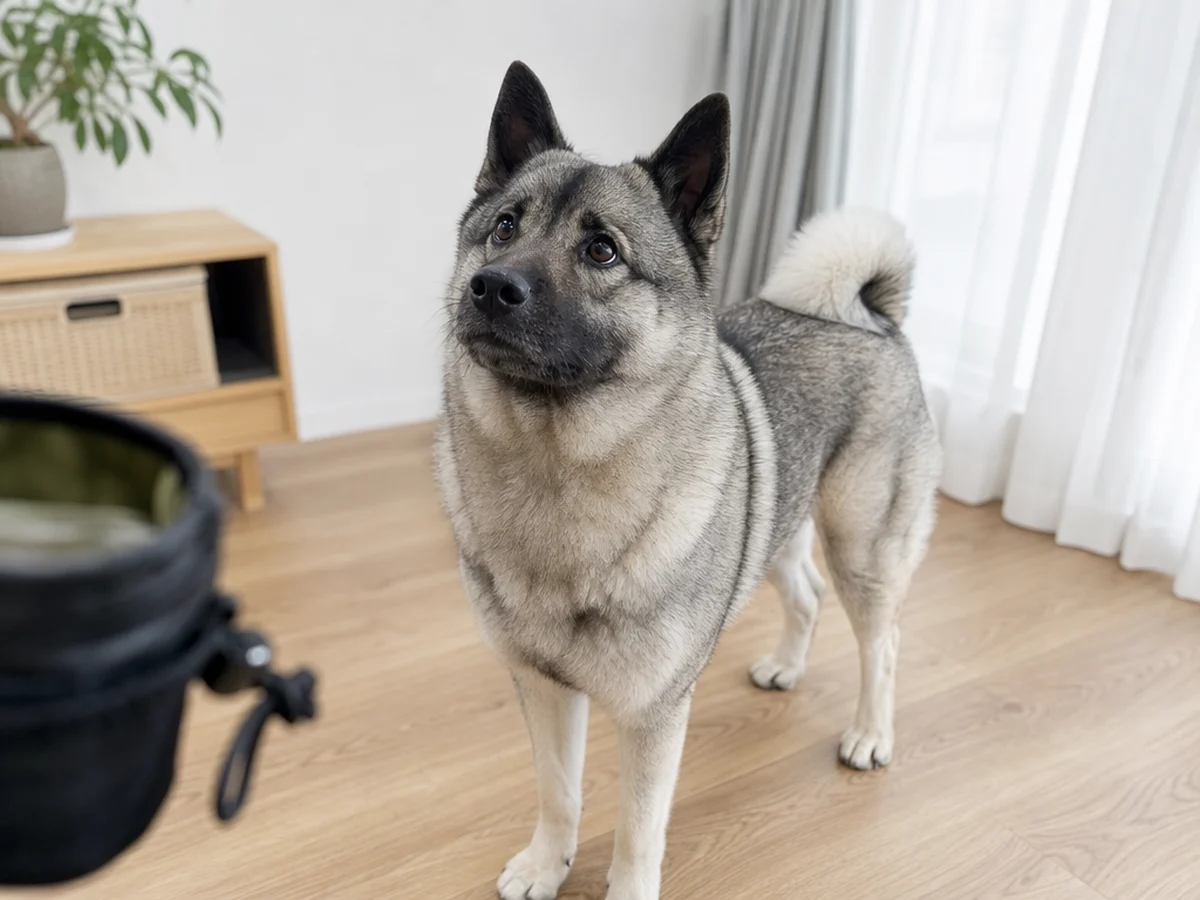
Keep the marker distinct from praise. “Yes” identifies one moment, while warm praise can continue afterward. The breed club describes Elkhounds as sensitive to praise and responsive to expression, gesture, and voice. That breed guidance supports kind handling, but precision still matters.
Add a release word such as “free” after the reward. Toss a piece a short distance on the safe floor or step away so the dog can move. The release creates an edge around the repetition and prevents the dog from holding a position indefinitely. A consistent release also prevents duration from growing accidentally.
Run a Timing Check
Choose a behavior the dog offers naturally, such as looking toward you. Mark while the head is oriented your way, then reward. If you routinely mark after the dog turns away, practice your timing without adding harder skills.
Delivery follows the marker, but it does not need to appear before the behavior. Reaching into the pouch early can become the real cue. Keep your hand neutral until after the marked choice.
Norwegian Elkhound Name Response and Check-In
Say the dog’s name once when they are nearby and not deeply distracted. Mark the first head turn toward you, reward close to your body, then release. The name should predict useful attention, not announce that several demands are coming.
Practice when success is likely. Calling from another room while the dog is eating, sleeping, or absorbed in a smell adds difficulty before the foundation exists. Begin close, reward the turn, and let the name remain uncomplicated.
Use these boundaries while the name is new. These rules preserve the name as useful information instead of household noise.
- Say it once at a distance where orientation is easy.
- Mark the first head turn and reward close to you.
- Release without attaching a second cue every time.
If there is no response, do not repeat the name louder. Move to an easier position, reduce the distraction, or make a small neutral sound before trying later. Protecting the cue is more valuable than forcing a result.
A check-in is the same orientation offered without the name. Stand quietly and wait. When the Elkhound looks toward you, mark and reward. Voluntary attention gives you a way to begin later lessons without nagging.
AKC advises against letting Norwegian Elkhounds roam freely because the urge to travel and inspect is intrinsic. Its breed overview makes outdoor attention an important long-term goal. Start indoors, then practice in secure settings with appropriate leash management.
Sit and Down as Separate Training Skills
Sit and down should not become one automatic chain. Teach each in its own short session so the cue, body position, and reward placement remain clear. Use a comfortable surface and stop if movement looks hesitant or uneven.
Shape a Comfortable Sit
Wait for a natural sit if the dog offers one. Mark before the body rises and deliver the reward at nose level, then release forward. After the response becomes predictable, say “sit” just before the movement begins.
If you use food to guide at first, move it slowly above the nose without pressing the dog’s body. Fade that hand motion quickly so visible food does not become required. Never push the hips down.
Practice beside different chairs or on another safe floor only after the first setting is easy. A cue learned near the table may need fresh rewards elsewhere. One correct response in a new place is a useful session.
Once sit is comfortable, vary duration separately from location. Reward an immediate sit first, then occasionally wait one calm moment before marking. Release before the dog gets up so the end remains clear.
Build Down Without Pressure
Begin from a comfortable stand or sit and guide food toward the floor, then slightly forward, allowing the Elkhound to follow. Mark an elbow bend or lowered chest before demanding the complete position. Reward low between the paws.
Some dogs prefer shaping. Mark looking at the mat, lowering the head, bending a front leg, and finally lying down. Progress can occur across sessions, and the dog remains free to stand or leave.
Do not pull the front legs, press the shoulders, or repeat the cue while the dog is confused. If down is suddenly difficult after being easy, pause training and discuss the movement change with a veterinarian.
Reward-Based Training Beyond the Table
Change one feature at a time. Move to the next room, then near the closed door, then into a secure quiet outdoor area. Reward generously when a familiar skill succeeds in a new context because the environment has changed the question.
AVSAB states that reward-based training can include structure, routines, and guidelines. Its humane training statement supports humane instruction while keeping household rules clear. Access to doors, walks, greetings, and sniffing can all be structured consequences.
Use everyday opportunities without turning the whole day into a test. Pick one opportunity at first so foundation work does not fill the entire day.
- Reward a voluntary check-in before opening the yard door.
- Ask for one comfortable sit while the leash is clipped.
- Mark a name response before releasing the dog to sniff.
- Use down on the mat during one quiet household moment.
RSPCA guidance explains that rewarded behavior becomes more likely and recommends brief practice. Its training overview fits an Elkhound who learns quickly. End when the dog is still willing instead of stretching the session to prove endurance.
When the dog misses, lower distraction, shorten duration, or return to the last successful place. A miss describes the current setup and training history. It calls for a clearer next opportunity.
Family consistency is part of transfer. Everyone should use the same cue and release, while rewards can vary with the situation. If one person repeats the name and another uses it once, the sound develops two different histories. Agree on the words before practice, and post them near the reward station until the household uses them naturally.
A Two-Week Elkhound Training Plan
Move through the plan in four stages, with rest days whenever the dog needs them. Repeat a stage when clarity drops, even if the calendar has moved forward.
- During the first few days, prepare the kit and build the marker-release pattern. Add the name only after the marker predicts a reward.
- For the rest of week one, practice voluntary check-ins and begin either sit or down in one easy room.
- Early in week two, introduce the second position and move one familiar skill to a nearby setting.
- Later in week two, place one skill inside an ordinary routine, reward it, and release to the activity. The Elkhound leash training workshop applies the same logic on a mapped walk.
Keep a small record during week two. Note which cue worked, where it worked, what the dog earned, and whether they returned willingly for another turn. These observations make the next plan more specific than a simple good-day or bad-day label.
At the end of the period, ask whether the Elkhound turns to their name, offers attention, and performs each position comfortably in at least one setting. Do not chase a perfect score. Choose the weakest link and make its next version easier.
Maintain regular vet checkups, and contact the clinic when the dog becomes suddenly reluctant to move or shows an abrupt behavior change. If fear, guarded rewards, or repeated confusion continues after difficulty is reduced, a humane training professional can adjust the setup and mechanics.
For an adult with an established routine, the adult Elkhound training audit helps choose one replacement habit. The kitchen-table kit should eventually become almost invisible. A marker, a reward, a release, and a clear opportunity are enough. Keep those pieces consistent while locations and real-life uses expand, and training remains an ongoing conversation rather than a course the Elkhound finishes.
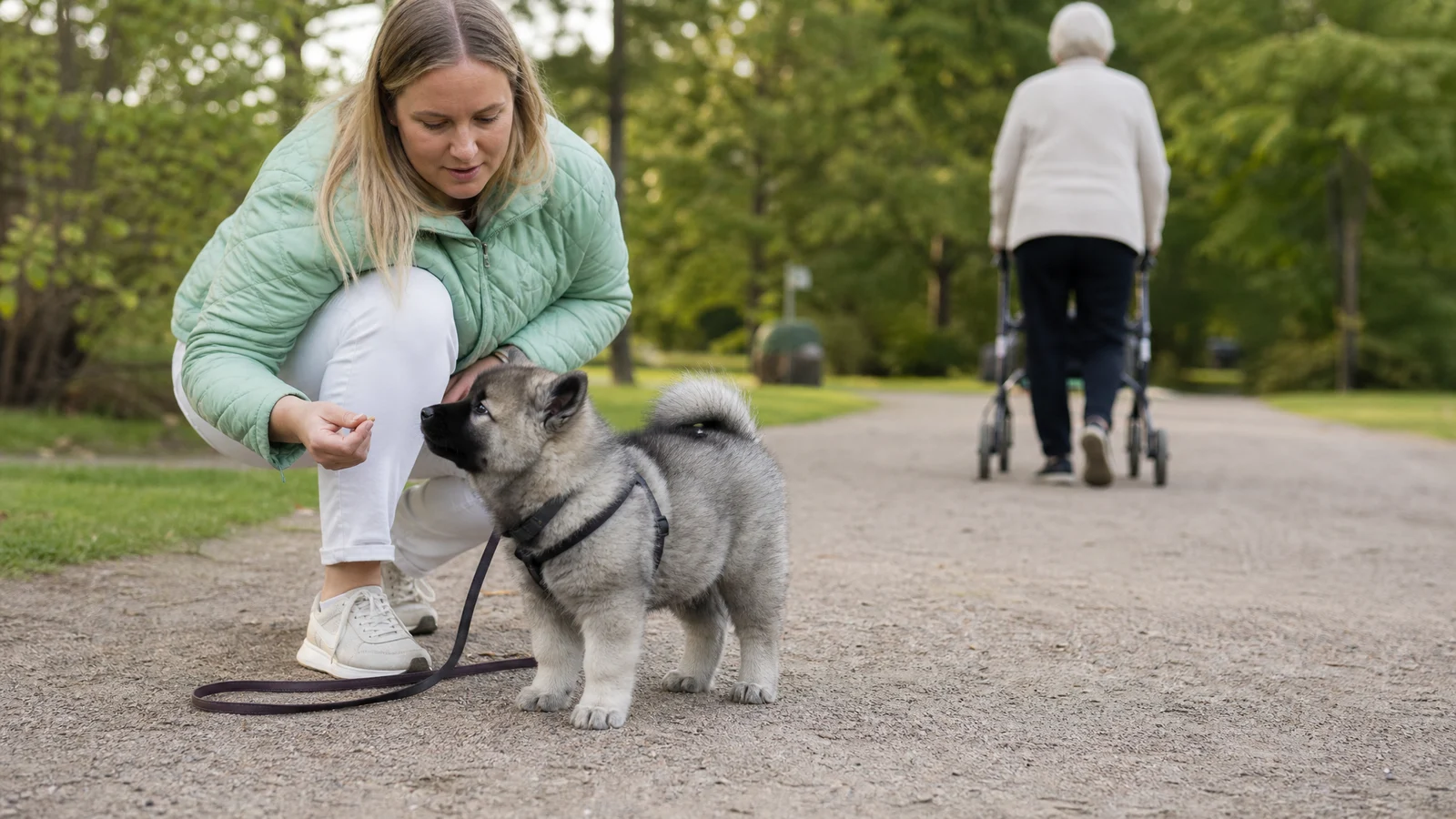 Puppy trainingSocializing Your Elkhound Puppy With Calm Introductions
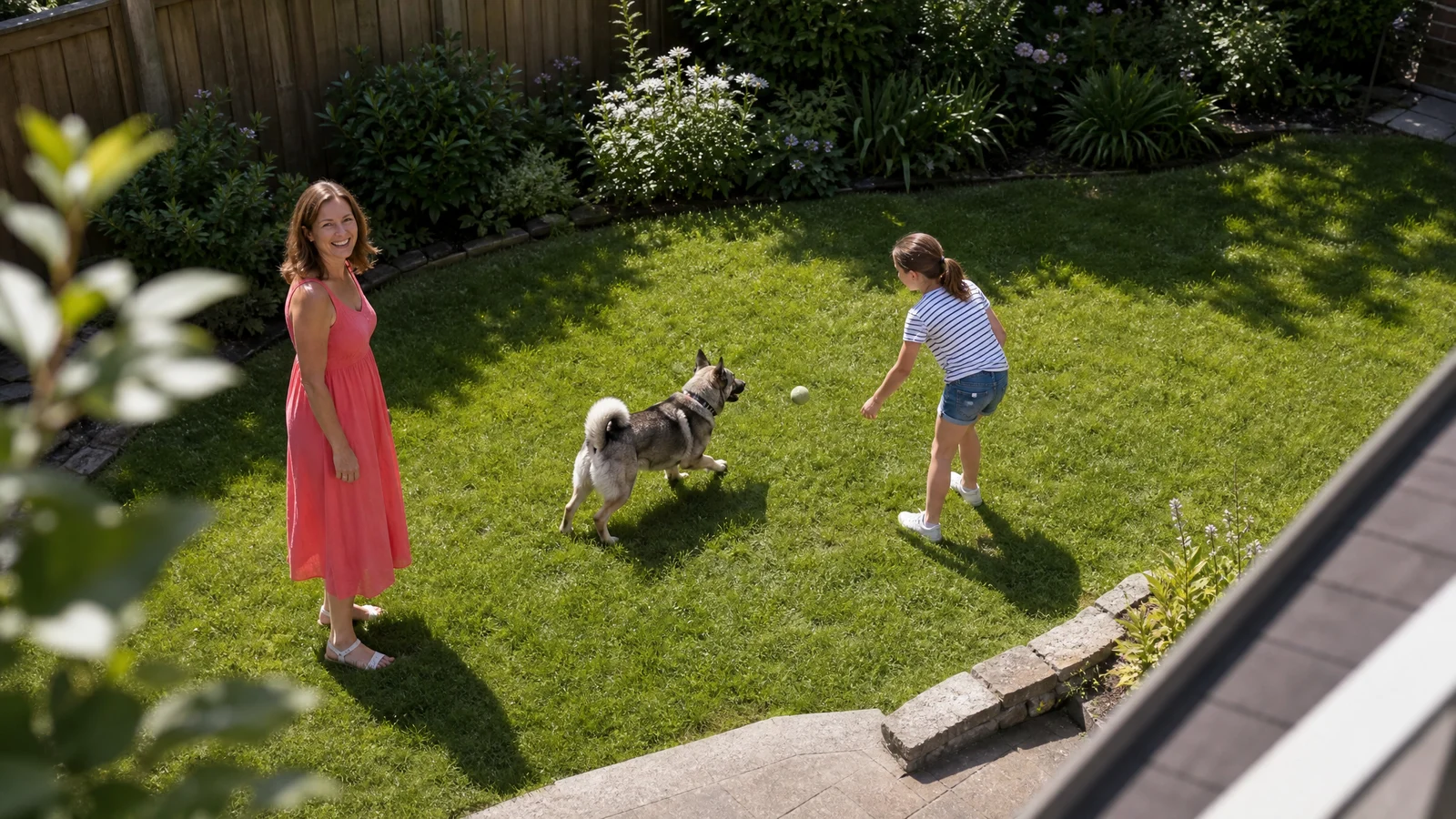 BehaviorHow to Teach Kids and Your Norwegian Elkhound to Get Along
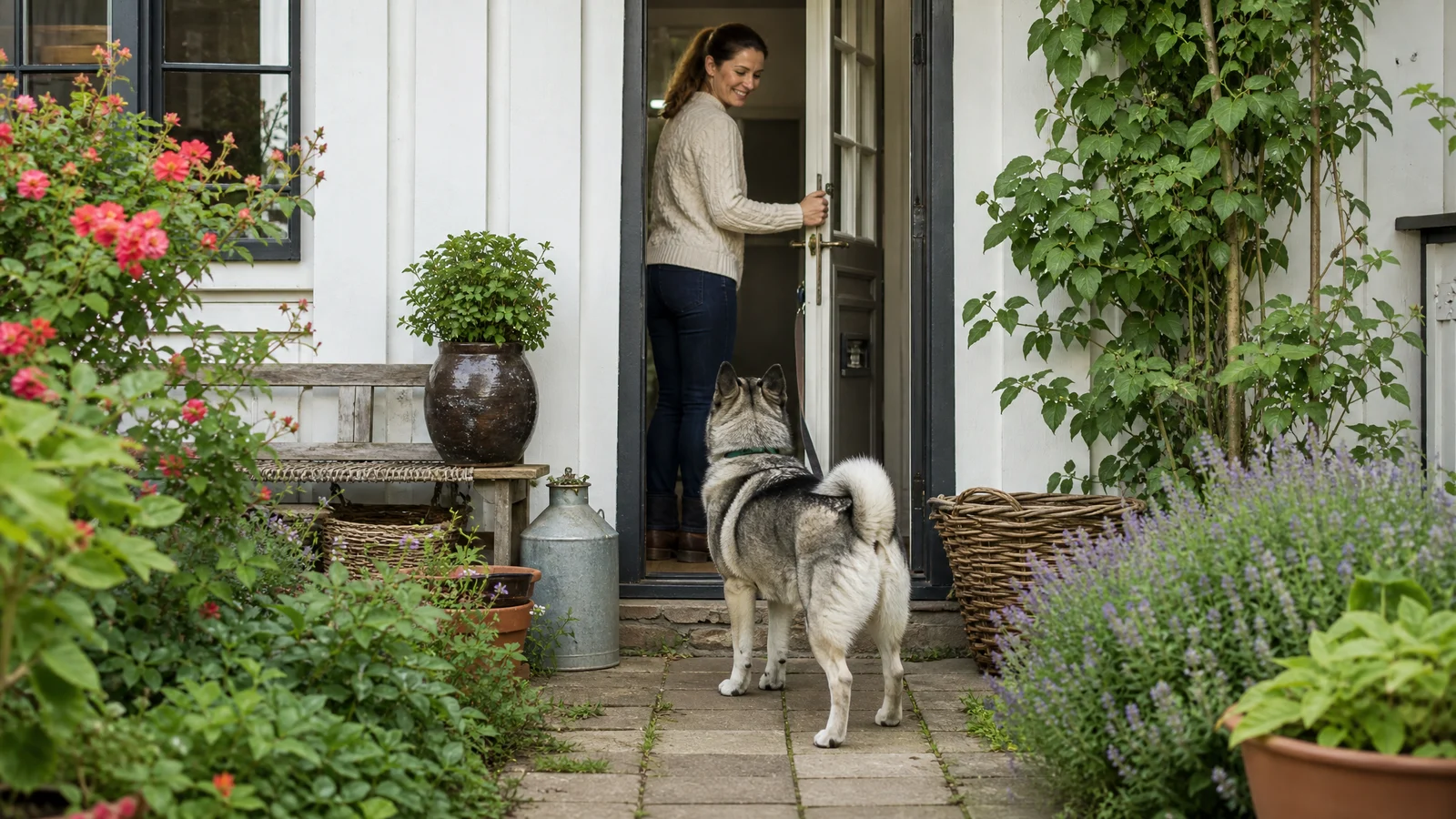 Training basicsCan You Train an Adult Norwegian Elkhound? Yes, and Here's How