 Elkhound
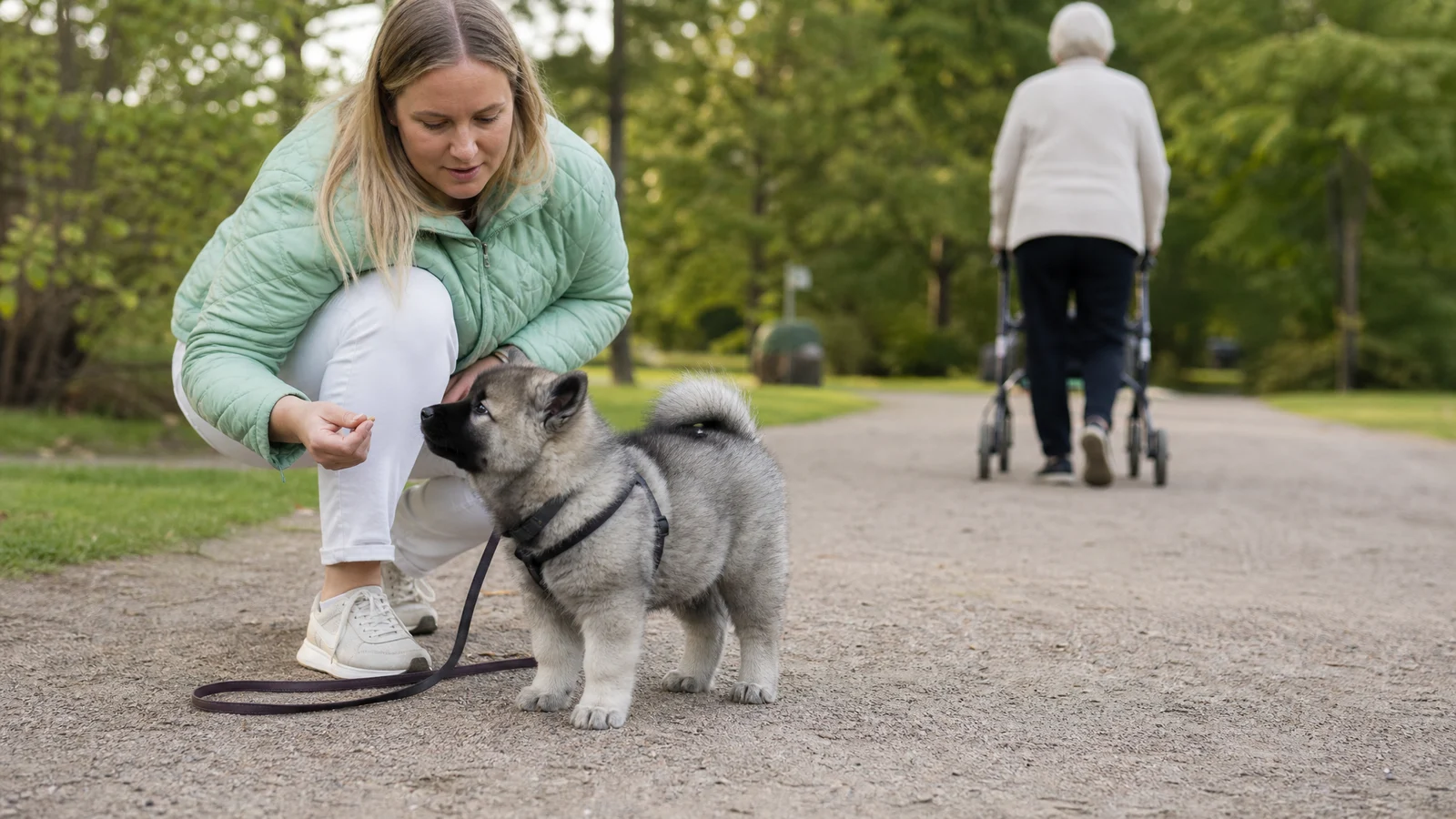
An Elkhound puppy notices a person across the sidewalk, pauses, and tucks slightly behind your leg. The stranger may want to crouch, reach, and make friends. In our view, the better socialization choice is often to create room, feed a few easy rewards, and let the puppy decide whether to look again. That pause lets the puppy gather information without turning the person into a test.
Socialization is not a contest to collect greetings. It is a mosaic of safe exposures to people, places, sounds, surfaces, handling, and other animals. Neutral observation counts, and the puppy’s ability to withdraw matters as much as their willingness to approach.
This guide uses an exposure calendar without turning age into a deadline. The brief contains no fixed schedule, so the puppy’s comfort, health plan, and recovery set the pace. Each calendar square is a small experience, not a requirement to finish the whole page. We care more about recovery across the mosaic than the number of filled squares.
The Norwegian Elkhound Puppy Training Calendar
Begin with exposures the puppy can notice while eating, playing, or calmly exploring. Distance changes difficulty. A bus heard from inside, a person watched across a parking lot, and a friendly visitor seated several feet away can all be useful first squares.
Battersea notes that puppies can experience fear periods and recommends continuing socialization at the puppy’s pace. Its socialization guidance warns against overwhelming gatherings. One calm experience is more useful than a crowded event the puppy cannot leave.
Record four details: what appeared, how far away it was, what the puppy did, and how quickly they recovered. “Watched a person with an umbrella, ate food, then sniffed” helps plan the next exposure. “Did well with strangers” hides the important parts.
Keep blank squares. Sleep, ordinary home life, play, and familiar walks belong in a puppy’s week too. Socialization loses value when every outing is designed to introduce something new.
Plan an exit before each exposure. Know where you can step behind a car, cross a path, close a gate, or return indoors. An exit keeps the handler from waiting until the puppy is overwhelmed before creating distance.
People in the Elkhound Puppy Training Mosaic
Vary appearance and movement without asking every person to touch the puppy. Someone wearing a hat, a person using a mobility aid, a quiet child at a distance, and a delivery worker seen through a window can each become separate, manageable pictures.
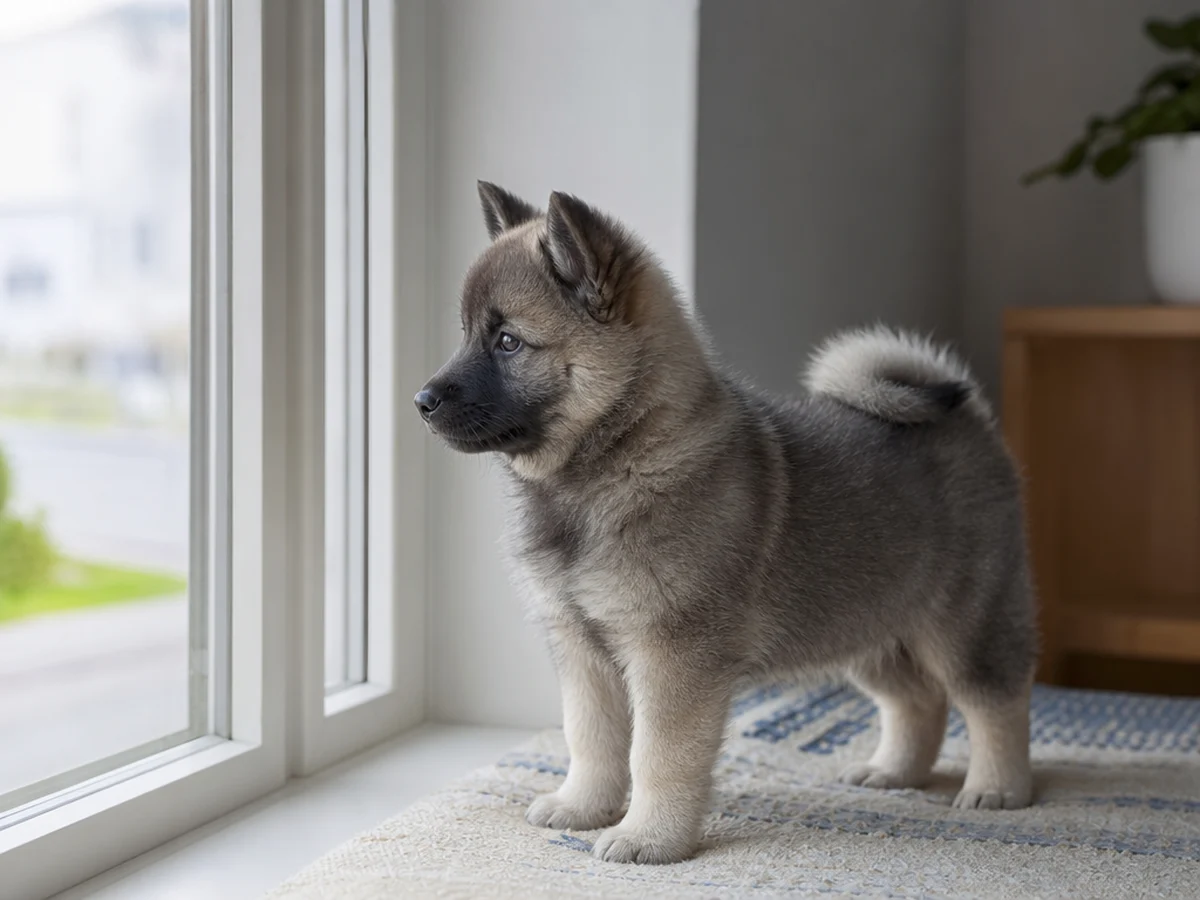
Ask helpers to turn slightly sideways, keep hands low, and let the puppy approach or retreat. They may toss a treat behind the puppy so moving away is rewarded too. This prevents food from luring a hesitant dog into contact they would not choose. A tossed reward preserves space instead of making the person the only route to food.
Elkhounds can be reserved before introductions and warm afterward, but breed tendencies do not decide how this puppy feels today. Do not hold the collar so a stranger can pet them. A calm look followed by a voluntary departure is a complete exposure. The choice to leave helps future approaches remain genuinely voluntary.
Keep greetings separate from handling. A puppy may choose to sniff a shoe without wanting a hand overhead. Reward the approach, allow the retreat, and save touch for a later choice if the body remains loose.
Quiet Visitors at Home
Have one visitor enter without calling the puppy over. The person sits, avoids leaning, and lets you reward relaxed observation. If the puppy approaches with loose movement, the visitor can offer a treat on the floor rather than reaching over the head. This setup lets the puppy study the visitor before deciding whether to move closer.
End while the room is still calm. Use a gate or separate comfortable area when the puppy needs rest. Repeating an easy visit with the same person can build more confidence than adding several new people at once.
Sounds and Surfaces in Norwegian Elkhound Puppy Training
Everyday sounds can begin at low intensity. A vacuum in another room, a door closing softly, traffic heard from a porch, or a recorded sound played quietly gives the puppy room to notice without being trapped beside the source.
Pair the sound with food or play only while the puppy remains comfortable. If they freeze, flee, refuse food, or stay alert after the sound stops, reduce volume or increase distance next time. Do not replay it until the puppy gives up reacting. A single comfortable sound is enough before the calendar moves to another category.
Surfaces deserve their own squares. Try carpet, firm grass, a stable rubber mat, dry sidewalk, or a broad low platform with nonslip footing. Let the puppy place one paw and leave. Avoid unstable objects, forced balancing, and anything that could slide.
The UKC standard describes a medium, compact spitz breed rather than giving a socialization schedule. Its breed standard should not be used to assume confidence in every individual. Observe this puppy’s posture and recovery.
Handling as a Consent Conversation
Touch a shoulder briefly, feed, and pause. If the puppy returns, repeat. Over several sessions, work toward ears, paws, coat, and collar contact in tiny pieces. Handling should predict rewards and include a clear break.
Stop when the puppy turns away, stiffens, mouths harder, or tries to leave. Restraint does not teach comfort. Cooperative handling grows when the dog can say no and return voluntarily.
Safe Puppy Training Around Other Dogs
Choose calm, healthy dogs with known behavior rather than a busy free-for-all. Begin at enough distance for the puppy to look, eat, and turn away. Parallel movement with separate handlers can be easier than a face-to-face greeting.
Health note: The puppy’s health plan and local conditions still shape where those exposures happen. Maintain regular veterinary visits as the puppy grows.
AVSAB says puppy socialization should begin before full vaccination is complete, while health precautions still matter. Its position statement supports early exposure. Ask your veterinarian how to balance local disease risk, vaccination status, and suitable class or outing choices.
Socialization does not require meeting every dog. Watching one pass calmly can be the best square for that day. Avoid unknown dogs, crowded dog parks, and interactions where either dog cannot move away.
A Calm Helper-Dog Setup
Best Friends describes stopping at the point where a dog notices a calm helper and can remain composed. Its helper-dog setup uses added distance and a retreat before any closer greeting.
Walk a broad arc, reward orientation back to the handler, and retreat. If both dogs stay loose across several passes, allow a brief sniff with curved bodies and loose leashes, then call them apart for rewards. Stop before play becomes overwhelming.
A puppy who hides, barks repeatedly, lunges, or cannot recover needs more distance. Do not use the helper dog to force a breakthrough. Repeat an easier observation on another day.
Place Exposures in the Puppy Training Calendar
Places combine several categories at once, which makes them harder than they look. A quiet parking lot may include carts, engines, doors, people, and strange footing. Begin at the edge where the puppy can watch one feature and remain able to disengage.
Carry the puppy where appropriate and safe if the ground presents health concerns, but do not carry them into the middle of an overwhelming scene. A stationary observation from a protected spot can be enough. Consult your veterinarian about local risk and safe outings.
Use short visits. Arrive, let the puppy orient, reward neutral or curious behavior, and leave before fatigue turns into worry. Returning to the same place at a quieter time builds familiarity without requiring direct contact.
Here are scenario squares to scatter through the calendar rather than complete in one outing: Choose only one scenario for any outing and adjust it before adding another.
- watch a person open an umbrella from a generous distance
- hear a shopping cart roll while eating several small rewards
- stand on a stable mat near a quiet building entrance
- observe a calm dog crossing the far side of a wide path
- listen to traffic from inside a parked car with safe ventilation
- greet one seated visitor who lets the puppy move away
Place this list in the middle of the plan, not at its finish. The scenarios are raw material. Adjust distance, duration, and order for the puppy rather than treating each bullet as a pass-or-fail assignment.
Read the Norwegian Elkhound Between Exposures
A comfortable puppy can look, sniff, take food normally, and return to exploration after a surprise. They may choose not to greet. Neutrality is useful because adult life contains many people and dogs who do not need interaction.
Early worry can appear as slowing, leaning away, repeated yawning, lip licking, sudden scratching, tucked posture, or refusal of familiar food. These signs need context, but clusters and changes from the puppy’s baseline should influence your next move.
The breed club notes that Elkhounds need regular activity, and appropriate movement can help a puppy arrive ready to learn. The club overview discusses the energetic adult breed. It does not justify tiring a growing puppy through long or intense exercise, so tailor activity with veterinary guidance. We separate that adult context from any exercise prescription for a growing puppy.
After an exposure, offer quiet time and observe recovery. A puppy who sleeps normally or resumes familiar play has processed the event differently from one who scans, paces, or remains unable to settle. Recovery determines whether the next square should be easier. A calm recovery can be more informative than a brave-looking approach in the moment.
Do not compare calendar totals with another puppy. One individual may need several quiet looks at a cart before approaching, while another is ready to move on. The useful measure is whether this puppy can notice, recover, and remain willing to explore.
When to Repeat, Retreat, or Get Help
Repeat when the puppy stayed loose and recovered easily. Retreat when food-taking changed, distance closed too fast, or the puppy tried to leave. Change only one feature on the next attempt so you can see what helped.
Arrange a veterinary visit when behavior changes suddenly, the puppy seems painful, or health questions affect exposure choices. For persistent fear, escalating barking, or unsafe introductions, seek a humane training professional with puppy behavior experience. Early support should make the plan gentler, not more forceful. The professional should help reduce pressure and make the next exposure easier.
Puppy Socialization Continues Past the Calendar
A calendar organizes attention, but socialization continues as the Elkhound matures. Fear can reappear during adolescence, and familiar scenes may need to be rebuilt at a greater distance. That does not erase earlier learning.
Keep a few exposures ordinary each week: quiet people watching, comfortable handling, calm passage by dogs, changing surfaces, and brief visits to manageable places. Mix familiar squares with occasional new ones, and preserve plenty of rest.
The close is not a checklist of related articles because this puppy brief includes no internal links. Instead, return to the mosaic. Look for missing categories, not missing greetings, and choose one low-pressure exposure that fits the puppy in front of you.
Tomorrow’s square might be five calm minutes watching the sidewalk from far enough away to eat and sniff. The puppy can approach, remain neutral, or leave. When those choices stay available, socialization builds confidence without asking an Elkhound to become socially indiscriminate. The open choice is the thread that connects every square in the mosaic.
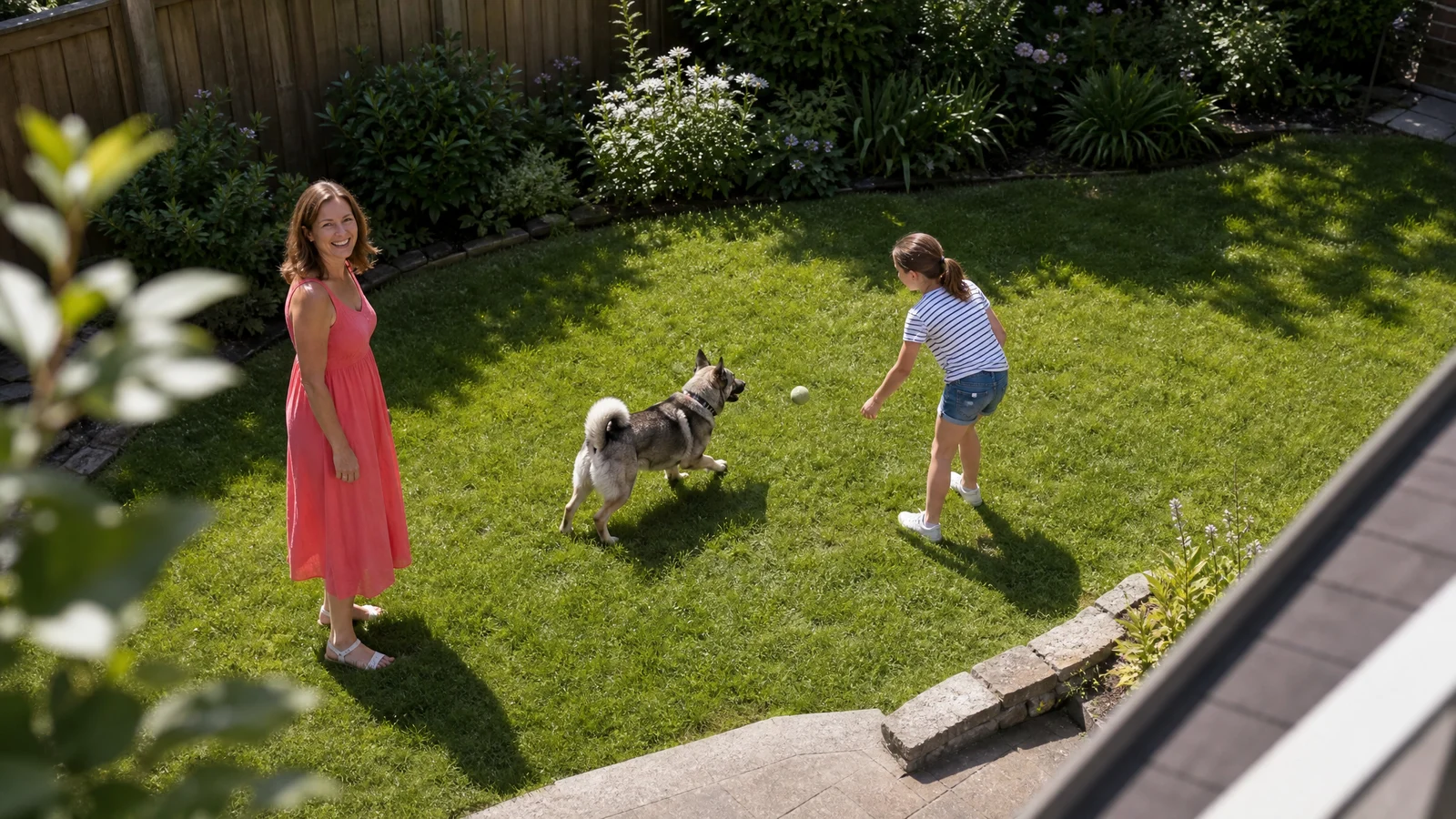 BehaviorHow to Teach Kids and Your Norwegian Elkhound to Get Along
 Training basicsCan You Train an Adult Norwegian Elkhound? Yes, and Here's How
 Exercise and jobsSniff Time on Walks for a Norwegian Elkhound With a Busy Nose