 Elkhound
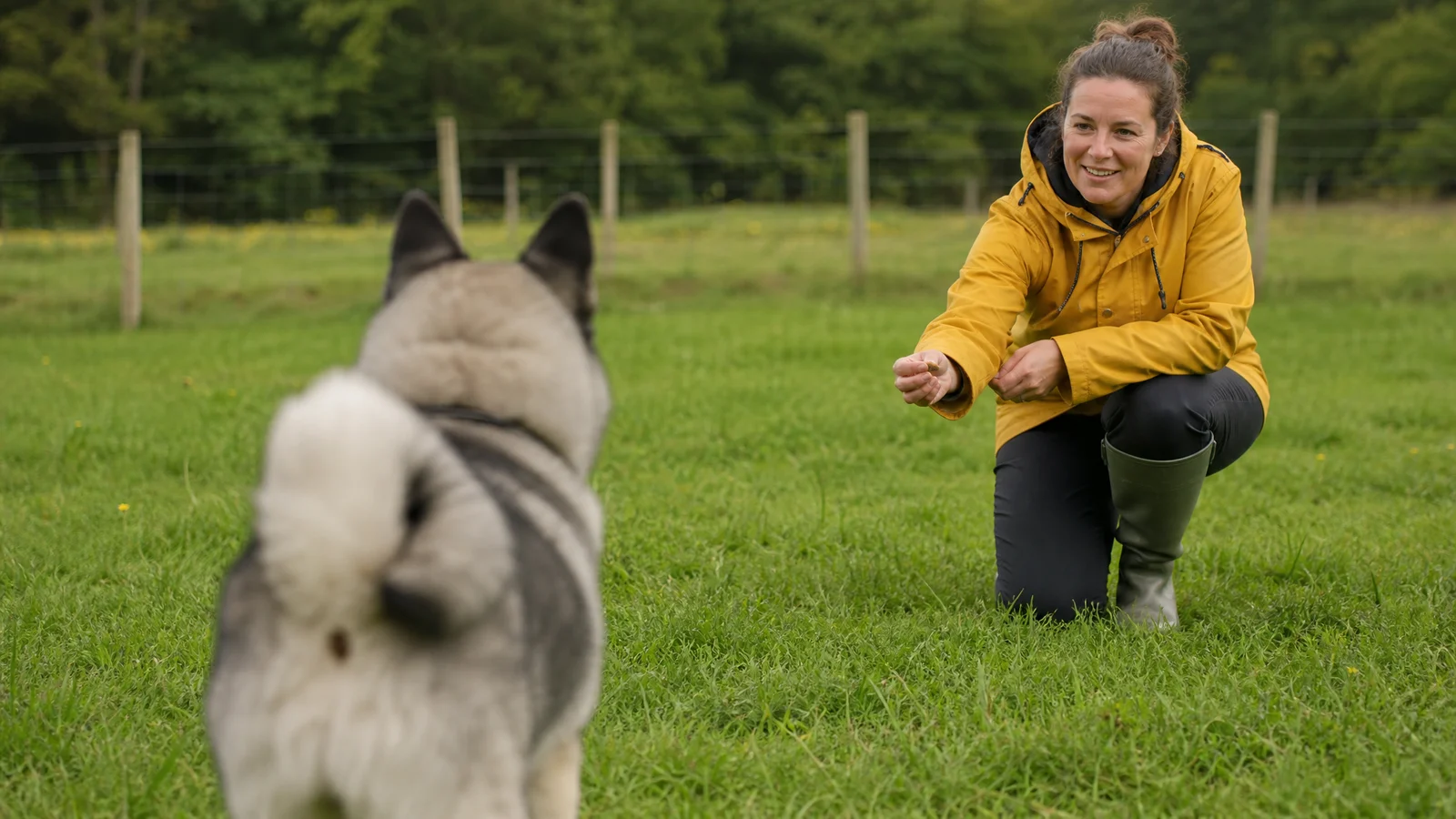
The AKC advises owners to resist letting a Norwegian Elkhound roam the neighborhood or a park off leash, because the instinct to travel and inspect the world is intrinsic to the breed. The parent club adds that this is a remarkably intelligent but headstrong, independent dog, so unquestioning obedience should not be expected.
That independence has a practical side. A dog bred to range ahead of people will treat your voice as one piece of information among many, and an Elkhound is easily pulled toward a passing person, a truck, a squirrel or the neighbor's dog. Our work centers on how this breed behaves and learns, and a recall that works here is built on motivation, not repetition alone.
A dependable recall matters more for this breed than for most, because it separates a dog who lives on a leash from one who earns safe freedom. Read on for how to choose a word and reward, run the first recalls on a long line, decide how much freedom is safe, and proof the skill against scent, wildlife and other dogs.
The Norwegian Elkhound's Urge to Roam
Watch an Elkhound on a quiet walk and you will often see the nose drop, the tail tighten, and the whole body lean toward a smell you cannot detect. That is not bad manners. The breed originated in Norway as a hunter and tracker, following the scent trail of moose over long distances and holding the animal at bay by barking until the huntsmen arrived. The breed standard describes a hardy dog with the endurance to track for long hours over rough and varied terrain.
Selection of that kind has a plain consequence. A dog bred to work far ahead of people and make decisions alone will tend to treat your location as one piece of information among many. That fits the headstrong, independent description, and it explains why obedience cannot be assumed even in a dog who learns quickly. Elkhounds pick up new skills fast, but repetition for its own sake bores them, so a recall built on drilling tends to fade.
The pull also shows in everyday triggers. Owners report barking at passing people, other dogs, trucks and cars. Each of those is a place where your recall will be tested, so the plan in this article starts with a list of the triggers on your own routes. A few days of simply noticing will show you where they are.
Why Does Your Norwegian Elkhound Ignore Recall?
Picture the likely moment. The dog is under a tree barking at a squirrel, you call, and nothing happens, not even a glance. It looks like defiance, but it is often a dog in the middle of a report.
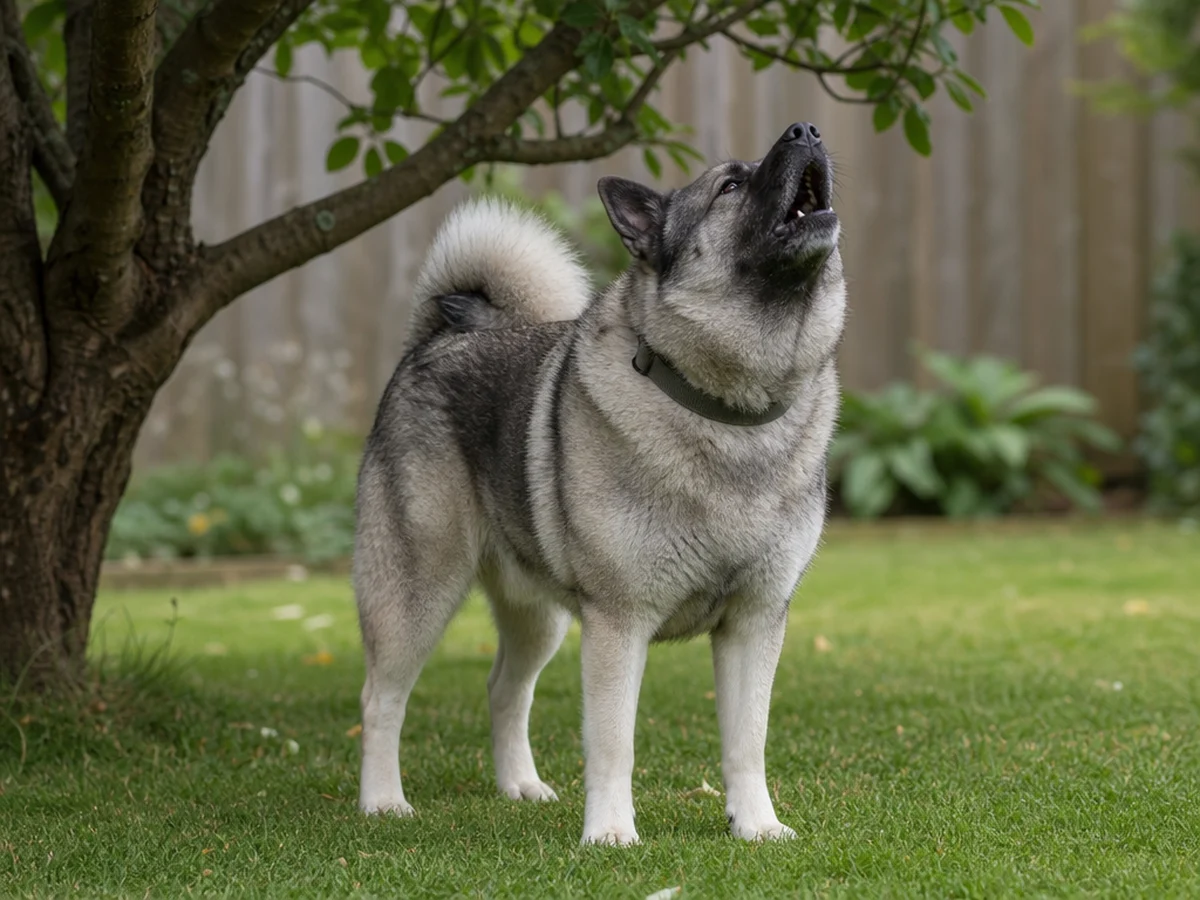
Some Elkhound barking announces one particular animal rather than raising a general alarm, and owners also describe dogs who bark at anything new or unusual, such as a stray balloon or something they only think they see. A dog absorbed in announcing is a poor audience for a word that has never beaten the squirrel.
It helps to sort the problem into causes, because each one has a different fix. We can rarely be sure which is at work in a single moment, so test them one at a time. The usual suspects are these:
- The scent, animal or movement is worth more to your dog right now than anything you are offering, so the answer is more distance from the trigger and a better reward, not a louder voice.
- Your dog has learned that coming back ends the fun, so a sensible independent animal declines, and the fix is to make returning the start of good things.
- The recall was never really taught, which means the word was repeated in the yard or house without a reliable payoff and has no more meaning than background noise.
Recall is simply a dog's dependable return to you on cue, and a well-taught one keeps the dog safe while allowing the benefits of off-leash exercise. Exercise also feeds the whole picture. Sources describe the daily need as roughly 20–30 minutes twice a day, and a dog who has had it is calmer and more able to think when you ask for a return. Meeting that need first makes every training session easier.
Choosing a Recall Word and Reward
Most dogs have heard "come" in every tone and for every purpose: at bedtime, at the end of a walk, before a bath, and in frustration from the back door. A word with a mixed history predicts mixed outcomes, so an Elkhound who is already weighing the options will weigh it against the squirrel and often choose the squirrel. Starting fresh with a distinct word or whistle removes that baggage, and it gives you something that has only ever meant one thing.
Pick a short word you do not use in conversation, and say it in a bright, happy voice. Elkhounds are sensitive to praise and respond to expression and tone, so cheerfulness carries real information to them. Pair it with a marker word, a quick sound like "yes" that pinpoints the instant your dog earns a reward. The recall word starts the behavior and the marker word confirms it.
Then choose rewards that can compete. For this breed, two work best together: a small, soft food treat kept only for recall practice, and release back to the thing they love, which is often the very scent they were pulled away from. That second reward is a life reward, meaning a real-world pleasure that you control and hand out. The rules that keep the word strong are short:
- Say the word once, then wait and help your dog succeed, because repeating it teaches them that the first call is optional.
- Use the word only for things the dog enjoys, and never to end a walk, start a bath or deliver something unpleasant.
- Pay generously every time in the early weeks, then gradually pay less often but never in a predictable pattern.
- Walk over and clip on the line without calling when you need to end an outing, so the recall word stays clean.
First Recalls on a Long Line
The first lessons should look dull. In a fenced yard or another enclosed space with nothing exciting going on, your dog will wander to the end of a long line, sniff the ground, and glance back at you now and then. A long line is a light, flat lead much longer than a normal leash, giving freedom to roam while you keep a hand on the outcome. It prevents your dog from practicing the habit of ignoring you, which is what really erodes a recall.
Work in short sessions, because an Elkhound who has understood the game will tire of repeating it. End on a success while your dog is still keen, and do your hardest sessions after exercise rather than before. The steps below are the pattern to follow:
- Start a few steps apart in a quiet, secure area, with the line loose in your hand or trailing on the ground.
- Wait until your dog is relaxed and looking elsewhere, then say the recall word once in a happy voice.
- When they turn toward you, mark with your marker word, and keep praising as they arrive.
- Pay several treats in a row at your side, then release them back to sniff with a cheerful release word.
- Add distance a little at a time, and drop back to an easier version at the first sign that your dog is slowing or stopping.
- Use the line only to prevent leaving, never to haul your dog in, because the goal is a dog who chooses to come.
Spend plenty of time on this stage, since everything later rests on it. Many owners are tempted to move on once their dog comes reliably in the yard, but a recall that works with no competition mostly tells you the dog understands the game. Whether it holds up under real pressure is a separate question, and it takes separate practice.
How Far Can a Norwegian Elkhound Safely Go?
Fence runners offer a useful preview. A dog who patrols the boundary and barks at whoever passes is rehearsing the habit with every repeat, and that same drive, once the fence is gone, becomes travel. The sober answer is that in any unfenced place, most Elkhounds should stay on the long line for life, and the caution against roaming off leash in neighborhoods and parks is the right default.
Off-leash freedom, if you offer it, belongs in fully enclosed spaces. Walk the boundary before you rely on it. Check gates and latches, the base of the fence, and any spot where your dog has paced or fixed their attention. A determined traveler will probably test whatever is weakest, though dogs vary in how hard they try. Supervise even in your own yard, because a fence prevents leaving but teaches nothing about coming back.
Common advice says a high-energy breed should be allowed to run off leash so they burn off steam and settle. For this breed it tends to backfire, since the dog learns that the best things happen far from you. Meet the exercise need with long walks on the line, time to sniff, and play with you, and let freedom grow only as proofing succeeds. Reliability in the kitchen tells you very little about reliability near a squirrel.
Proofing Recall Against Scent Trails
Proofing means adding distractions in small, planned steps so a recall that works in easy places still works in hard ones. For an Elkhound, scent is the main challenge, followed by animals and then other dogs and traffic. Keep the line on throughout, pay at jackpot level whenever a harder trigger is beaten, and go back a stage whenever your dog stops responding. Planning around the triggers you listed earlier turns guessing into a routine.
Scent and Ground Odors
Begin where the ground has interesting smells but nothing alive is in view. Let your dog start sniffing, wait a moment, then call. If they turn, you have won against their strongest instinct, and the reward should show it with plenty of treats and a quick release back to sniff the very spot. If they do not turn, you were too ambitious, so shorten the distance or move to a less enticing patch.
Wildlife at a Distance
Squirrels and birds come next. Pick a spot with enough space that your dog can still think clearly and make a choice. Since some barking is a report of one specific animal, you can let them announce once, then call before the barking builds, and reward the moment they pause or glance at you. Pay for the turn away, not for the barking itself. Never set up chases or closer encounters, and keep the line on whenever animals are around.
Dogs, People and Vehicles
Passing people, other dogs, trucks and cars are triggers that many owners report, so practice with these at a generous distance and shrink it slowly. Dogs rate between friendly and reserved with their own kind, and the breed is generally friendly with people once introduced, so plan on supervision.
Hold the recall word for moments when you are sure your dog can succeed, and use a quiet turn and walk away when you are not. Calling and failing teaches the wrong lesson.
Recall Over the Years With a Norwegian Elkhound
If recall slips at any age, go back to the long line and raise the reward value. Elkhounds are independent by nature, so a dog who once flew back to you may sometimes study you and then wander off. Treat that as a signal to make coming back more rewarding, not as a reason to scold. Keep sessions short and fun, and expect progress to wobble rather than run in a straight line.
Expect reliability to improve but never to become absolute. The parent club describes training as an ongoing process in this dog's life, and recall is the clearest example. Even a dog who comes beautifully a thousand times may meet a scent, a deer or a moving truck that outweighs everything you offer. That is why containment and a long line remain part of life, whatever your dog's age, and why a fenced yard stays valuable long after the recall is good.
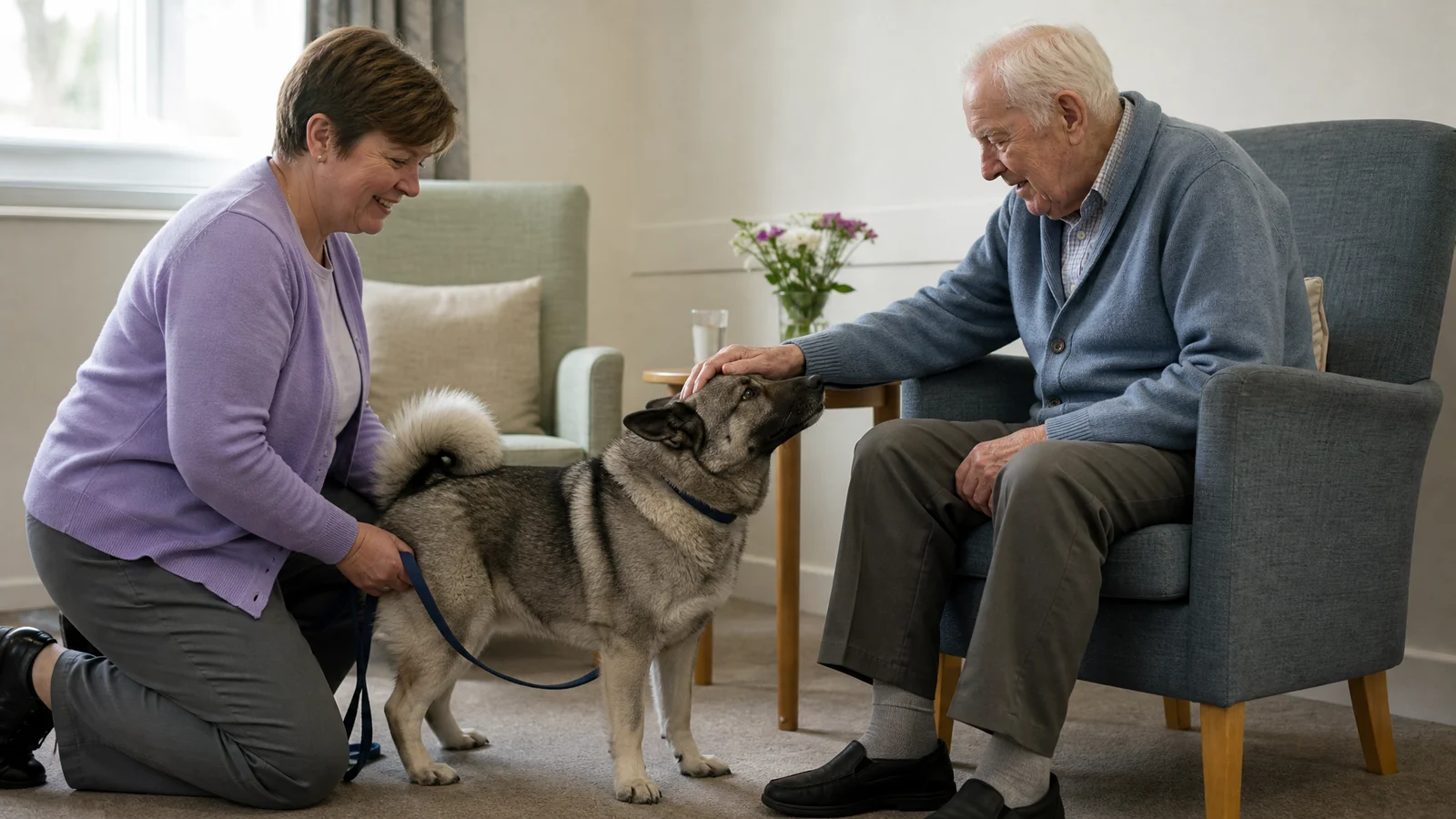
Older dogs often travel less, and dogs are considered senior in the last quarter of their breed's expected lifespan, but the nose does not retire. Keep paying for recall at every age, mention any change in hearing or response at your regular vet visits, and treat the skill as something you maintain. If you later want to work toward therapy or service roles, service and therapy work training builds on exactly this foundation of calm, dependable responsiveness.
Plan on a long relationship with the same instinct. The Elkhound who wants to roam will keep wanting to, and the reward of this work is a dog who chooses you often enough that family outings stay safe. Keep the line, keep the payoffs worth the trip back, and let freedom expand slowly in places you have secured.
 Exercise and jobsNorwegian Elkhound Service Dog and Therapy Work Training Basics
 Training basicsLoose-Leash Walking With a Dog Built for Endurance
 Training basicsWhere to Start Training a Norwegian Elkhound: Reward-Based Basics