 Elkhound
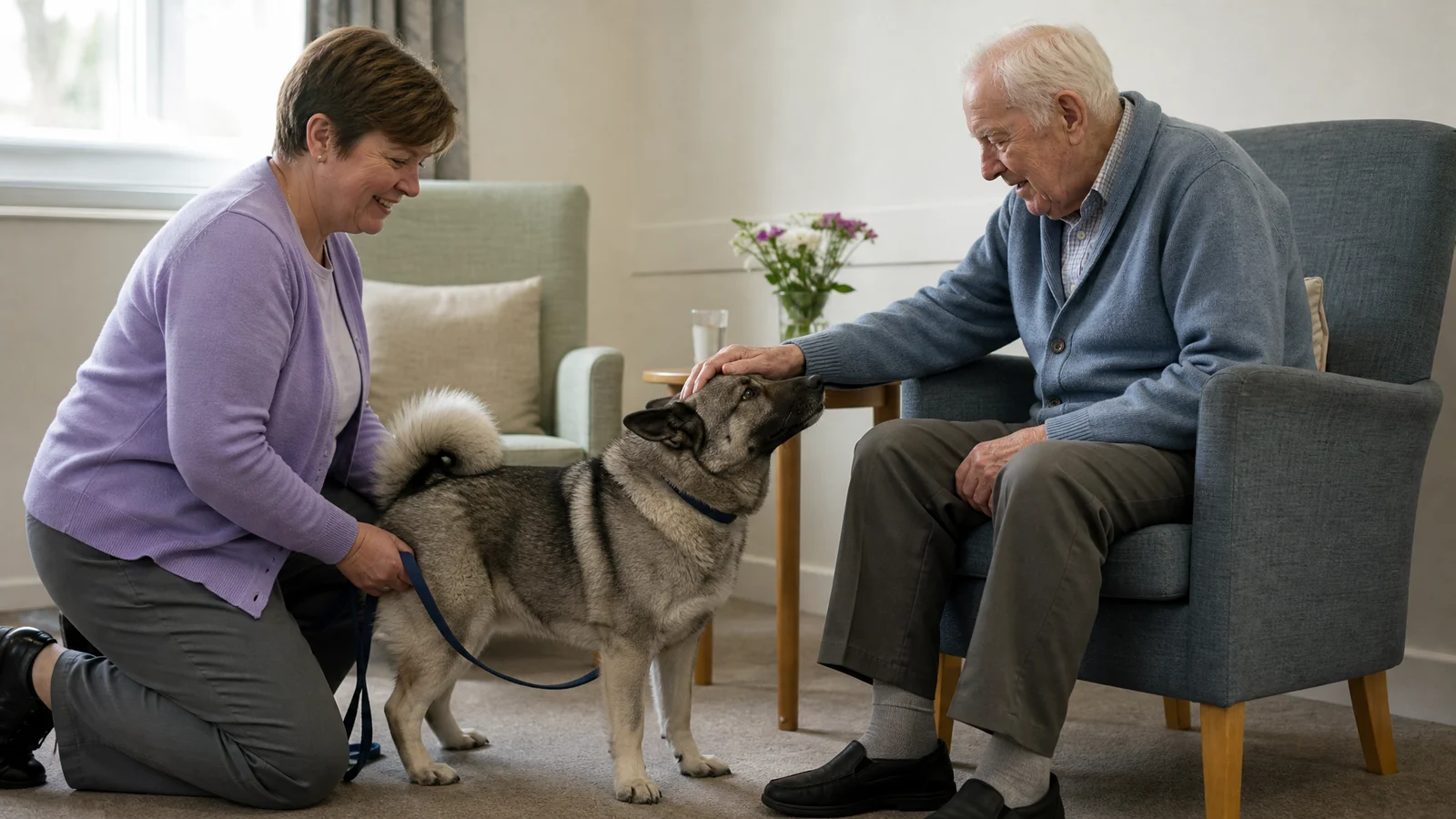
Work-prep for a Norwegian Elkhound starts in the first weeks at home, with calm looks at everyday sights and a few tiny rewarded skills, long before anyone mentions a vest or a visit. Adolescence is where plans wobble, because the famous independence becomes selective hearing and a cue that worked last month turns optional overnight. Formal evaluation belongs to the settled adult, and the timing varies a good deal from dog to dog.
Done patiently, this work gives a clever dog a purpose and gives you a steadier companion. Rushed, it produces a dog who announces every passing truck and stray balloon. We specialize in Elkhound behavior and training, and we'll walk you through temperament, trainability, strangers and crowds, scent work, service demands and stamina, then help you decide which role fits your own dog.
Temperament for Dog Sports and Therapy
Therapy visits and most dog sports reward a dog who is steady, friendly and unbothered by clutter, so the first thing to weigh is how the written temperament of the breed lines up with that picture. Some traits carry over almost untouched, others need careful management, and the setting where the work happens often decides which you notice.
Traits That Help and Hinder
The breed standard's summary describes a stable disposition that makes the Elkhound an ideal multipurpose dog at work or at play, and the details back it up. They are loving and good-natured, affection for family sits at the top of the scale, and playfulness is rated 4 of 5. Temperament varies by individual, but the breed is not normally aggressive and is normally friendly, even with strangers.
The standard also names great dignity and independence of character, and says unquestioning obedience should not be expected. Beside that sits a watchdog rating at the very top of the scale, a protective streak toward family and property, and a deep, resounding bark. That is a fine presence at your own front door and a harder fit for a hospital corridor, where calm is the whole job.
Sensitivity to praise is the useful counterweight. Much can be communicated through expression, gesture and voice, so a warm tone, a bright face and a well-timed treat carry real weight, and the dog who seems to ignore you in the yard will often work hard for your approval in a quiet room.
Visit Settings That Suit Them
Therapy animals take part in animal-assisted activities or therapy and are typically registered or certified by an organization after training plus behavioral and veterinary evaluation. Your dog has to meet someone else's standard, and groups differ, so read theirs early and train toward it.
A quiet room with one or two people suits an Elkhound far better than a crowded lobby, at least at first. A dog who alerts to people, other dogs and vehicles has to practice calm around those triggers before therapy or similar public work, and many owners report barking at passing people, other dogs, trucks and cars.
The alerting also reaches past real sights, to anything new, unusual or imagined, such as a stray balloon, the wind or something the dog only thinks they see. Short, varied, rewarded sessions around everyday sights build the calm. Sit at a distance where the dog notices the sight but can still take a treat, reward the glance back at you, and close the gap over many outings.
Verdict: a strong match on warmth and a weaker one on quiet, so gentle one-on-one visits are the sensible first goal.
Norwegian Elkhound Trainability for Dog Sports
The breed profile rates trainability 4 of 5, and that number is fair as far as it goes. The Elkhound learns very quickly and is highly intelligent, but the rating says nothing about whether they choose to use what they know on a given afternoon, and that choice is the real question for any sport or work path.
Motivation That Stays Fresh
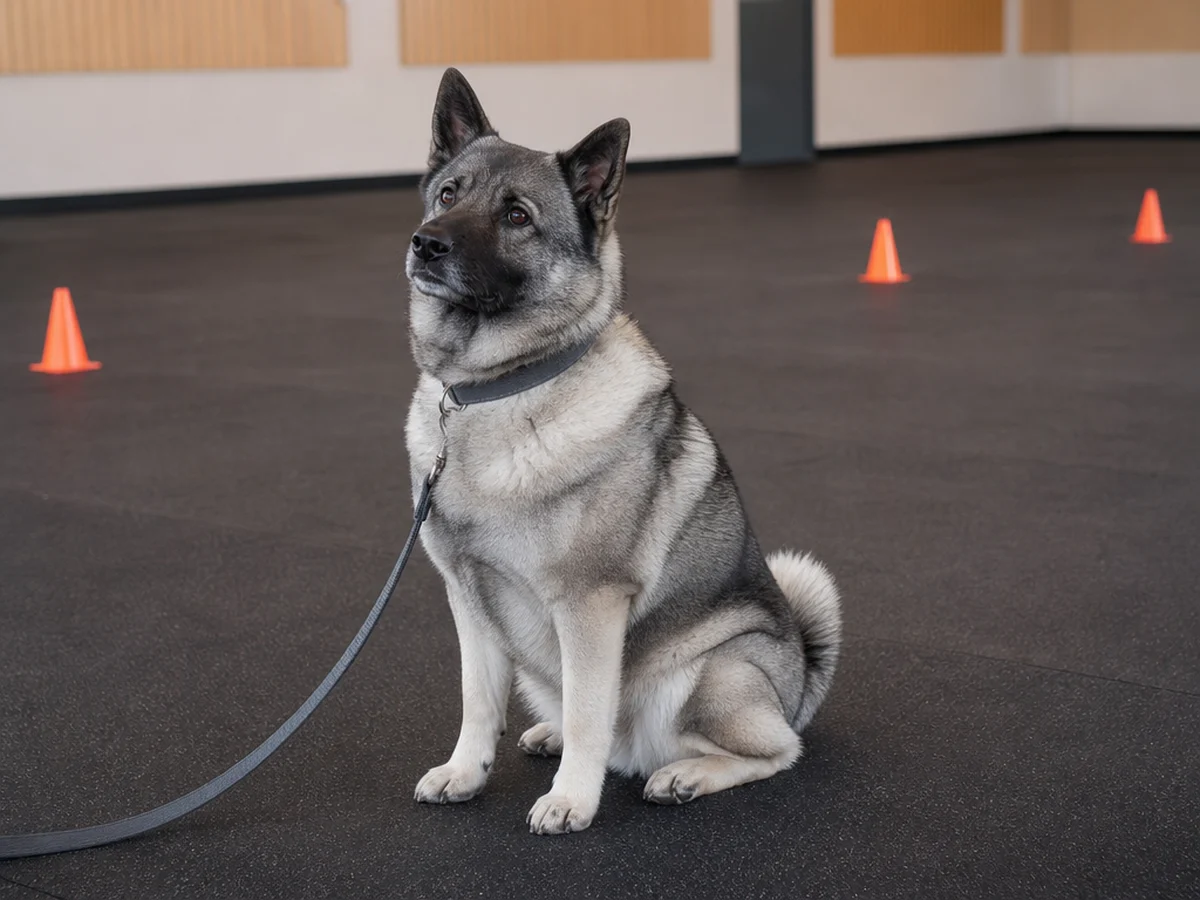
The breed is not known as a star of the obedience ring, because once a skill is learned they settle into an attitude of having done this a dozen times already. The usual drill-until-perfect routine backfires with this dog, since it manufactures exactly that boredom. Rotate food, tug and praise, change the game from one session to the next, and quit while the dog still wants another round.
Stay with reward-based methods throughout, which current evidence supports for all dog training. With a breed that reads your voice and face so closely, it is also simply the approach that works best.
Working With Independence
The original job explains the streak. The Elkhound is an independent hunter, free of direct command, who silently trails moose and holds them in place until the hunter can approach. A dog selected for that kind of self-direction will find a fresh scent or a passing bicycle more compelling than a repeated cue, and no amount of nagging changes that.
The urge to travel and inspect the world is also why open, off-leash practice is a poor idea here, and our guide to recall for a roaming Elkhound covers the groundwork. Expect less instant compliance than from a more eager dog, make yourself the most interesting thing in the picture, and reward every voluntary check-in on walks. Training is an ongoing process across this dog's whole life.
Short Sessions That Stay Varied
Energetic dogs learn badly when they are wound up, so exercise comes first. A routine of 20–30 minutes twice a day is commonly cited, and a dog who has had that settles and focuses far better. Then run each practice session along these lines:
- Teach the skill in a quiet room until it is easy and fast.
- Stop after a few repetitions while the dog is still keen, then play or rest.
- Revisit the skill another day somewhere new, such as a driveway, a kitchen or a calm park, so the cue does not belong to one room.
- Introduce one mild distraction, like a person standing far away, then reward generously for staying with you.
- If the dog stumbles, make the task easier and reward the next success instead of repeating the same drill.
Verdict: quick to learn and patchy under distraction, which makes variety and distraction proofing the real curriculum.
Strangers and Crowds in Dog Sports
Openness to strangers is rated 4 of 5, and Elkhounds are described as reserved until introductions are made and trustworthy friends afterward. That is a useful picture for hospitals, schools and trial grounds. It suggests a dog who wants a moment to assess a new person and then relaxes, which is very different from one who throws themselves at everyone.
Greetings
Mild reserve is often an asset for visiting work, because the dog approaches calmly and does not overwhelm a nervous person. Let them set the pace, reward each calm step forward, and teach one simple greeting, such as a sit or a hand target, so there is always a polite thing to do before anyone reaches out.
Handling by Strangers
Therapy and show settings mean being touched by people the dog barely knows. Practice with friends who stroke the shoulder and back gently, reward calm each time, and let the dog step away if they wish. Ratings for children and for other dogs both land in the middle, which means supervision, so introduce every new child or dog slowly and reward relaxed behavior.
Noise and Barking
Many owners describe a dog who is vocal overall, some far more than other dogs they have owned, and the breed profile agrees with a barking rating of 4 of 5. The encouraging pattern is that an Elkhound can learn to stop barking when asked, though some keep a few small half barks. Aim for a quick quiet and rewards for stopping, not total silence.
Mark the pause the instant it happens and pay well for it, then practice around doors, carts, voices and passing vehicles at a distance where the dog can still succeed.
Verdict: a friendly, measured greeter whose limit is noise, not manners.
Scent Work Aptitude for Dog Sports
Scent work appears among the activities listed for Elkhounds, alongside tracking, agility, rally and therapy dog work, and for this breed it is the option we rate highest. You are asking a dog bred to follow a trail, and to work at a distance from direct command, to do something they already understand in their bones.
In beginner nose work, the dog finds odors hidden both indoors and outdoors, and the earliest games tuck a toy or treat into one box among several. The dog makes the decisions and earns the reward, which sits well with an independent thinker. It also builds sustained focus on a task, and that focus tends to carry over into calmer behavior in public.
Be realistic about the difference between sport and profession. A hobby search game is a natural fit, while professional detection work demands a level of reliability, quiet and handler focus that sits closer to service work. If you want people to learn from, the breed club's ambassadors can connect you with members who do scent work and nose work with Elkhounds.
Verdict: the best-fitting role for the breed, and a good way to build calm and focus for everything else.
Service Dog Demands
True service work asks for far more than friendliness: specific trained tasks, flawless public access and reliability on the worst day of the year. Before the details, the table below shows how the roles people often confuse differ, with our read on the Elkhound's fit for each.
| Role | What the dog does | Fit for an Elkhound |
|---|---|---|
| Therapy | Visits people with a handler in animal-assisted activities | Realistic with calm training |
| Detection and scent sport | Finds hidden odors on cue | Natural fit |
| Service | Performs trained tasks and stays reliable in public | Hardest fit |
Tasks
A service dog earns the title through the tasks they are taught, shaped to one person's needs and performed on demand. The Elkhound learns quickly, but the been-there-done-that attitude is a real obstacle for tasks that must be repeated reliably every day for years, so you would need a deep reward bank and constant variety to keep each task crisp.
Public Manners
One trainer quoted by a pet health site says the harder training challenge is producing a calm, handler-focused partner who accepts many environments and stays steady whatever happens. Use this checklist to see what is still missing:
- They settle on a mat or beside a chair for a sustained stretch without demanding attention.
- They walk on a loose leash past people, other dogs and food smells without pulling or lunging.
- They accept a stranger's approach, a gentle touch and a sudden noise, then return to you for a treat.
- They stop barking quickly when asked, even if a small half bark slips out first.
- They ignore dropped items and wait for your release before investigating anything.
Certification
Breed profiles describe temperament and activities, and they do not certify any dog for service work. Legal definitions and access rights differ by place, so check local rules before planning around any status. Therapy registration is a separate process run by organizations, as described earlier, and passing one does not give a dog service status.
Verdict: the hardest fit by far, because vigilance and independence work against constant focus on one person. A rare individual may manage it, but most Elkhounds will be happier and more successful elsewhere.
Stamina Suits a Norwegian Elkhound
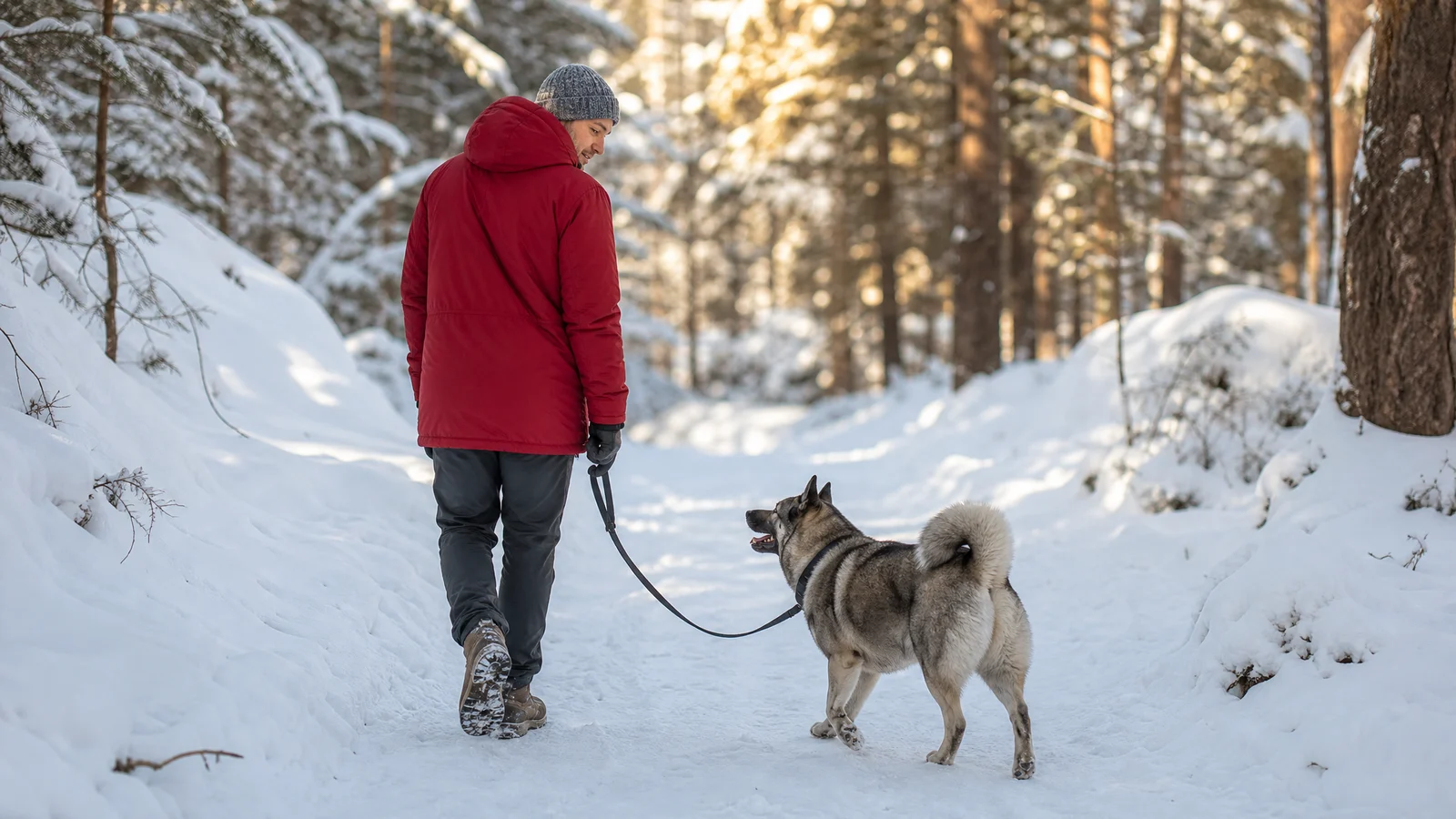
Physical fit decides whether a good-tempered dog can handle a working day. Energy is rated 4 of 5 and so are mental stimulation needs, and the breed is described as relishing long walks and bicycling. Their history as sled dogs hauling supplies over frozen terrain fits the same picture of endurance, which is why hiking, camping and skijoring appear among the listed activities.
The coat is the catch. Grooming needs are modest and shedding is moderate, so upkeep is manageable, but a thick northern coat holds heat. For indoor visits, schedule water breaks, a cool floor and a chance to step outside, and watch for early signs of overheating. A thorough brushing before every outing keeps loose hair off the people you visit.
The practical rule is to exercise before a session so the dog arrives able to be calm, then keep working time short enough that they finish wanting more. Regular vet visits keep you informed about fitness, weight and joints before you ask for longer days.
Verdict: an excellent body for outdoor and active sports, and perfectly acceptable for short indoor visits when heat and pre-work exercise are managed.
Is Your Norwegian Elkhound Ready?
Readiness belongs to the individual dog, not the breed, so hold the verdicts above against the dog in front of you. Work through this list honestly, and if several items are shaky, spend more time on foundations rather than pushing toward an evaluation.
- They are settled and fully grown, and they recover within moments of a surprise.
- They take treats in unfamiliar rooms and look back at you when something new appears.
- They quiet quickly on request, even if a small half bark escapes first.
- They greet strangers calmly, accept gentle handling and can step away without fuss.
- They still enjoy short, varied sessions instead of drifting off after a few repetitions.
- They get their daily exercise before work, so they arrive able to concentrate.
The role that fits best follows from all of this. Scent work and active outdoor sports come first, therapy visits come second once calm around triggers is solid, and service work comes a distant third. This breed gives their best when the job respects their independence, so meet their exercise needs, keep sessions short and varied, and reward calm around the sights that make them bark.
Once you have a plan, a few practical follow-up questions are worth working through:
- How do you keep an Elkhound from roaming while you practice outdoors? Build the habit of coming back through rewarded repetition, and begin with our roaming-instinct Elkhound recall guide before working near open space.
- Can an Elkhound learn to be quiet in public? Yes, to a useful degree. Reward the moment they stop, expect a quick quiet, and accept the occasional half bark.
- Can you start before the dog is fully grown? Yes, with foundations such as settling on a mat and calm walks past everyday sights, while formal evaluation waits for the settled adult.
- Is an adult dog too late to begin? Not at all, since training is a lifelong effort for this breed, though adults still need patient proofing around distractions.
 Training basicsLoose-Leash Walking With a Dog Built for Endurance
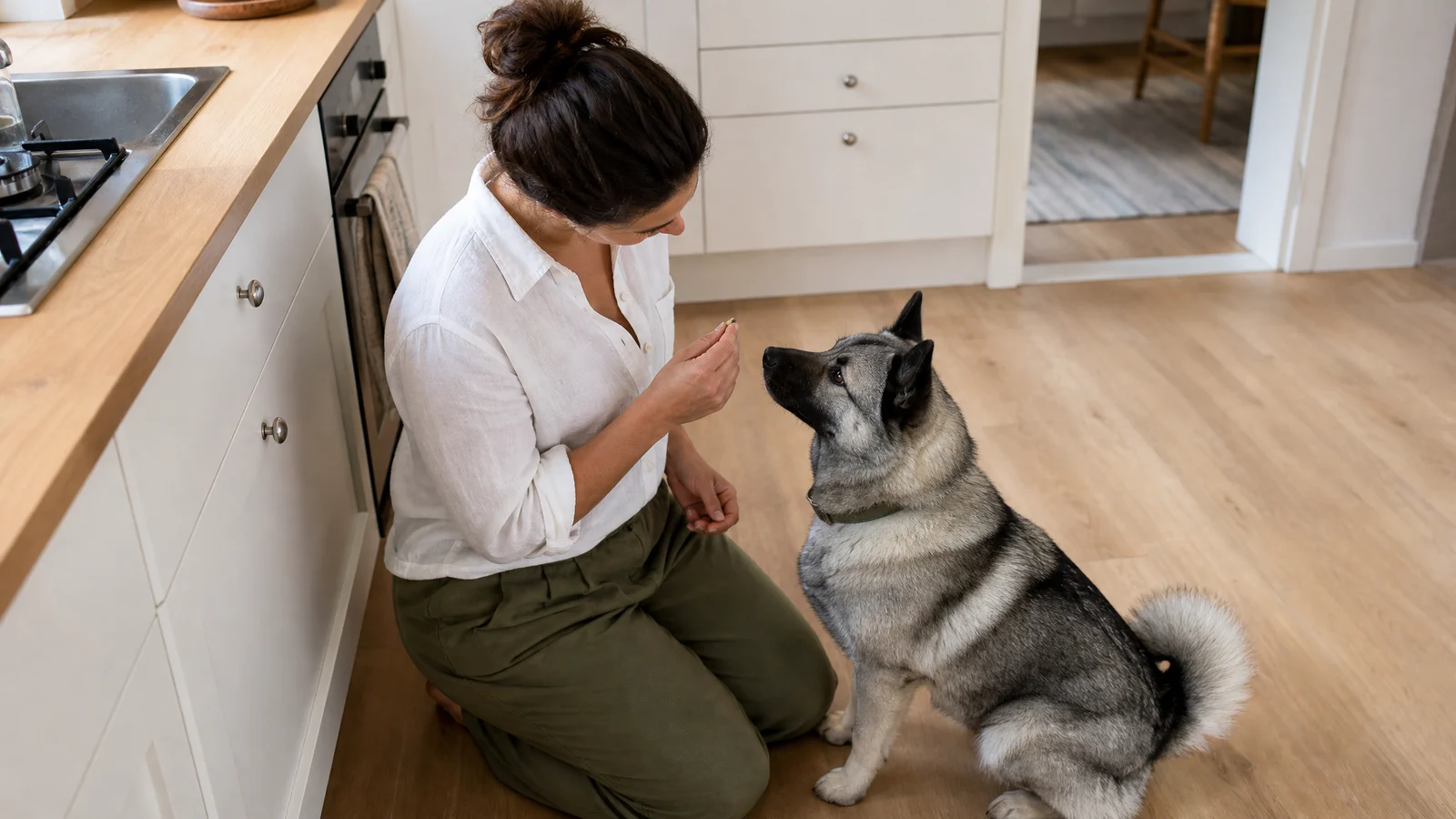 Training basicsWhere to Start Training a Norwegian Elkhound: Reward-Based Basics
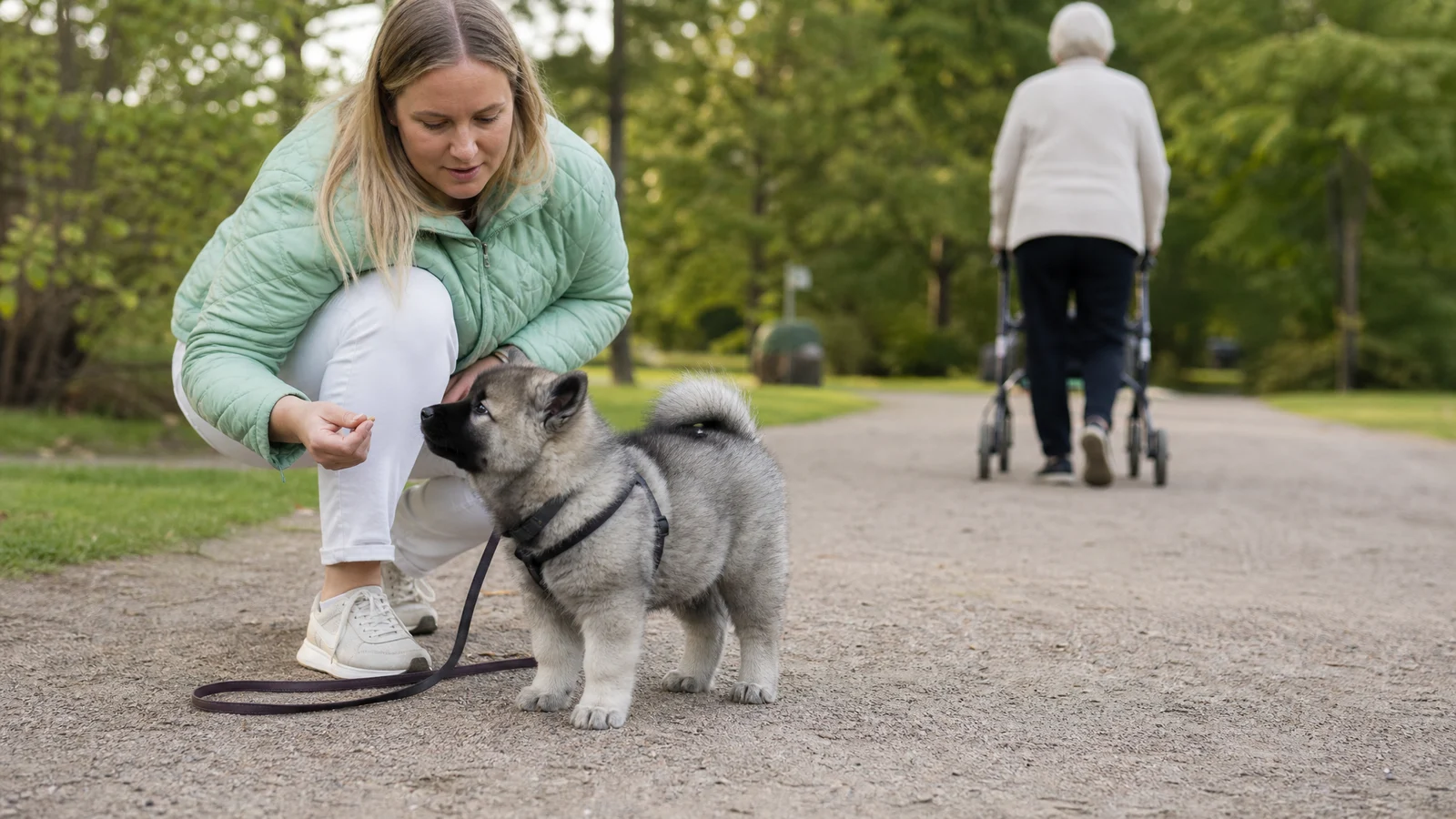 Puppy trainingSocializing Your Elkhound Puppy With Calm Introductions