 Elkhound
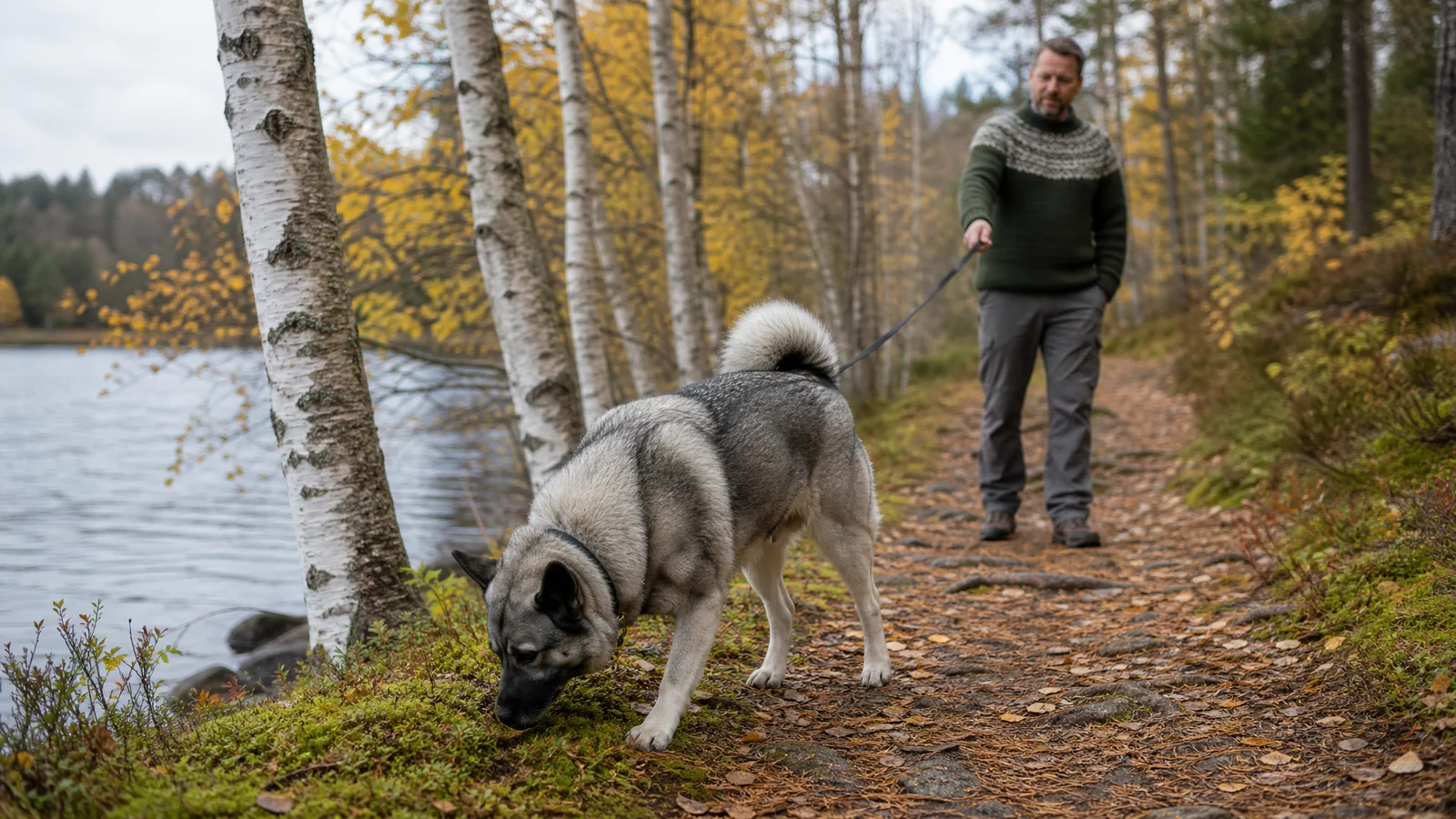
A Norwegian Elkhound does not put a nose down on a walk to be difficult. Scent is information, and following it is part of how this hunting breed reads a place. The practical goal is not to stop sniffing. It is to make sniff access predictable while keeping the leash safe and workable.
In this guide, we will separate those two skills so sniffing does not become an accidental tug-of-war. We will audit where the nose drops, install a clear finish cue and assign different rules to neighborhood, trail and recovery walks.
The aim is not a dog who ignores scent. It is a Norwegian Elkhound who can investigate when the route allows it, leave a scent picture without leash pressure and move home with enough recovery left to settle.
Nose Down on Walks Uses Two Currencies
Forward travel and scent access are both valuable to an Elkhound, but they do not need the same rules. During a focused segment, a loose leash keeps the team moving. During sniff time, the dog may choose direction within the safe length of the leash, provided the line does not stay tight.
The distinction protects sniffing from becoming a tug-of-war. If every odor is forbidden, the dog may pull harder whenever one appears. If every pull reaches an odor, tension becomes the price of admission. A release cue lets the handler grant access before the dog drags the team there.
The AKC breed profile cautions that the urge to travel and inspect the world is intrinsic to the breed. That context supports secure leash walks and long-line work in appropriate places. It does not mean an individual dog cannot learn check-ins and route boundaries.
The AVSAB training statement supports routines and clear guidelines taught with rewards. On this walk, a soft leash opens opportunities and sustained tension pauses forward access. The dog receives useful information without losing every chance to investigate scent.
Audit Nose-Down Patterns Before Changing the Walk
Before changing cues, walk one familiar route and record where the outing becomes difficult. Notice the first location where the nose drops, whether the dog can still take food and how long it takes to turn back toward you. The earliest change is more useful than the point where the leash is already tight.
| Route feature | What it can change | Easier choice |
|---|---|---|
| Fresh wildlife trail | Long tracking, faster pace, little response | Cross the trail at greater distance |
| Busy sidewalk edge | Rapid scent sampling and weaving | Use a wider verge at a quiet hour |
| Familiar sniff patch | Predictable pull toward one spot | Release before the leash tightens |
| Open field | More room, but stronger roaming interest | Use a secure long line and clear boundary |
A route can be physically easy and mentally intense. Ten minutes beside fresh animal tracks may demand more self-control than a longer loop on a familiar street. Compare the quality of movement and recovery, not only distance or time.
Check equipment during the audit. A well-fitted harness and ordinary fixed-length leash should allow comfortable movement with steady handling and no sudden leash pressure. A long line belongs in open, lawful spaces away from traffic, never around crowded feet or where it can wrap people, dogs or obstacles.
Keep recall work separate from permission to roam. The site's Norwegian Elkhound recall plan explains how to build returns on a long line. Sniff time on a regular walk is a controlled access system, not evidence that off-leash freedom is safe.
Norwegian Elkhound Cues for Nose Down on Walks
Choose a start phrase such as “go sniff” and a finish phrase such as “let's go.” The words matter less than the sequence around them. Start in a low-distraction patch where the dog can discover that one phrase predicts exploration and the other predicts reconnecting with you.
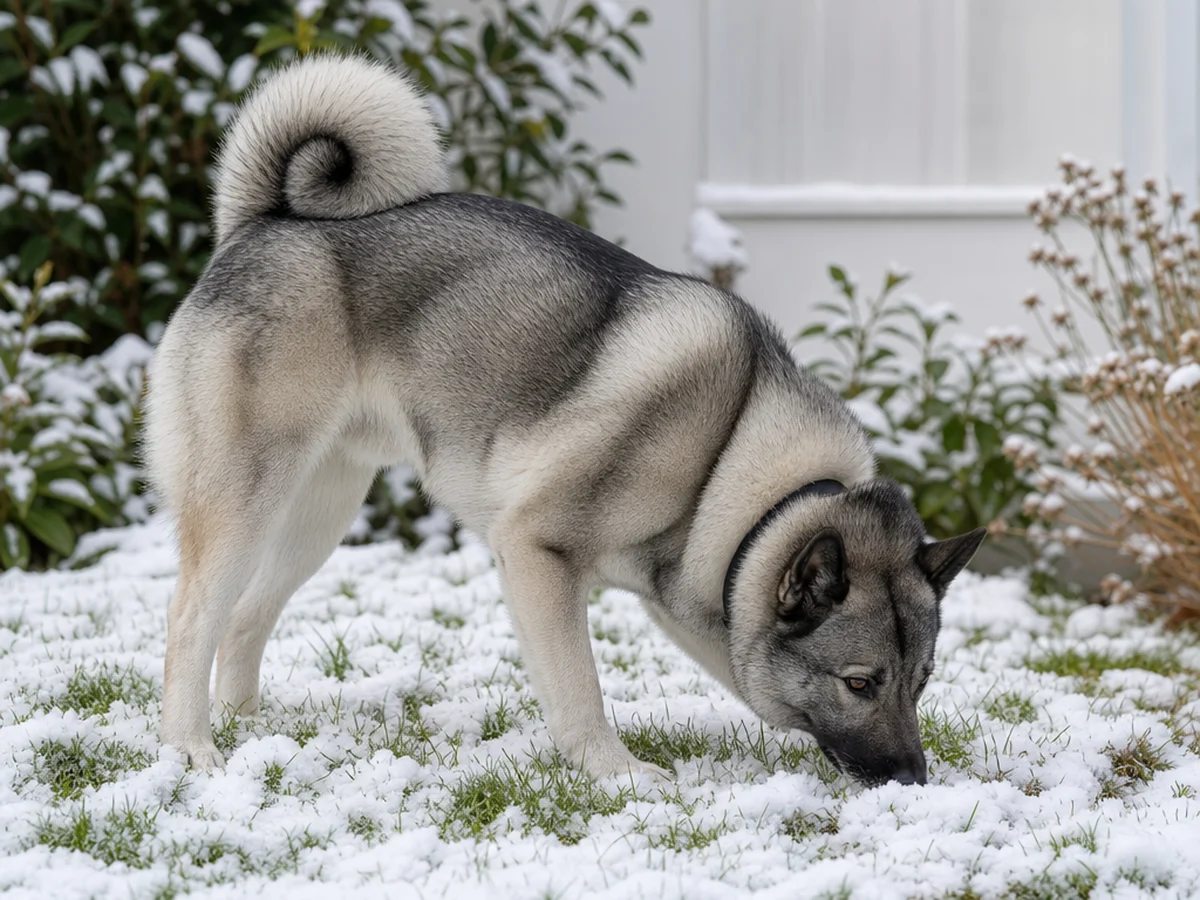
To teach the start cue, stop while the leash is soft, say the phrase and gesture toward the ground. Follow the dog for several steps within the safe area. The scent itself is the reward, so food is optional during this part unless a check-in occurs naturally.
The Finish Cue Returns to the Route
To teach the finish cue, wait for a tiny pause in sniffing. Say the phrase, move away with an inviting body turn and reward when the dog comes with you. Begin a focused segment for only a few steps, then release again before the dog has to fight a powerful odor.
Do not repeat the finish cue while standing still against a tight leash. That teaches the phrase as background noise. Move from an easier distance, shorten the sniff interval or use a better food reward so following the cue remains possible.
Brief sessions help the contrast become clear. The PDSA leash guide recommends stopping when pulling begins instead of pulling back. Combine that pause with access granted on a soft line, and the dog receives consistent information from both parts of the walk.
A Norwegian Elkhound Walk Ledger
A walk ledger is a simple sequence, not a strict minute schedule. It lists the job for each part of the route and the condition that moves the team forward. Begin with a connection check, alternate short focused and sniff segments, then finish with an easy decompression stretch.
- Start near home with a name response and two or three soft-leash steps.
- Release to the first low-intensity sniff patch before pulling starts.
- Use the finish cue during a natural pause and reward the turn with you.
- Walk a short focused segment past the narrow or busy part of the route.
- Release again in a wider area where the dog can choose a safe direction.
- End with an easy return rather than one final test beside the strongest scent.
Write only three notes afterward: the hardest location, the best check-in and the dog's state ten minutes after returning home. Those details reveal whether the next outing needs an easier route, more sniff access or shorter focused segments. Also note whether the dog drank, rested or kept searching at the door, since recovery can expose intensity that distance alone hides.
A short ledger should change the next walk. Keep it practical.
The Neighborhood Route Card
On a sidewalk, choose sniff patches away from driveways and street crossings. Use focused walking for the narrow sections, then release on a verge or quiet corner. The route card protects safety first and gives the nose a predictable place to work.
The Trail Route Card
On a trail, the environment may be one continuous scent picture. Ask for fewer focused steps and use more frequent check-ins rather than expecting a long heel. Turn around before fatigue or wildlife scent makes the return cue much harder than it was outbound.
The Recovery Route Card
After a busy day, choose a familiar loop with broad sightlines and low traffic. Let the dog investigate at an unhurried pace while you reward voluntary orientation. This is not a day to test closer passes or a new route.
Nose Down on Walks Without Leash Tension
When the line tightens, become still before the dog reaches the scent. Wait for any softening, head turn or step back, then mark that change. You can release toward the scent if the location is safe, which makes slack the action that restores access.
If the dog cannot soften, the odor is too close or too powerful for that repetition. Turn along a gentle arc and create distance rather than pulling straight backward. Reward movement with you, then offer a less intense sniff opportunity so the walk does not become a series of denials.
Rewards That Compete With Scent
Use food for choices that scent alone cannot pay well. A check-in near wildlife tracks may deserve a high-value reward, while a familiar curb sniff may reward itself. Matching the reward to the job respects the dog's priorities without handing route control to a tight leash.
Avoid turning every sniff into an obedience interruption. Frequent recalls from the ground can poison both the cue and the exploration. Let some sniff segments remain uninterrupted, and use the finish cue only when you are prepared to reward the transition.
If pulling happens throughout the outing, separate line practice from exploration for several days. Use a quiet block for soft-leash repetitions and a different safe patch for released investigation. This plan answers how purposeful scent access fits inside a workable walk, while the simpler setup keeps both skills available.
Use Home Nose Work to Support the Route
Home scent games reduce pressure on the daily route without replacing exercise. Scatter part of a meal in grass, hide food in open cardboard boxes or place a treat under one of several cups. Keep the first searches easy enough that the dog learns to persist calmly.
The Best Friends nose-work guide describes beginning with open boxes, some baited with food, so searching pays immediately. Use clean, safe materials and supervise. The aim is independent investigation, not tricking the dog with an impossible puzzle.
Formal nose work, tracking and other dog sports can provide a larger outlet for an Elkhound who loves scent. A class should still use humane methods and secure setups. Sport interest does not make ordinary leash safety optional.
Rotate search locations rather than endlessly increasing difficulty. A simple search in a new room changes airflow and context without hiding the reward beyond reach. End while the dog is still searching thoughtfully, not after frantic pawing or frustration.
Use the dog's search style to guide the next setup. A careful dog may enjoy several easy hides spread apart, while a fast dog may need fewer boxes and more room to slow down. Change only one feature so success still explains what the dog learned.
Check Recovery After the Walk
Progress appears across the whole walk. The dog reaches familiar patches on a softer line, finishes a sniff with fewer repeated cues and offers more spontaneous glances toward the handler. The return home also becomes easier, with less pacing or demand for another immediate outlet.
Watch for the opposite pattern. Longer pulling, frantic zigzagging, refusal of food, repeated scanning or difficulty settling afterward can mean the route was too intense. Reduce novelty, widen distance from wildlife areas or shorten the focused segments before adding more challenge. A calmer route for several outings is useful training, not a retreat from progress.
Signs Nose Down on Walks Is Working
Sudden changes in stamina, gait, breathing or willingness to walk deserve veterinary attention. Training cannot explain every change in outdoor behavior. Regular veterinary care also helps keep equipment and exercise choices appropriate for the individual dog.
For the next outing, choose one route and mark two sniff zones before leaving home. Release while the leash is soft, finish during a natural pause and record the dog's recovery after returning. A useful sniff walk is not the one that covers the most ground. It is the one where nose work, connection and safety can all happen together.
 BehaviorHeadstrong but Smart: Working With an Independent Elkhound
 BehaviorProtective or Possessive? Handling Guarding Behavior Kindly
 Puppy trainingTeaching an Elkhound Puppy to Settle Alone and Love the Crate