 Elkhound
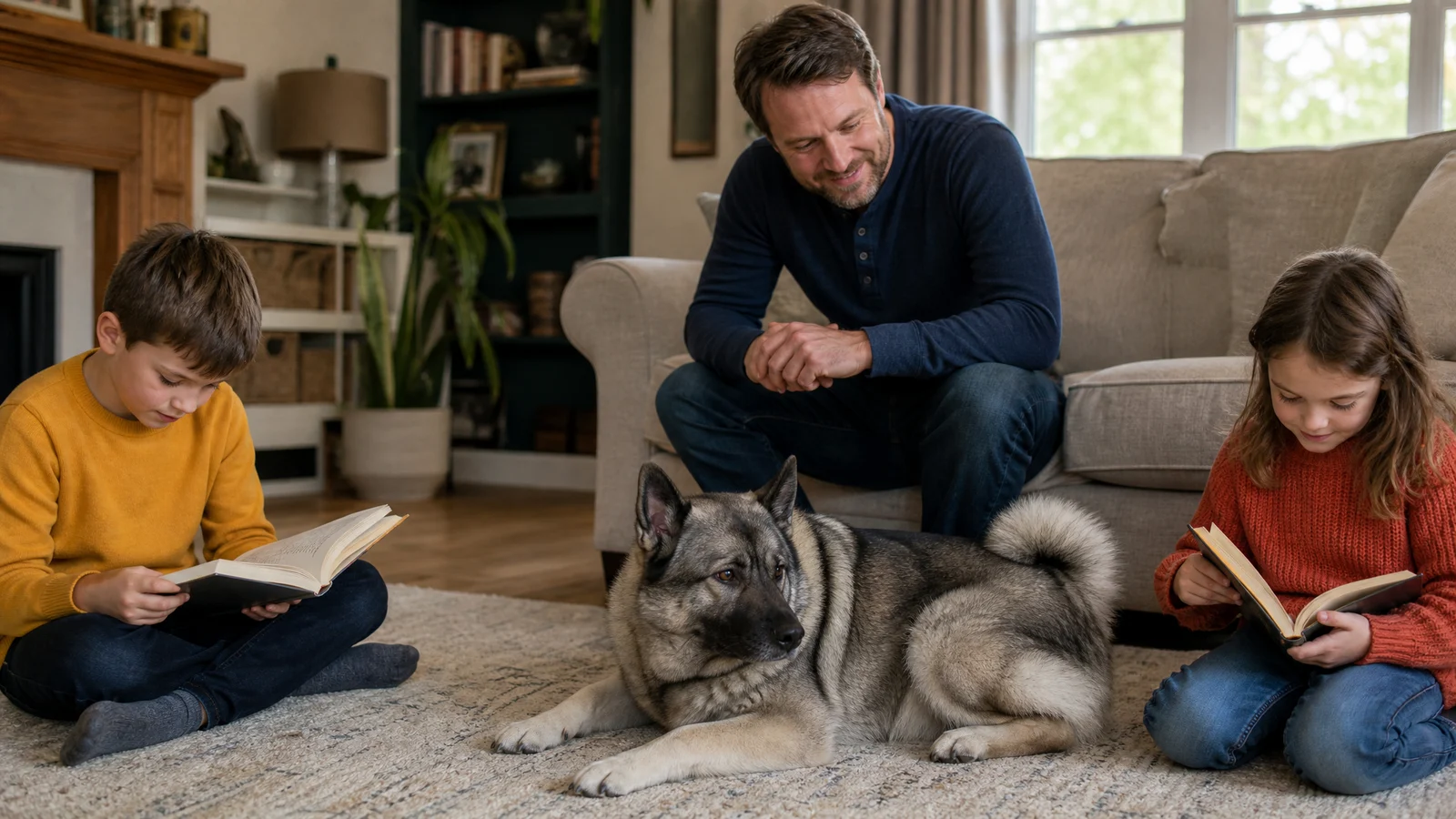
Yes, a Norwegian Elkhound is a good family dog when their daily exercise and training are actually met. The breed scores 5 of 5 for affection with family and 4 of 5 on both energy and mental stimulation, and that sums up life with one: a devoted dog who gets loud and inventive when the day is dull.
Plan for noise, too. Many owners find Elkhounds far more vocal than any dog they have owned before, and some adopt the whole street as their territory. Handled well, you get a warm, funny housemate. Handled badly, you get the same announcements aimed at every neighbor.
In this article, we'll go through how an apartment, a house full of small kids, a second dog and a long workday each change the socializing job. We finish with a plan covering the first two weeks that you can begin tomorrow.
Why Elkhound Affection and Energy Shape Socializing
The warmth is real. Elkhounds are loving, good-natured dogs who respond to praise, and a lot of communication happens through expression, gesture and tone of voice. They are normally friendly, even with strangers, though many stay reserved until introductions are made and then become trustworthy friends.
The energy is just as real. The parent club says Elkhounds need 20–30 minutes twice a day of consistent exercise, or they may struggle with the calm housepet role most owners expect. Add a vigilant watchdog streak and an independent mind, and the pattern behind every household below is clear: an affectionate dog wants to be in the middle of things, and an under-exercised one makes the middle of things louder.
Barking varies more than the ratings suggest. Some Elkhounds patrol every corner of the yard each morning and bark at trucks, passers-by and the neighbor dog. Others bark only to alert, or once to be let in, and some save most of it for outdoor play. Work from the dog you have, and aim for a quick quiet on request, rewarded every time, rather than total silence.
These points hold in every household that follows:
- Two real outings a day come first, because training a dog who has not burned off energy mostly teaches them to tune you out.
- Training is lifelong with this breed, and short sessions beat long drills for a dog who learns fast and then decides they have already done this.
- Reward-based does not mean rule-free. Structure and routine are what make an independent dog easy to live with.
- A settle on a mat is the best off-switch you can teach, and the steps appear in the kids section.
Socializing a Norwegian Elkhound in an Apartment
An apartment shows off both big traits at once. There is no yard to absorb the energy, and the walls carry the voice straight to the neighbors. The job here is managing what your dog sees, what they meet in shared spaces and how they spend the hours indoors.
Windows and Walls
A street-facing window is a live news feed for a dog bred to notice everything. Every person, truck and neighbor dog becomes a bulletin, and an Elkhound left to watch will report on each one. Cut the view with removable privacy film on the lower panes or rearrange the furniture so the sidewalk is no longer a front-row seat.
Then reward the first pause after an alert bark. Say your marker word the moment they go quiet and hand over a treat. After a few days, many dogs start glancing at you after they bark, which is exactly the habit you want.
Hallways, Elevators and the Lobby
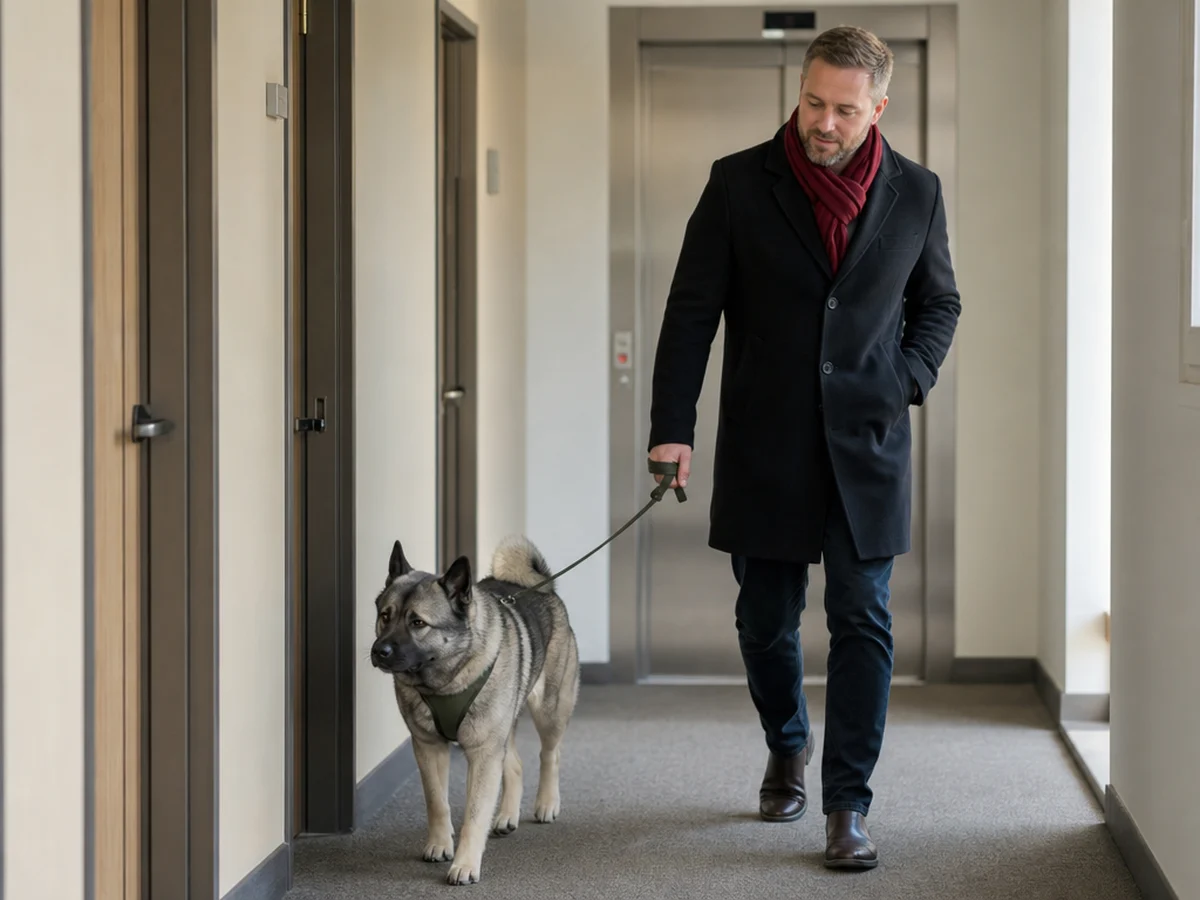
Shared spaces are where social skills get built or broken. Elkhounds tend to be friendly but reserved, so give strangers a job: a neighbor offers a treat on a flat palm while your dog stands or sits at a polite distance. Keep these hellos dull and frequent. Step to the side when someone passes so your dog is never cornered in a narrow hall.
Indoor Games for Bad-Weather Days
Weather and long days will eat into outings sometimes, so keep a few games ready:
- Scatter part of a meal across the floor or in a snuffle mat so your dog has to find it by scent.
- Hide treats in several rooms and send your dog to search, which tires the brain as well as the legs.
- Practice sit, down and mat in a very short session, and end it while your dog is still eager for another round.
These top up the walks and do not replace them. Let part of each outing be slow sniffing, since that tires a dog differently than marching. Skip the crowded dog park when your dog is already wound up, because an overexcited dog in a crowd practices exactly the wrong thing.
Socializing Around Young Kids Under Foot
A house with a toddler and school-age kids is where the breed's affection pays off, and where an adult has to do the supervising. The rating for good with young children is 3 of 5, which the scale reads as good with supervision. Elkhounds are playful and energetic, and a toddler in the path of a happy dog is a collision waiting to happen.
Start with greetings. When the kids come in, have them walk in calmly and ignore the dog for a minute, while your dog earns a treat for staying with every paw on the ground. Then move the party outside for a short play session. A baby gate gives the youngest family member a dog-free zone and gives the dog a break from small hands.
House Rules for Children
Kids need their own short list, and it is worth posting somewhere they will see it.
Kids should let the dog eat, sleep and rest on their mat without being disturbed. When they offer treats, they use a flat hand and let the dog come to them.
There is no hugging around the neck and no climbing on the dog. If the dog walks away, the game is over, and that choice is always respected.
Our guide to kids and Elkhounds getting along goes deeper on this. The skill the dog must learn is retreat and settle, since the mat gives them somewhere to go when the house gets loud.
Teaching the Mat Retreat
Work in short, happy sessions and follow these steps:
- Put the mat on the floor and reward any look or step toward it.
- Reward standing on the mat, then sitting, then lying down, marking each as it happens.
- Once lying down is reliable, deliver treats between their paws, then slowly stretch the gap between treats.
- Add a cue word just before they head to the mat on their own.
- Practice with mild distractions, such as someone walking past, and reward calm.
- Release with a word and a small reward so the dog learns when the job ends.
Visiting friends are a separate test. An Elkhound can be protective of family and property, and a room of shrieking children may set off barking. Send your dog to the mat with a chew before guests arrive, and see our piece on Elkhound barking at visitors for more.
Socializing in a Two-Dog Household
A second dog doubles the fun and, with an Elkhound, tends to double the volume. The rating for getting along with other dogs is 3 of 5, again meaning with supervision, and the breed's independent streak means your dog will hold firm opinions about who sits where. Plan the introduction instead of hoping they sort it out in the hallway.
Meet on neutral ground, walking side by side with enough distance that both dogs can still look at you. Reward each dog for checking in with you rather than staring at the other, and close the gap slowly. Keep early sessions short and end while both are relaxed.
Managing Resources at Home
At home, most early squabbles are about stuff, not feelings. Give each dog a separate feeding spot, a bed of their own and a private place for high-value chews. Rotate toys and pick up whichever one causes trouble. Sharing can come later, once both dogs trust that nothing will be taken.
Fairness matters just as much. Each dog gets one-on-one time and, ideally, a walk apart from the other, because two dogs walked together split the sniffing and double the fence energy. Dogs who bark along a fence line can turn the barking into a duet with a neighbor dog, and a second dog at home makes the chorus bigger.
Keep fence time supervised, call both in for a treat before the barking peaks and reward them for settling inside. If the dogs freeze over a toy or a doorway, call one away calmly, reward the move and give both a short time-out if the tension stays.
Socializing When the Owner Works All Day
This is the setup where an Elkhound is hardest to keep happy. A dog rated 4 of 5 for energy and 4 of 5 for mental stimulation cannot bank a morning walk and spend it across a long workday. Chances to play, chase, smell and chew are part of every dog's day, and a dog without them will invent some, usually involving your couch cushions and the patience of your neighbors.
We have trained this breed for many years, and the households that thrive here treat their schedule as a contract. Real exercise goes before work and again after, a walker, neighbor or daycare handles the midday gap, and the hours between are covered with chews and puzzle toys. A friendly stranger with a leash and treats also keeps an affectionate dog's people skills in practice. Here is a sample day:
| Part of Day | What Happens |
|---|---|
| Before work | A brisk outing with plenty of sniffing, then a puzzle toy |
| Midday | A walker, neighbor or daycare visit with a bathroom break and a few quick training reps |
| Afternoon | A long-lasting chew or snuffle mat while the house is quiet |
| After work | The second outing, 20–30 minutes, then a short training session |
| Bedtime | Settle on the mat while the family winds down |
Be realistic about what a schedule can do. Exercise alone rarely fixes unwanted behavior completely, so the common advice to simply tire them out only gets you partway. Dragging a stressed dog through a busy place can make things worse, and a quiet route beats a crowded one.
If you cannot arrange a midday break or protect the morning and evening outings, and the barking and chewing keep climbing, this household may not suit an Elkhound right now. A sudden change in behavior is worth a call to your vet to rule out a physical cause, and regular checkups belong in the routine either way.
A Two-Week Plan for a Calmer Norwegian Elkhound Home
This plan starts with the exercise schedule and adds one skill at a time, so nobody has to change everything at once. Pick the household above that matches yours, do the daily basics and add that household's socializing task. Keep sessions short, end on a success and pay well in treats and praise.
- First few days: lock in two outings a day of 20–30 minutes each, with sniffing time, and put them on the calendar. Cut down the window view if your dog patrols it.
- Rest of week one: teach the mat in short sessions and reward every pause after an alert bark with your marker word and a treat.
- Early week two: add the cue word to the mat and practice it during dinner or TV time.
- Midweek two: add your household's task. Apartment owners set up neighbor treat hellos. Families run calm door greetings with each child. Two-dog homes start separate feeding spots and a supervised mat session. Workday owners test the midday plan.
- Final days: repeat the hardest moment of your day with all the skills in place, then check progress on day 14.
On day 14, ask three questions. Does your dog settle within a few minutes when asked? Do they quiet down after an alert bark? Are both outings happening every day? If the answers are yes, keep going, because training for this breed never really ends.
If not, change one thing, usually the amount of exercise, and book a vet visit if something seems off. An Elkhound fits family life when the walks are real, the training stays kind and the settle practice continues, which gets you the loving dog on the rug beside you instead of the one at the window running the street.
 Training basicsTeaching a Reliable Recall to an Elkhound Who Wants to Roam
 Exercise and jobsNorwegian Elkhound Service Dog and Therapy Work Training Basics
 Training basicsLoose-Leash Walking With a Dog Built for Endurance