 Elkhound
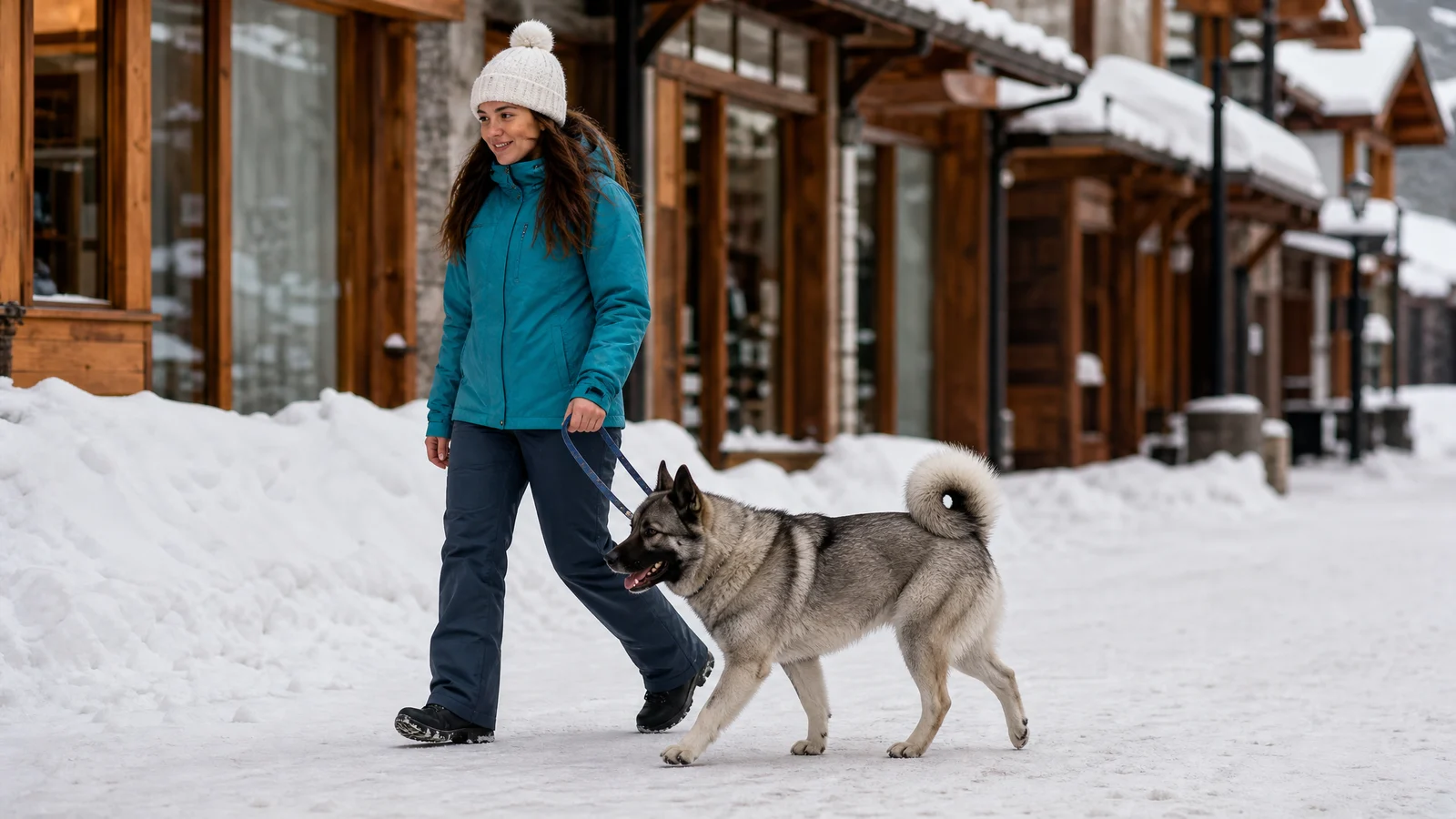
A Norwegian Elkhound in the teenage months may respond beautifully in the kitchen and ignore the same cue beside a scent trail. That is not proof that puppy training vanished. Growing confidence, physical ability and environmental interest can change the cost of a response from one context to another.
This guide uses context gates instead of blaming every setback on adolescence. You will map where behavior changes, tighten management, rebuild four core skills and decide which privileges can return without guessing.
The teenage months are not a single training emergency. The useful plan separates a young dog's changing environment from sudden behavior that deserves veterinary or qualified training support promptly.
Norwegian Elkhound Teenage Months Change by Context
Adolescent change is often uneven. The dog may settle well after exercise but struggle when visitors arrive, or recall in a yard and fail near wildlife scent. List the locations and triggers where reliability changed instead of declaring every skill lost.
Physical growth can make old behavior more consequential. Jumping reaches higher, a door dash travels farther and leash pulling moves the handler. Management must catch up with the dog's body even while the underlying skill is rebuilt at an easier level.
The national breed club describes the Elkhound as energetic, intelligent and independent, with protective tendencies. Those traits provide context for adolescence. They do not predict the exact timing or intensity for one dog.
Measure recovery as well as response. A young dog who misses a cue but reconnects quickly is in a different place from one who remains unable to eat or orient for several minutes. Recovery determines whether to practice again or leave the setting.
A Context Ledger for the Teenage Months
Use four columns: setting, trigger, response and recovery. A successful kitchen settle and a difficult visitor arrival can both be true. The ledger keeps the family from treating adolescence as one global failure and shows which setup needs a smaller step.
Review patterns across several comparable days. Weather, sleep and a new environment can change one session. We look for repeated changes before advancing privileges or redesigning the whole routine.
Management During the Norwegian Elkhound Teenage Months
Management prevents the dog from rehearsing behavior that training has not caught up with yet. It can include a gate at the entry, a long line in a secure open area, closed access to food preparation and planned distance from difficult dogs. These are temporary safety systems with clear jobs.
| Management job | Training job | Why both matter |
|---|---|---|
| Gate blocks the open door | Practice waiting behind a closed door | The dog cannot rehearse a dash |
| Long line prevents roaming | Reward short recalls | Misses stay safe |
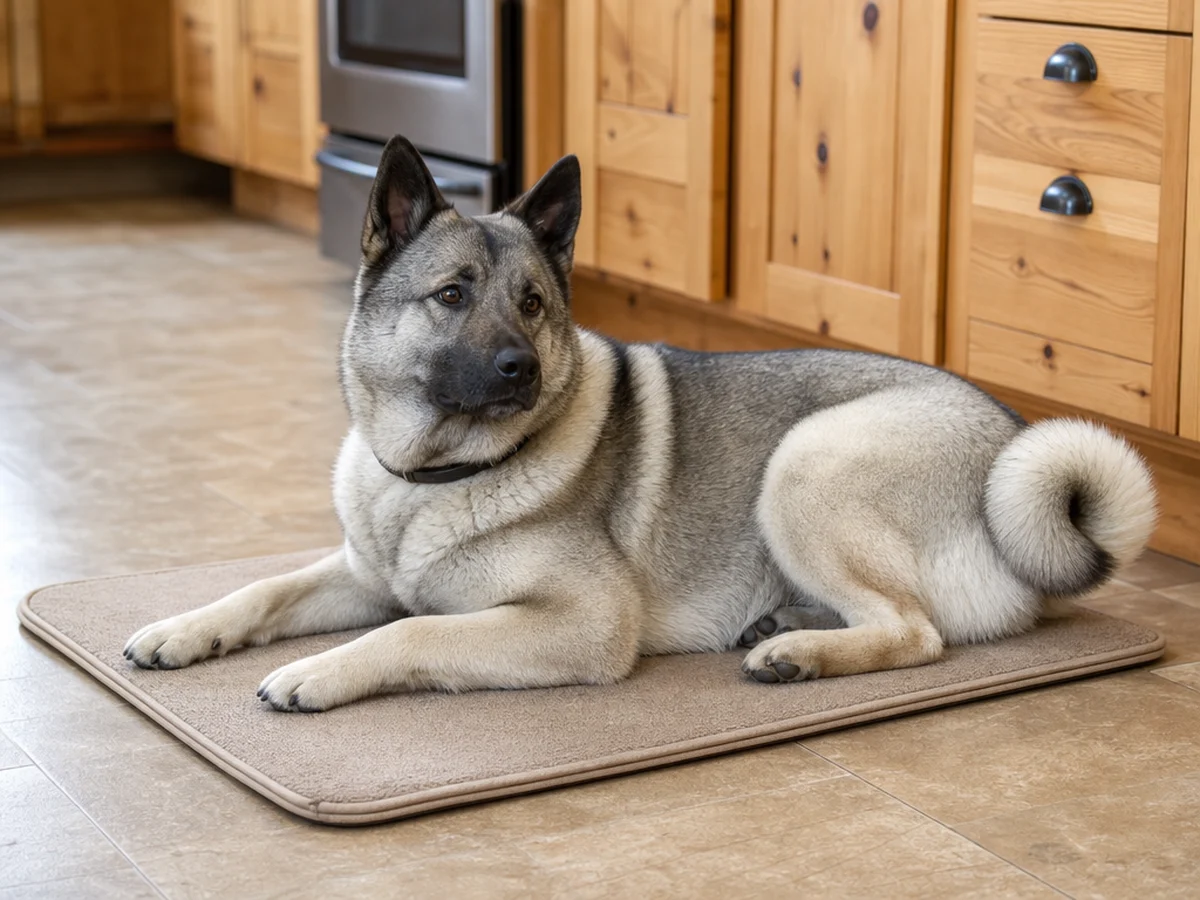
| Mat sits away from dinner | Build settle duration | Food stealing does not pay |
| Distance from a trigger | Reward orientation | The dog can still learn |
Do not remove every outlet in the name of control. A teenager still needs movement, sniffing, sleep, social contact suited to the individual and chances to make safe choices. Management narrows risky options while preserving an appropriate life.
Agree on household rules. If one person opens the door during jumping and another waits for a mat, the dog receives two systems. Choose the simplest response everyone can deliver, then prepare rewards and barriers where the behavior happens.
Management Has an Exit Condition
Write what must be true before a barrier changes. The door gate might remain until the dog reaches the station on one cue during several mild setups. An exit condition prevents management from disappearing because the family feels impatient.
Rebuild Four Skills in the Teenage Months
Return each skill to a version the dog can complete easily. Reward the first clean response, stop before attention fades and change only one environmental feature at a time. We are rebuilding fluency in new conditions, not proving that the puppy lesson once happened.
Choose one skill per session. Mixing recall, doors, settling and handling makes a miss hard to interpret. A narrow session lets the family know which variable changed and preserves enough attention for ordinary life afterward.
Recall and Reconnection
Use a secure long line in an appropriate open space. Reward short returns away from mild distractions, then release to sniff when safe. The reward should make coming back worthwhile without ending every interesting activity.
End recall practice before the line is needed to stop a chase. One successful return from a mild scent is enough to record. On the following day, restore that distance and confirm the return before choosing a livelier distraction.
Doors and Thresholds
Practice with the exterior door closed. Reward the dog for moving to a station, touch the handle and return to pay again. Add a small opening only when the station remains easy, while a gate provides backup.
Include both arrivals and departures. A teenager may wait while leaving but rush when a family member comes home. Rebuild the station with a familiar helper outside, then add the real greeting after the dog can stay oriented.
Settling Around Household Activity
Teach settling before the busiest hour. Deliver calm rewards on a mat for a lowered head, hip shift or relaxed breath. Release the dog before restlessness begins, then add meal preparation or family movement in small pieces.
Handling and Cooperative Care
Growing dogs may become less tolerant of rushed handling. Pair one brief touch with food, pause and let the dog move away. A release cue and no-slip surface make grooming or examination more predictable without forcing a long session.
Keep social exposure calm and optional. The site's Elkhound puppy training guide emphasizes reading the dog between exposures. Adolescence is not a reason to flood the dog with strangers or busy places to “get over” uncertainty.
Channel Energy During Norwegian Elkhound Teenage Months
Energy needs an outlet, but exhaustion is not the training objective. Combine age-appropriate physical activity with sniffing, short skill sessions and rest. A dog who never practices settling may become fitter without becoming easier to live with.
Use small jobs inside the routine. Use a brief orientation cue at the yard door, offer a food search after a walk or hide a toy in one room. The task should have a clear finish so arousal can come down afterward.
The AVSAB training statement describes capturing, shaping and luring within humane, reward-based work. Capture choices the teenager already offers, such as checking in or lying down, then pay them before asking for a harder version.
Protect sleep. An overtired adolescent can become mouthy, vocal or unable to settle, which looks like a training failure. Build quiet periods into the day and use a familiar resting area rather than adding another stimulating activity.
Outlets Need a Clear Finish
End a search with a simple cue, collect the materials and move to water or rest. End play with a toy exchange and a scatter. A clear finish teaches the teenager how activity changes state instead of leaving arousal to fade by accident.
Balance novelty with familiar routes. A new trail can provide rich scent information, while several new places in one week may make recovery harder. Keep at least one easy walk where the dog can succeed without a major training test.
- Movement outlet: a safe walk with sniff access.
- Mental outlet: one short search or skill game.
- Social outlet: calm time with compatible people or dogs.
- Recovery outlet: uninterrupted rest in a familiar space.
A Privilege Ladder for the Teenage Months
Privileges return one rung at a time. The lowest rung uses full management and an easy skill. The middle rung adds limited access with supervision. The top rung offers ordinary freedom only after repeated success in that exact context.
- Gate and leash prevent the risky behavior while the easy response earns rewards.
- One barrier is reduced for a short, planned repetition.
- Supervised access expands within the same room or route.
- The dog succeeds with a mild real-life distraction.
- Ordinary freedom returns while backup remains available.
Advance only one privilege per review. A dog who earns more yard freedom does not automatically earn an open front door or off-leash access. Each context has its own reinforcement history and safety cost.
Privilege Reviews During the Teenage Months
Ask whether the dog responded on the first cue, stayed able to eat and recovered within the usual period. Avoid labels such as “better” without a behavior attached. Observable evidence lets different family members make the same decision.
Keep the successful rung for several ordinary repetitions before advancing. One perfect training setup may not survive groceries, visitors or a windy evening. Real-life variation belongs inside the current rung before more freedom appears.
Write down who supervised and which backup was present. A rung practiced with one experienced adult may need to be easier for another family member. The dog is learning a shared system, and each handler needs a history of success.
If behavior slips, return one rung without drama. The ladder is a decision tool, not a grade. Restoring a gate or line prevents another rehearsal while the skill is refreshed.
Alone-time privileges may need their own ladder. The related Elkhound crate training guide uses before-during-after evidence and tiny departures. Do not lengthen absences merely because the teenager handles more freedom elsewhere.
When the Teenage Months Need Professional Help
Seek qualified help when adolescence includes a bite, repeated snapping, escalating guarding, panic during separation or fear that prevents ordinary care. The ASPCA aggression guide recommends behavior modification guided by a qualified professional for aggression concerns.
Regular veterinary care supports the adolescent plan. Sudden changes in movement, sleep, appetite or tolerance deserve prompt veterinary attention. Growing does not explain every new behavior. The Battersea professional guide distinguishes trainers for skills from behaviorists for problems such as aggression and separation distress.
Keep the review narrow enough that the household can act on it. Compare the current notes with the last week instead of relying on the hardest recent memory, and include one quiet day when the environment asked less of the dog.
At the end of each week, review one context: what management prevented, which response improved and how quickly the dog recovered. Advance one privilege only after repeated success at the current rung. Patience becomes practical when freedom follows evidence instead of age.
Before the appointment, write down the first context where behavior changed, the management already in place and what recovery looks like after a difficult event. A concrete record helps the veterinarian or trainer separate a broad adolescent pattern from a sudden change that needs a different response.
 BehaviorWhy Does My Norwegian Elkhound Bark So Much at Visitors?
 Training basics“Didn't We Already Do This?” Keeping an Elkhound Engaged in Training
 BehaviorIs a Norwegian Elkhound a Good Family Dog?