 Elkhound
Yes, you can train an adult Norwegian Elkhound. Age does not erase the ability to learn, but it does mean you are working with rehearsed habits, a known daily rhythm, and preferences that deserve to be understood before you ask for change.
An Elkhound may learn a new cue quickly and still decide that the old option pays better. The useful question is not whether the dog is too old. It is what happens before the habit, what reward follows it, and which small replacement can succeed in the same moment. That tradeoff is why the audit follows consequences rather than age.
This guide uses a before-and-after habit audit. You will observe one ordinary day, choose one change, build a reward-based replacement, and compare what the dog can do after practice. The aim is a clearer routine, not a personality rewrite.
Norwegian Elkhound Adult Training Starts With Today
Do not begin by testing every cue the Elkhound might know. Watch breakfast, doorways, walks, rest, greetings, and evening activity as they already happen. Familiar routines reveal where the dog is comfortable and where people have accidentally taught a less useful pattern.
Write observations, not labels. “Pulls toward the gate after the latch clicks” gives you a starting point. “Stubborn at the gate” does not tell you what to change, and it turns a predictable sequence into a character judgment.
The Norwegian Elkhound Association of America describes the breed as sensitive to praise and reproof, with much communication possible through voice, expression, and gesture. That responsive temperament makes your timing and body language part of the audit. A tense person can change the picture before a cue is spoken. Consistent signals make the replacement easier to recognize across ordinary household moments.
Include the people in the household too. If one person rewards waiting while another opens the door during a surge, the old habit still receives occasional payment. Agree on the replacement, the marker, and what access follows it before practice begins.
Keep management in place while the new response grows. A gate, leash, closed window view, or prepared mat can prevent the strongest rehearsal. Management protects the lesson and gives the adult dog more chances to practice the response that now works.
Map the Habit Loop Before Training
Record the cue from the environment, the dog’s response, and the result. A knock may lead to barking, then the door opens. A tight leash may lead to another step toward a smell. Results explain why habits survive.
Include what happens just before success. If the dog settles after a walk but paces before one, movement needs may be changing the training picture. If a cue works in the kitchen and disappears outside, distraction is part of the task rather than proof that the learning vanished. The sequence often reveals an easier training point before the unwanted response begins.
Choose One Norwegian Elkhound Training Change
Pick the habit that would improve daily life most, then describe its replacement in visible terms. “Be better at doors” is vague. “Wait with four paws behind the threshold until released” gives everyone the same behavior to notice and reward.
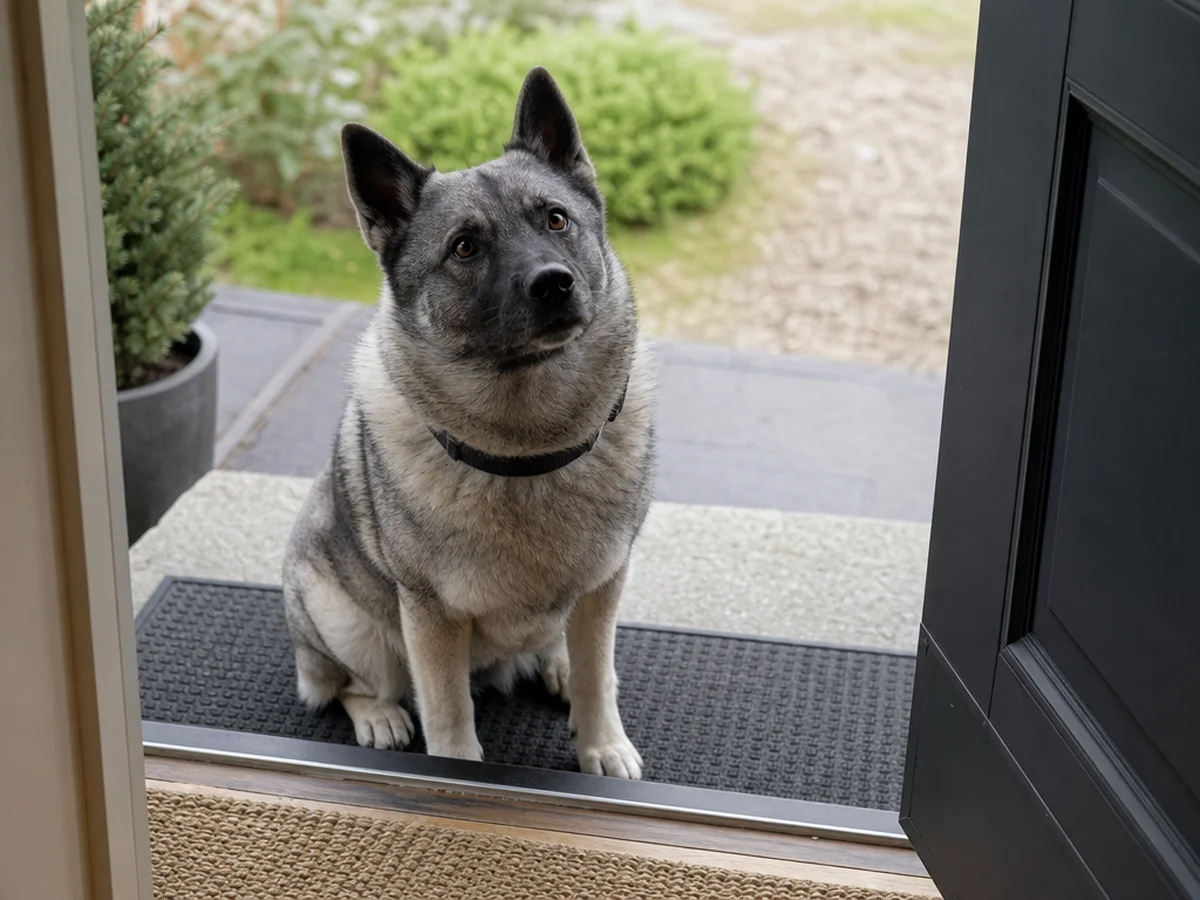
Start with one context. A sit in the kitchen, at the front door, beside a car, and near another dog may sound like one skill to a person, but each setting changes the problem for the dog. Build the easiest version before asking the cue to travel.
The first choice might be a check-in before a walk, a pause at a doorway, a relaxed mat during dinner, or returning from the yard. For foundation mechanics, the site’s Elkhound training guide separates markers, rewards, and releases. The guide to Elkhound training engagement helps when a known behavior loses energy after repetition. We choose only one of these starting points so the new rule stays legible.
Adult Elkhound Training Needs a Reward Audit
We treat a reward as whatever the dog wants in that moment. Food may matter indoors while access to sniffing matters outdoors. Praise can be powerful with this breed, but it should be warm and specific rather than used as a substitute for every other payoff.
Offer a small choice test away from the difficult habit. Present two safe foods on separate repetitions, or compare food with a brief toy game. On a walk, notice whether a treat or release to investigate earns the faster return. The answer can change by location and time of day.
The RSPCA explains that giving the dog something they value makes the rewarded response more likely. It also recommends short sessions, which fit an Elkhound who understands quickly and loses interest in empty repetition.
Build a Better Payoff After the Audit
Place the reward where the replacement ends. For a doorway wait, deliver behind the threshold before releasing forward. For a mat settle, place food between the paws. Reward location quietly shapes where the dog returns next time.
Use access as well as food. A loose leash can open the route to a smell, and a voluntary return can earn another turn in the yard. The dog learns that cooperation does not always close the interesting part of life.
Keep an easy reward available for surprise opportunities. Adult habits occur outside planned sessions, so the new response must pay during real life too. If the pocket is empty whenever the doorbell rings, the old sequence keeps winning.
Adult Training Replaces One Habit With Another
Stopping a behavior leaves an empty moment. Fill it with something the adult dog can do comfortably. A dog who jumps at a visitor can go to a mat, a dog who surges through a door can pause behind a line, and a dog who barks for dinner can offer quiet eye contact. Each replacement preserves a useful way for the dog to participate.
Teach the replacement away from the trigger first. A mat should be valuable before a guest appears. A doorway pause should be easy when nobody is rushing. Training at full difficulty turns the lesson into a contest with the strongest version of the old habit.
The brief’s welfare sources support humane, reward-focused teaching. The breed club likewise emphasizes sensitivity to voice and expression. Clear structure comes from predictable access and practiced alternatives.
Use this short audit before increasing difficulty. Keep the lines brief enough to compare after several real opportunities.
- Name the environmental cue that starts the old sequence.
- Arrange a simpler moment in which the replacement can occur.
- Mark the earliest useful piece and reward it in position.
- Release clearly, then note what changed on the next opportunity.
When the old response appears, lower difficulty and wait for a small piece of the replacement. Mark a glance away from the window before asking for a full mat settle. Reward one step back from the door before expecting a long wait. Small pieces give the dog a route out.
Practice Norwegian Elkhound Training in New Places
Once the replacement works in one easy location, alter only one feature. Move the mat a few feet, practice with the door partly open, or add one familiar person. Changing room, distance, duration, and distraction together makes it impossible to tell which part caused the miss.
AKC describes the Elkhound as a fast learner who may react as if repeated drills have already been completed enough times. That quick-learning pattern favors short questions in varied settings. It does not mean rushing from one unfinished behavior to another.
Use the dog’s first response as information. A pause, slower movement, or refusal of food can mean the setting is too hard. Return to the last version that produced a loose body, then make the next change smaller.
A Three-Context Transfer Test
Ask for the behavior in the original room, a nearby quiet place, and one everyday setting where it will matter. Reward each successful response as though it is new. The transfer is complete only when the dog can understand the cue without relying on the original floor, furniture, or person. Transfer matters because adult habits usually occur beyond the original practice room.
Do not run all three tests in a row if enthusiasm drops. One successful context today and another tomorrow preserves interest. Variation should refresh the question, not disguise a long drill.
Adult House Training Gets Its Own Audit
An adult who has accidents needs a fresh routine, not punishment after the fact. Take them to the same appropriate place after waking, meals, play, and other predictable transitions. Stay present so you can reward immediately after they finish.
Humane World advises giving praise or a treat once the dog has finished. That immediate reward connects the correct location with the payoff. Bringing the dog inside before rewarding can make the connection less clear.
Supervise during the reset and clean old sites thoroughly. If you cannot watch, use a comfortable managed area for a short period rather than giving the dog another chance to rehearse the accident. Expand freedom after a reliable pattern has returned.
A sudden change in house training, sleep, movement, appetite, or tolerance deserves veterinary attention. Health changes can alter behavior, and pain or age-related changes may affect older dogs. Maintain regular veterinary care instead of assuming every new problem is a training choice.
Measure Adult Training Without Chasing Perfection
Compare the after picture with the original notes. Count opportunities rather than days. Did the dog pause at three of five ordinary door openings, recover faster after a miss, or offer the replacement before a cue? Those are meaningful changes even when the old response still appears.
Continuing play, exercise, and training throughout an older dog’s life remains useful. The ASPCA’s older-dog guidance also emphasizes patience when learning slows. Adjust reward value, session length, surface, and physical demands to the individual.
Plateaus call for a smaller question. Reduce the doorway opening, shorten the mat duration, or move farther from the distraction. If fear, guarding, intense reactivity, or repeated confusion blocks progress, consult a qualified reward-based trainer. Start with a veterinarian when behavior changes suddenly or movement appears uncomfortable.
Keep the record simple enough to use. Note the setting, trigger, response, and reward in one line. A week of clear observations is more useful than a long account of whether the dog seemed good or difficult.
One Adult Training Habit to Start Today
Choose one routine that will happen before bedtime and observe it once without changing anything. On the next opportunity, arrange an easier version, mark the smallest useful response, and give a reward the Elkhound values there. Stop after that success.
Tomorrow, repeat the same replacement in the same context, then vary one feature only after it is easy. Keep the before note beside the after note. An adult Elkhound does not need a clean slate to learn, only a clear path that pays better than the established habit. That measured change keeps the next repetition familiar enough to understand.
Lifelong training can be quiet and ordinary. A pause at a gate, a return from the yard, or a relaxed body on a mat may never look like formal obedience. It still changes the household because the dog understands what works now.
 Exercise and jobsSniff Time on Walks for a Norwegian Elkhound With a Busy Nose
 BehaviorHeadstrong but Smart: Working With an Independent Elkhound
 BehaviorProtective or Possessive? Handling Guarding Behavior Kindly