 Elkhound
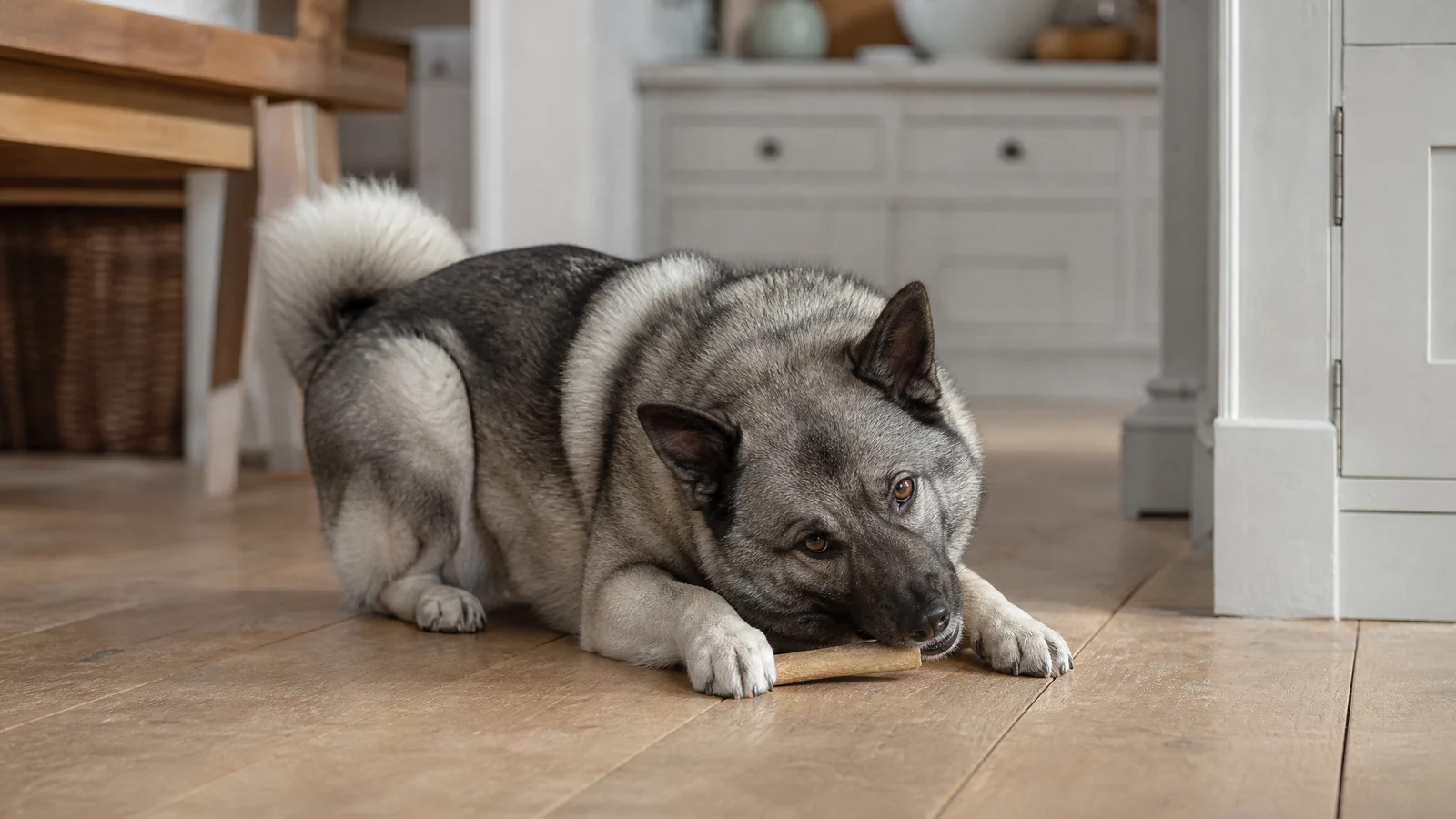
A Norwegian Elkhound who barks at the property line is not necessarily guarding a food bowl for the same reason. Protective alerting concerns a boundary or possible threat. Possessive behavior concerns losing access to food, an object, a space or even a person. Training starts by naming the exact target.
This guide builds a resource atlas before it builds exercises. You will identify what the dog protects, arrange three safety rings and rehearse exchanges without testing tolerance or reaching into conflict.
Separate practical working sections address food, found objects, people, resting spaces and other pets. The final threshold explains when management should give way to qualified veterinary or behavior help.
A Norwegian Elkhound Guarding Resource Atlas
The national breed club notes that an Elkhound can be protective or possessive of family and property. That context does not identify today's target. Build an atlas with four pages: food, objects, spaces and people, then record the first visible request for distance on each page.
Do not stage an encounter to complete the atlas. Use events that already happened and ordinary observations made beyond the dog's reaction distance. The useful details are the target, approach direction, earliest body change and what allowed recovery.
Food Page
Food patterns may involve a bowl, dropped item or preparation area. Record whether the dog eats faster, covers the food or stops moving when a person enters. Feed behind a closed barrier while the map is incomplete so meals do not become daily tests.
Object Page
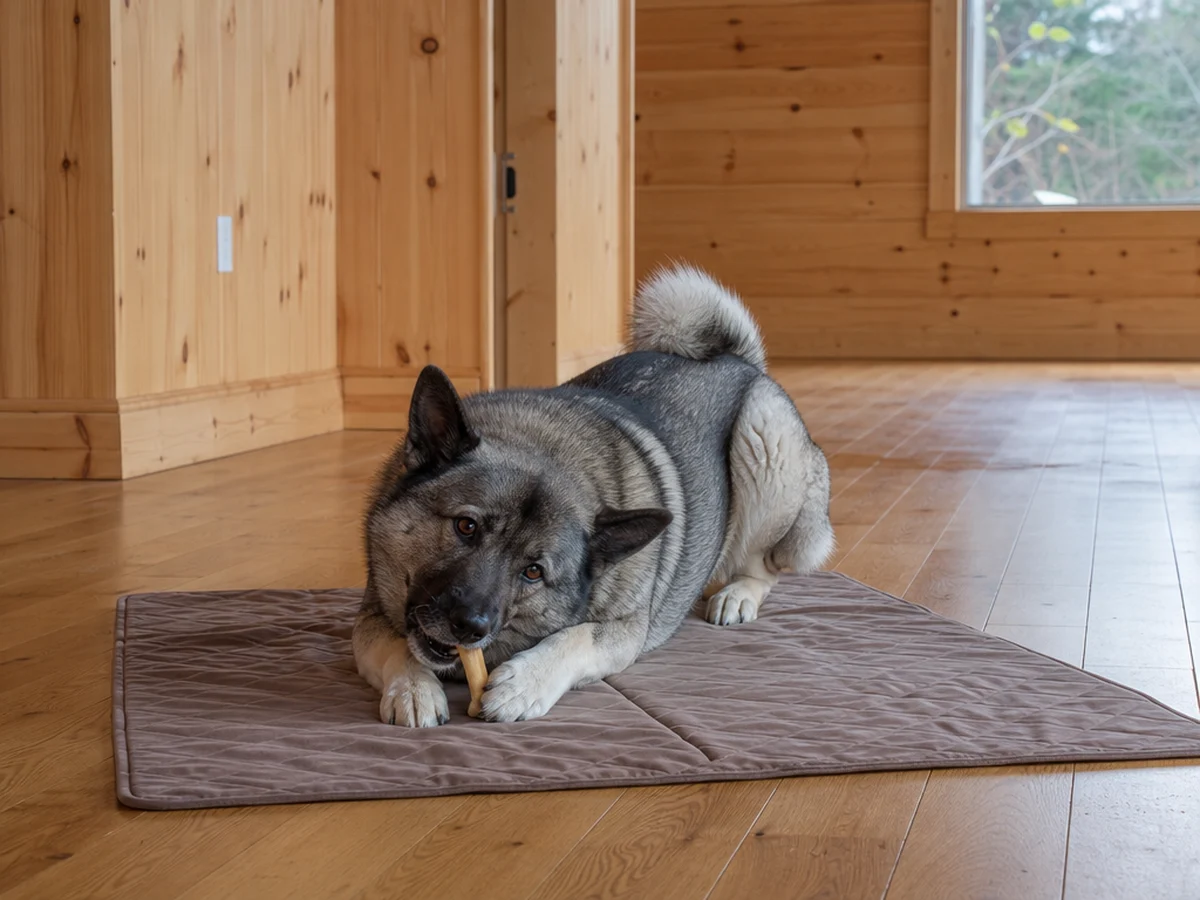
Objects include chews, toys, laundry and things found outdoors. Note whether the dog carries the item away, swallows faster or becomes still. Remove tempting hazards before access and reserve planned trade practice for safe, low-value objects.
Space Page
A bed, couch, doorway or narrow hall can become the target even when no object is present. Draw the traffic route and mark where the dog's posture changes. Move foot traffic around the area and provide another comfortable resting place with a clear exit.
People Page
Person guarding can appear as blocking, hovering or watching someone approach a favored individual. Remove lap access during busy arrivals and give the dog a station away from the social path. The map should name who approaches and from which direction.
Value changes from one event to another. An empty bowl differs from a meal, and a familiar toy differs from a new find. We start with the lowest-value page where the dog can remain loose and mobile, while high-value events stay fully managed.
The Atlas Records Recovery Too
Note what ends the tension. The dog may relax after the person retreats, after a barrier closes or after the resource is no longer visible. Recovery shows which environmental change worked and how long the household should wait before ordinary traffic resumes.
Protect children, guests and other pets from every marked zone. The Humane World guide explains that guarding is often rooted in anxiety. Forced access adds pressure, while distance and predictable outcomes create room for safer learning.
Three Safety Rings for Norwegian Elkhound Guarding
Use three rings around the resource. The red ring is the distance where the dog has already shown guarding, so nobody enters it during ordinary management. The yellow ring is the observation zone where subtle changes may appear. The green ring is far enough away for relaxed behavior and learning.
- Red ring: close the door, use a gate or reroute people immediately.
- Yellow ring: observe body language without leaning or reaching.
- Green ring: deliver good outcomes and begin easy training.
Mark the rings differently for each target. A bowl may need a closed room, while a resting place may only require moving a walkway. The rings are not permanent measurements. They change as context, value and the dog's comfort change.
House rules should be visible and simple. Feed separately, collect risky objects before children enter and give chews only in a protected area. Adults manage gates and doors. Children never participate in trade practice or test whether the dog is improving.
Ring Changes Require a Review
Move a ring only after several easy sessions at the current distance. A person stepping closer is not progress if the dog eats faster or stays vigilant afterward. The household should agree on the new boundary before the next ordinary meal or chew.
The Best Friends guarding guide warns that repeatedly taking food or putting a hand in the bowl can create guarding. Our green ring creates the opposite prediction. People at a safe distance make extra value appear and then leave.
Food and Object Guarding Exchange Workshop
Teach the exchange away from a real conflict. Offer a low-value object the dog can safely have, then place better food on the floor several feet away. When the dog moves to eat, collect the object without rushing and either return it or offer another appropriate item.
- Set up behind a gate or with enough space for the handler to step away.
- Present the planned object and allow calm possession.
- Say the trade cue once, then place food away from the object.
- Pick up only after the dog has fully moved off.
- Return the object when safe so trading does not always end access.
The Battersea guarding guide recommends placing food at a good distance so the dog moves away before the item is collected. Distance prevents hands from entering the guarded space and lets the dog make a voluntary choice.
Food Bowl Exchanges Are Different
Do not lift the bowl during a meal. Begin outside mealtime by placing an empty bowl down, adding one piece of food and walking away. Later, approach only within the green ring, toss something better into the bowl and leave before the body changes.
Over many easy repetitions, approach predicts addition rather than loss. Stop if the dog eats faster, freezes or hovers. Increase distance at the next session and keep ordinary meals fully protected from practice.
Vary the approaching person only after the primary handler can complete easy additions without a body change. The new person begins at the original green-ring distance. Familiarity does not erase the need to rebuild a prediction.
Found Objects Need an Emergency Route
When the dog has something unsafe, avoid a chase. Place high-value food at a distance and open a barrier or route away from the object. If the item could cause immediate harm and cannot be exchanged safely, contact a veterinarian for real-time direction.
Change What Human Approach Predicts
Approach training begins in the green ring with the lowest-value setup. The person takes one step, tosses food and retreats. Retreat matters because it tells the dog that people can notice the resource without continuing to close space.
Change one feature at a time. Move one foot closer, use a slightly better object or add a familiar person, but never all three. If the dog stops eating or tracks the person closely, restore the last easy setup.
Count approach repetitions, not minutes spent near the resource. Two easy passes followed by retreat may be enough for one session. Longer exposure can turn a good prediction into vigilance, especially when a person remains inside the yellow ring.
Keep the handler's posture neutral. Turn slightly sideways, avoid looming and deliver food so it lands away from the object. The dog should not need to push past the person to create distance.
Independent training skills can help outside guarding episodes. The site's Elkhound sports approach uses worthwhile rewards and bounded choices. During guarding work, however, safety rings and professional guidance take priority over testing ordinary cues.
Guarding People and Resting Spaces
Person guarding often has a social pattern. The dog may block an approaching family member, stiffen on a lap or rush between people. Remove high-pressure access during greetings and give the dog a separate station that earns calm rewards away from the favored person.
Practice social movement without possession. The favored person stands, walks to the station and delivers a reward there before another person enters. This moves value away from the lap and gives the dog a predictable job that does not require controlling an approach.
A Resting Place Needs an Exit
Place beds where the dog can leave without being cornered. Route foot traffic around them, and teach family members to call the dog away rather than touching a sleeping body. A second comfortable bed can reduce competition around one strategic spot.
Other Pets Need Physical Separation
Feed pets in separate closed spaces and collect bowls before reopening access. Give chews only with barriers in place. Do not expect a human trade game to solve competition between animals, since movement and proximity can change the pattern quickly.
Reopen shared space only after every resource is collected and both animals have settled. Doorways can become a new pressure point, so use separate exits or bring one animal through at a time. Management is successful when no animal gets a chance to rehearse competition.
Guarding around children requires especially conservative management. The Norwegian Elkhound socializing guide discusses household structure, but a child should never manage a guarded resource. Adults create distance and seek qualified help.
Arrange professional support after a bite, snap, repeated lunge or guarding that spreads across resources and rooms. Seek help sooner when children, older adults or anyone unable to follow the safety rings shares the home. Management continues while the plan is assessed.
Professional Help for Serious Guarding
Bring the resource atlas to the consultation. Dates, targets, distance and recovery give the professional a more useful starting picture than a general claim that the dog is possessive. Bring existing notes instead of staging the behavior again. A planned reenactment adds risk and can strengthen the guarding sequence.
A sudden new guarding pattern can accompany discomfort or another health change, so regular veterinary care matters. Tell the veterinarian exactly what changed and avoid handling that recreates the guarded situation. Behavior support should use humane, reward-based methods and respect the dog's warning signals.
Choose one resource today and draw its red, yellow and green rings without approaching the dog. Close the red ring with a barrier, then plan one green-ring repetition that adds value and leaves. Progress begins when people stop testing access and start making safety predictable.
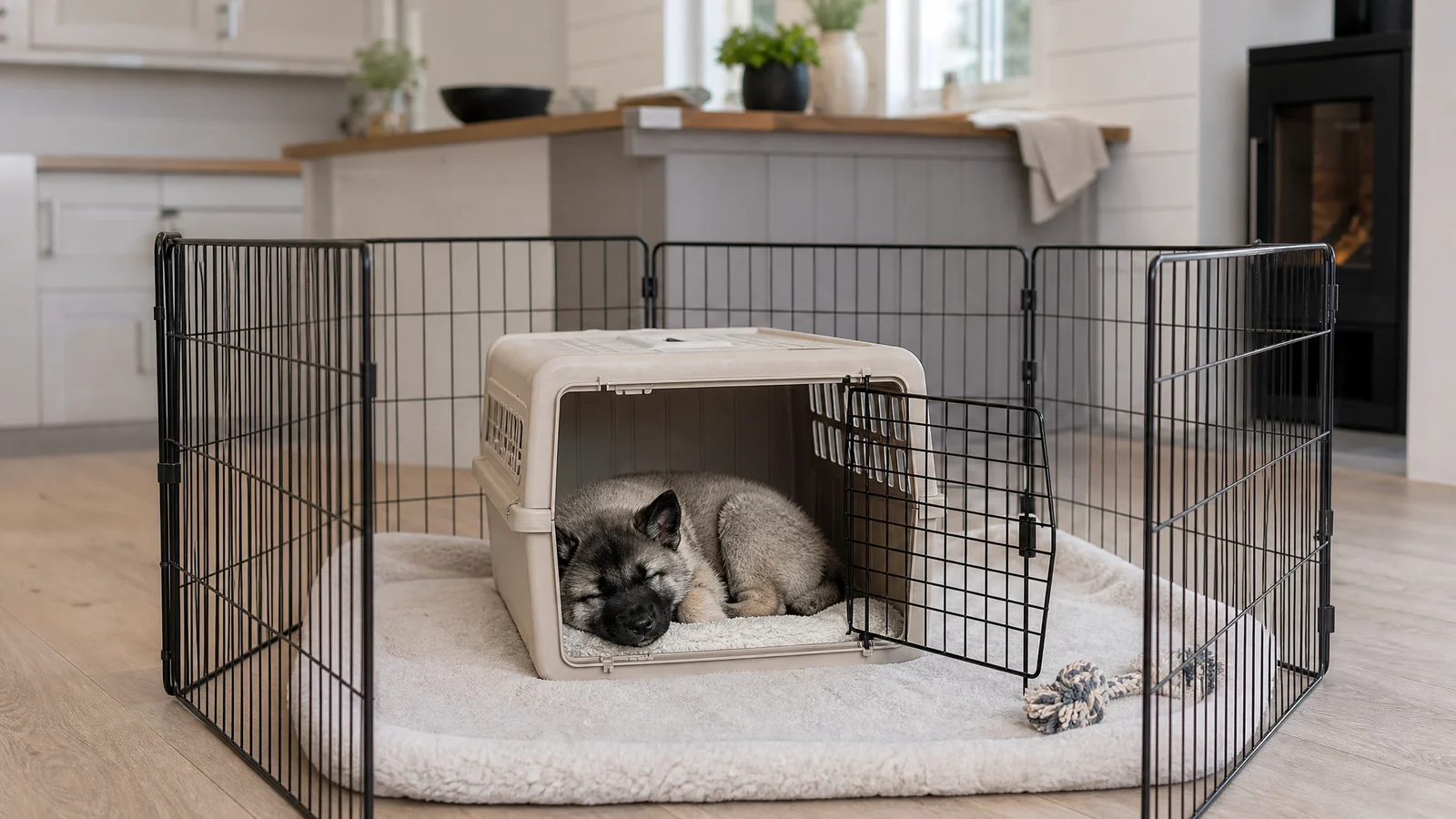 Puppy trainingTeaching an Elkhound Puppy to Settle Alone and Love the Crate
 Puppy trainingNorwegian Elkhound Teen Months: Patience With a Bold Young Hound
 BehaviorWhy Does My Norwegian Elkhound Bark So Much at Visitors?