 Elkhound
10 Elkhound training topics
Every common Elkhound challenge, with first steps and guides to read.
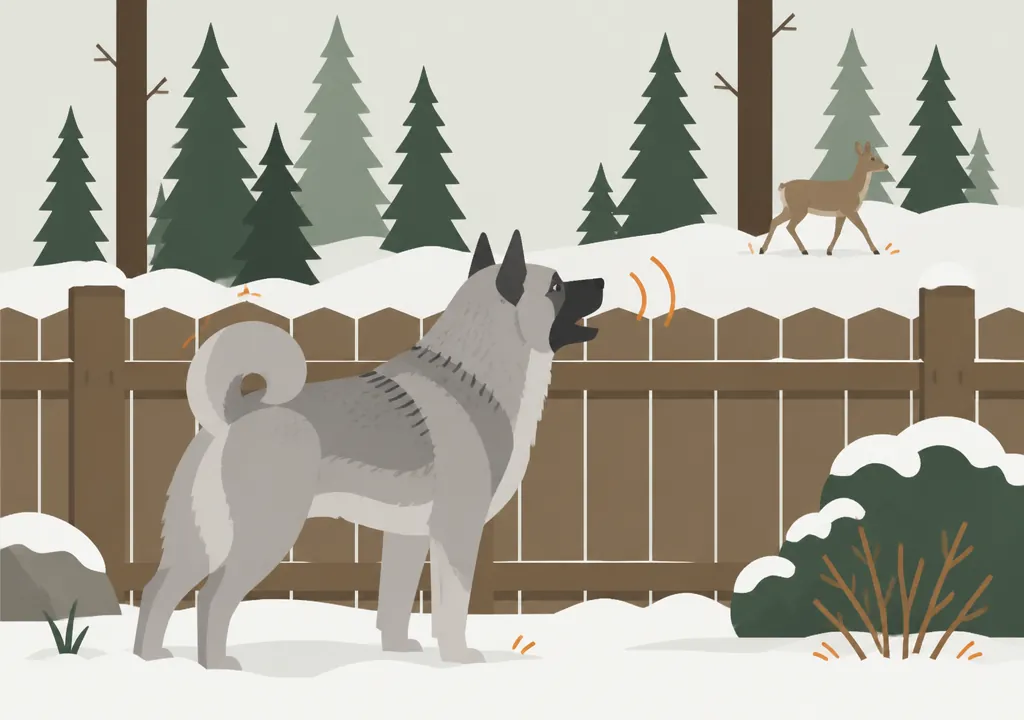
Barking at the fence
Elkhounds bark to hold what they find. Teach quiet.
Some Norwegian Elkhound owners hear a deep alarm at every knock, and others hear two barks and a dog settling. Both are doing what the breed was built for, and the gap is habit and management.
The full guide covers visitor barking, not the fence line, so a vigilant dog reports once.
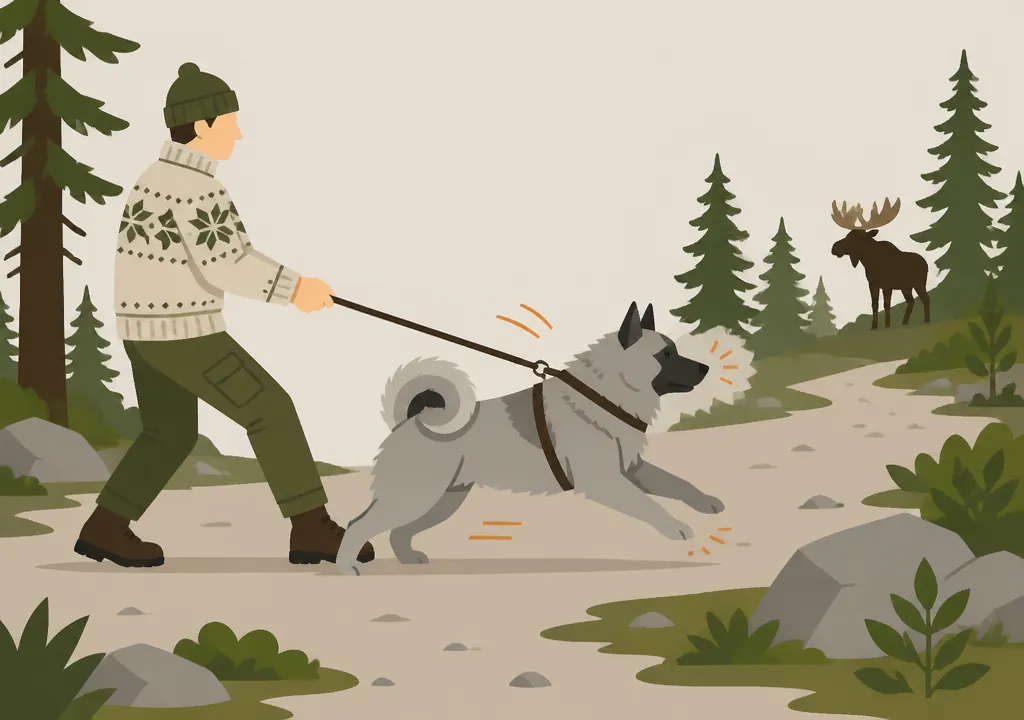
Pulling toward wildlife
A loose leash for a dog with a strong chase instinct.
Loose-leash walking with a Norwegian Elkhound is not mainly about endurance. The breed is built to keep moving, and a walk asks them to pass smells without towing you, so start with a route that makes success possible.
The full guide maps a quiet launch, sniffing lane, practice stretch and distraction junction.
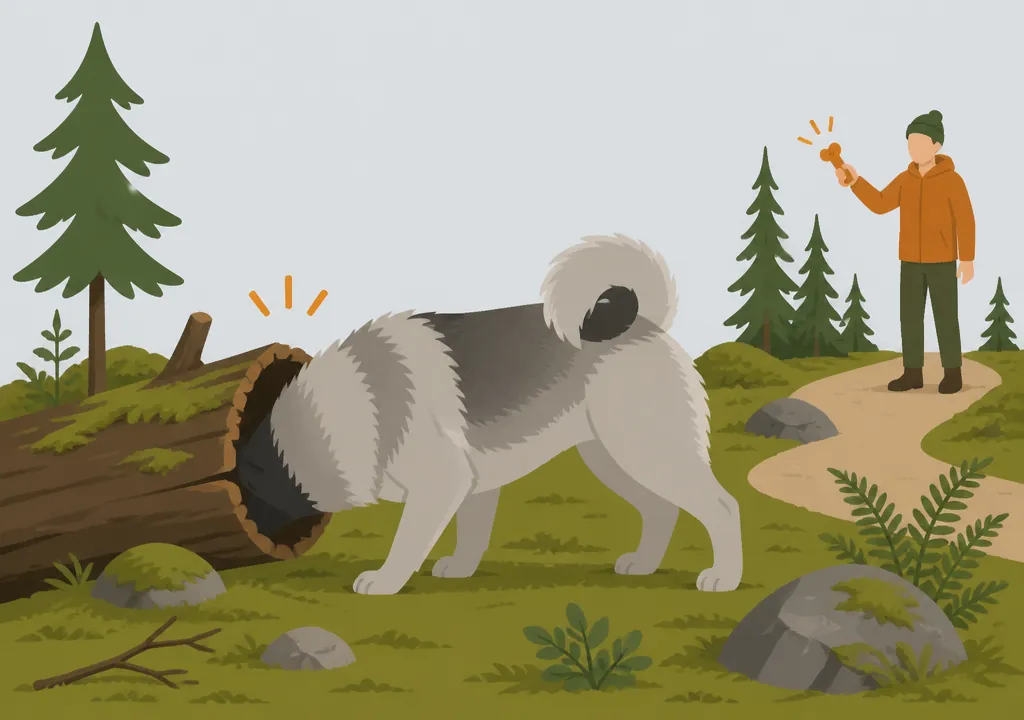
Recall on scent
Come back, even from a good smell.
The AKC advises against letting a Norwegian Elkhound roam off leash, since the instinct to travel and inspect is intrinsic, and the parent club calls them headstrong. Your voice is one signal among many.
The full guide builds recall on motivation, not repetition, and proofs it against scent, wildlife and dogs.
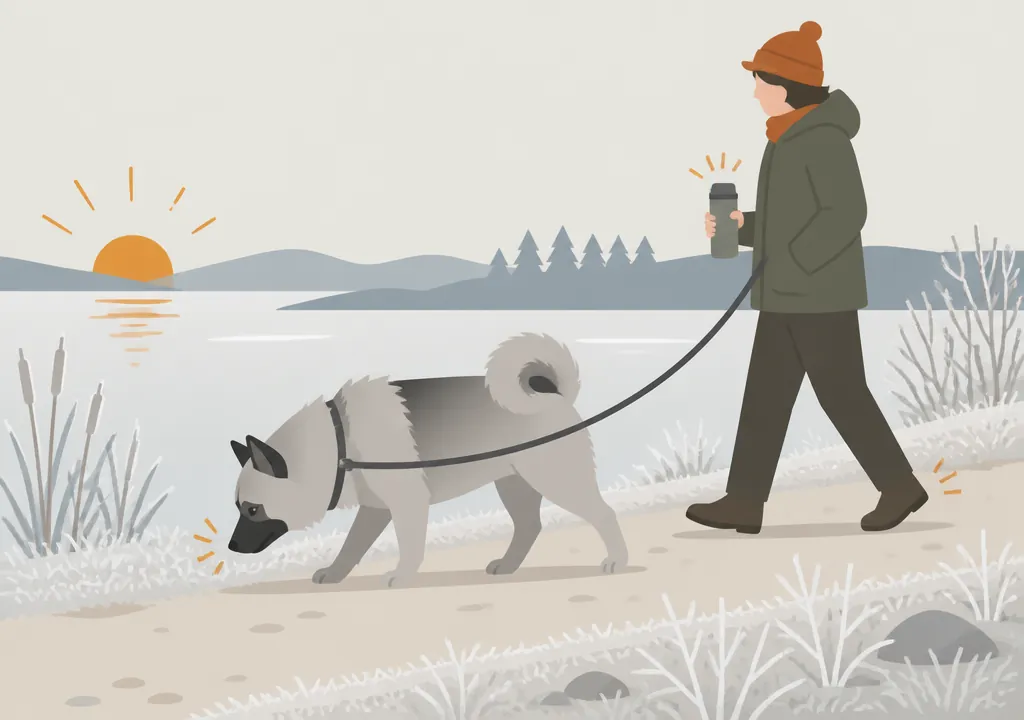
Nose down on walks
Walks that suit a scent-driven dog.
A Norwegian Elkhound does not put a nose down on a walk to be difficult. Scent is information, and following it is part of how this hunting breed reads a place. The practical goal is not to stop sniffing. It is to make sniff access predictable while keeping the leash safe and workable.
In this guide, we will separate those two skills so sniffing does not become an accidental tug-of-war. We will audit where the nose drops, install a clear finish cue and assign different rules to neighborhood, trail and recovery walks.
Read the full guide: Sniff Time on Walks for a Norwegian Elkhound With a Busy Nose
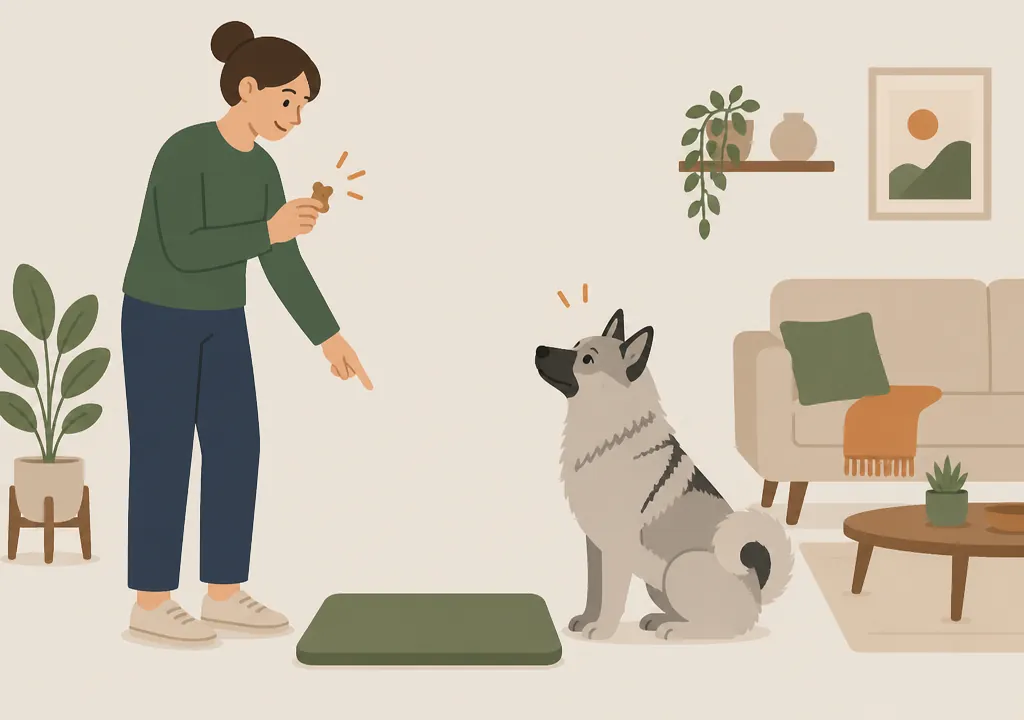
An independent streak
Rewards for a dog that thinks for itself.
When a Norwegian Elkhound ignores a familiar cue, “stubborn” feels like an explanation. It is usually only a label for the moment the person and dog wanted different outcomes. Better training begins by asking whether the request was clear, affordable and worth answering in that environment.
An independent dog can still be highly cooperative. The handler's job is to design choices that make cooperation useful, then practice them before the hardest distraction arrives. In this guide, we will use a four-part audit, a reward menu and one-skill proofing grid, then measure whether the Elkhound returns to the task voluntarily. The aim is a dog who understands the offer and finds cooperation worthwhile across daily life and sports.
Read the full guide: Headstrong but Smart: Working With an Independent Elkhound
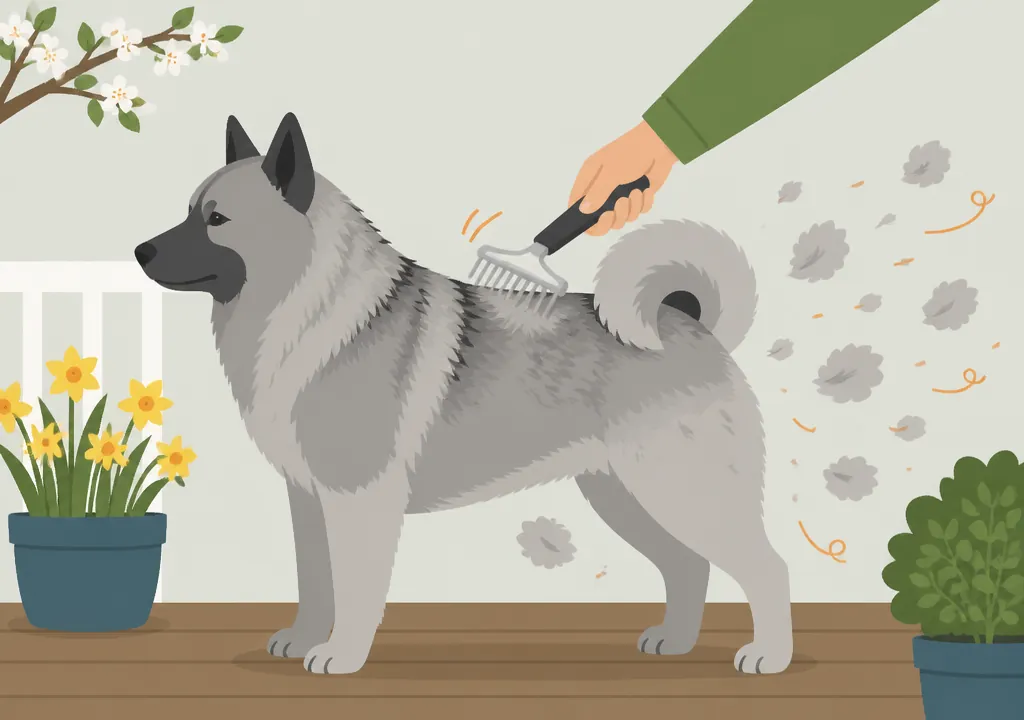
Shedding and brushing
Calm brushing for a thick double coat.
Brushing a thick double coat goes better with an engaged dog, and engagement is this guide's subject. An Elkhound who seems bored after learning an exercise is usually tired of the same question, not of training.
The full guide covers engagement, not grooming, with purposeful repetition and familiar skills reused in games.
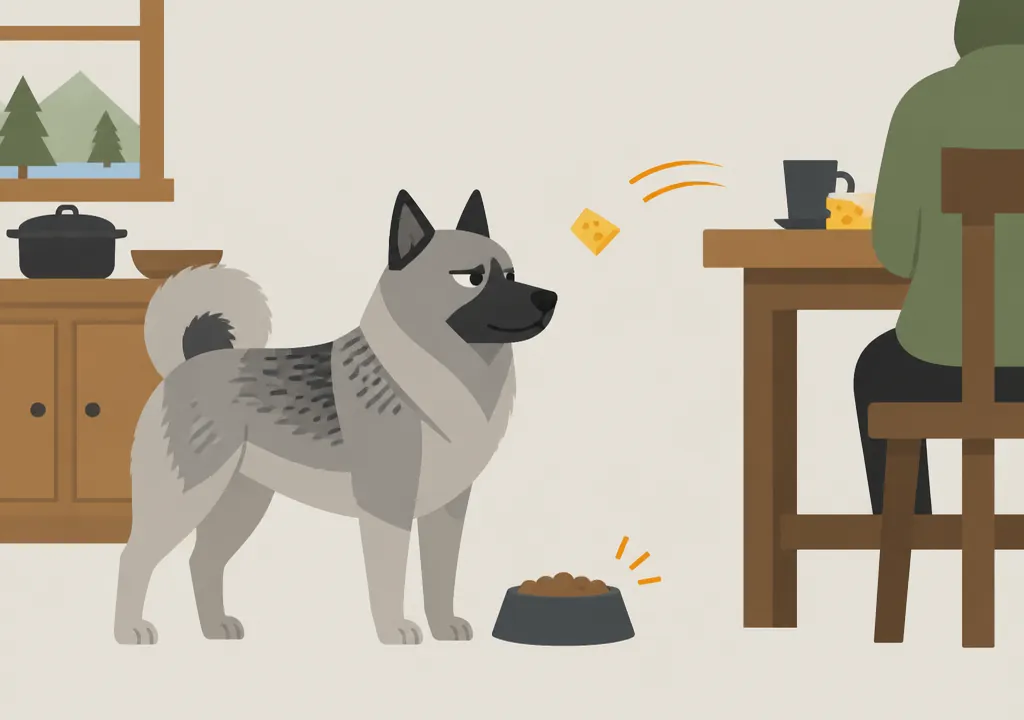
Guarding food
Trust around the bowl.
A Norwegian Elkhound who barks at the property line is not necessarily guarding a food bowl for the same reason. Protective alerting concerns a boundary or possible threat. Possessive behavior concerns losing access to food, an object, a space or even a person. Training starts by naming the exact target.
This guide builds a resource atlas before it builds exercises. You will identify what the dog protects, arrange three safety rings and rehearse exchanges without testing tolerance or reaching into conflict.
Read the full guide: Protective or Possessive? Handling Guarding Behavior Kindly
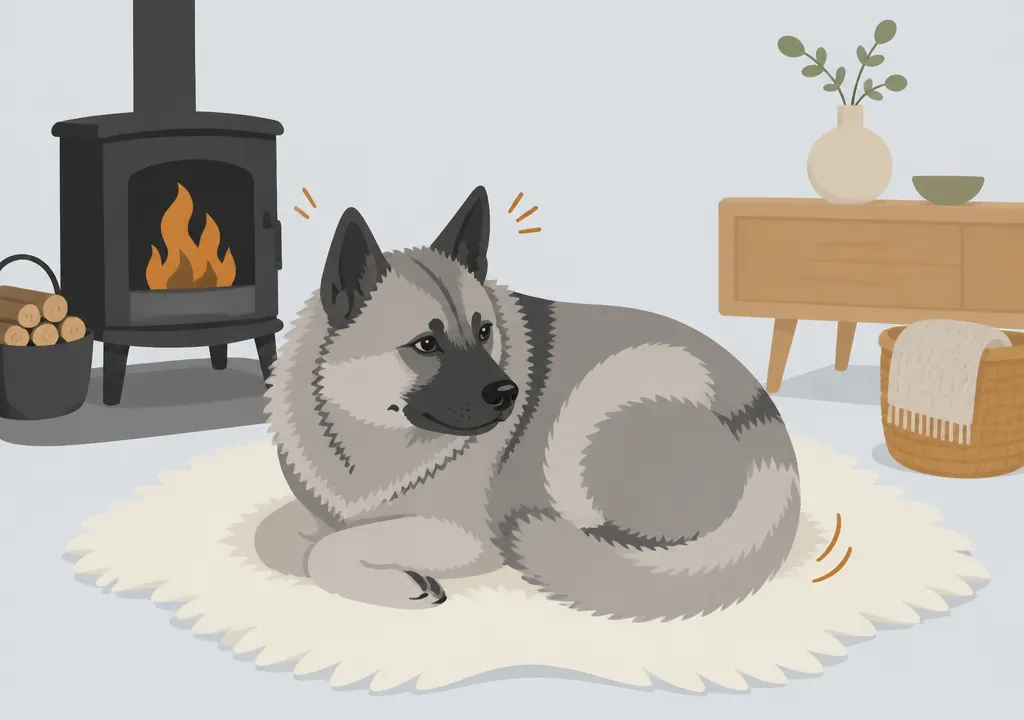
Time alone
Calm alone time for a pack dog.
A puppy who rests in a crate while someone sits nearby has learned confinement, not yet solitude. A puppy who stays quiet for one departure may still be frozen or listening at the door. Calm alone time is measured across the whole event, including preparation, the absence and the return.
In this guide, we will choose a safe base, record an honest baseline, soften predeparture signals and build a micro-absence ladder. The next repetition comes from the puppy's recovery, not a fixed clock target. A crate can be useful, but it is never the only acceptable place to learn. We will keep confinement comfort, departure cues and actual absence on separate tracks so one hard variable does not hide another.
Read the full guide: Teaching an Elkhound Puppy to Settle Alone and Love the Crate
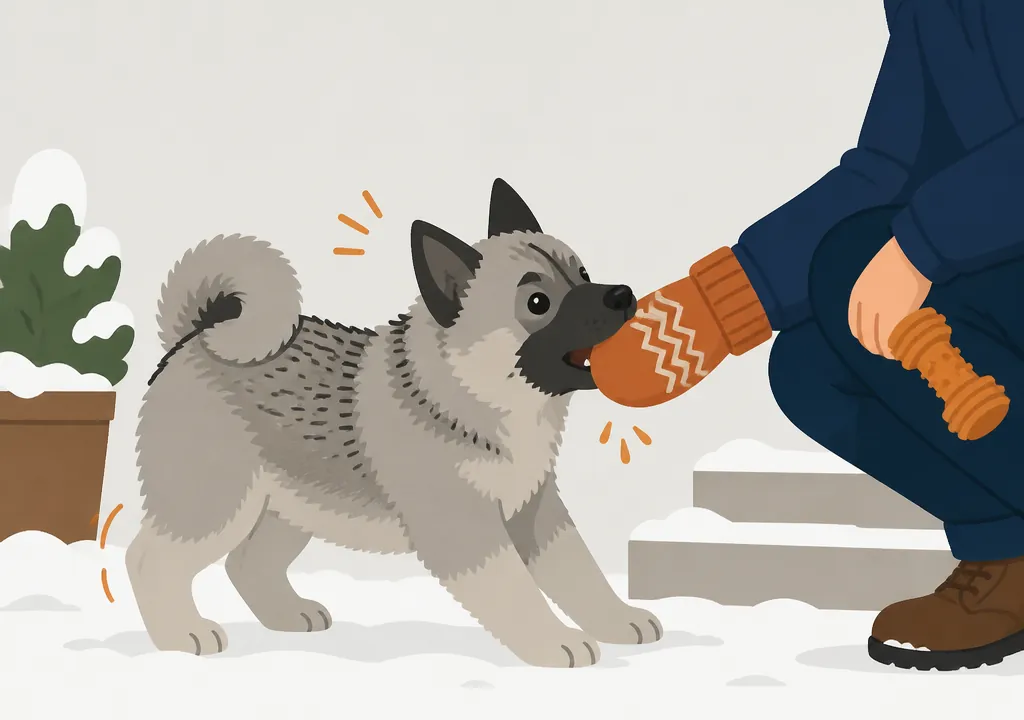
Puppy mouthing
Soft mouths from day one.
Soft mouths and calm introductions are both built early, and this guide takes the second. An Elkhound puppy hiding behind your leg from a stranger does better with room and easy rewards than a reaching greeting.
The full guide covers socialization, not puppy teeth, with safe exposures to people, places and animals.
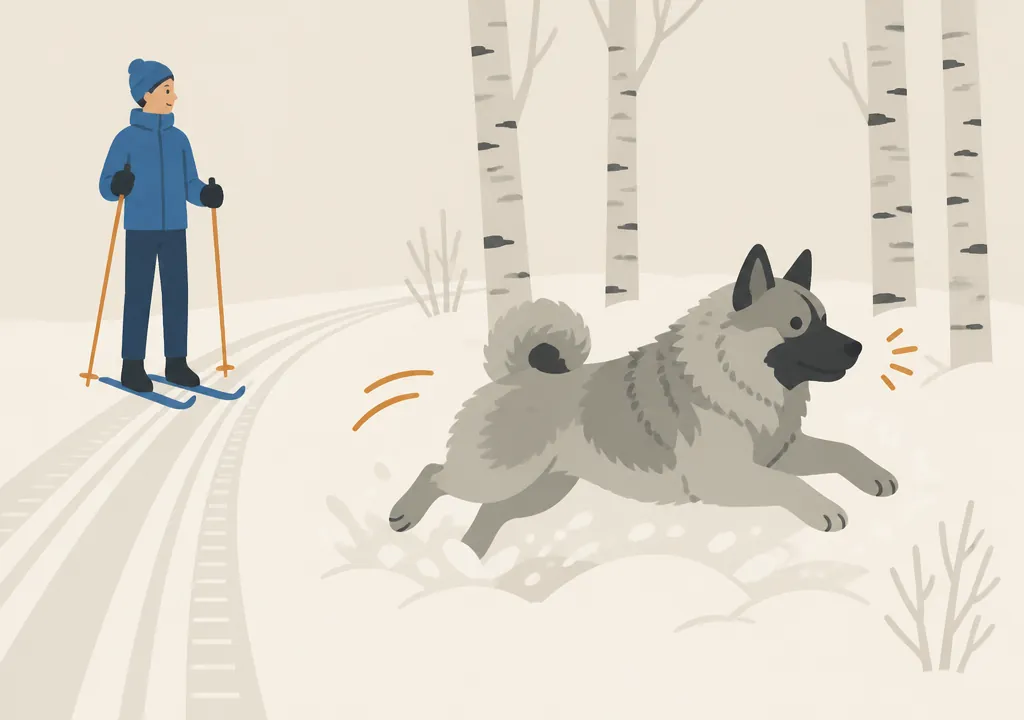
The teenage months
Patience with a bold young hound.
A Norwegian Elkhound in the teenage months may respond beautifully in the kitchen and ignore the same cue beside a scent trail. That is not proof that puppy training vanished. Growing confidence, physical ability and environmental interest can change the cost of a response from one context to another.
This guide uses context gates instead of blaming every setback on adolescence. You will map where behavior changes, tighten management, rebuild four core skills and decide which privileges can return without guessing.
Read the full guide: Norwegian Elkhound Teen Months: Patience With a Bold Young Hound